Understanding how words like it, he, she, and they link back to something already mentioned is one of the most practical grammar skills you can develop in English. This concept has a formal name — anaphoric reference — and even though it sounds intimidating at first, it is something every speaker uses constantly without even thinking about it.
What is an anaphoric reference and why does it matter?
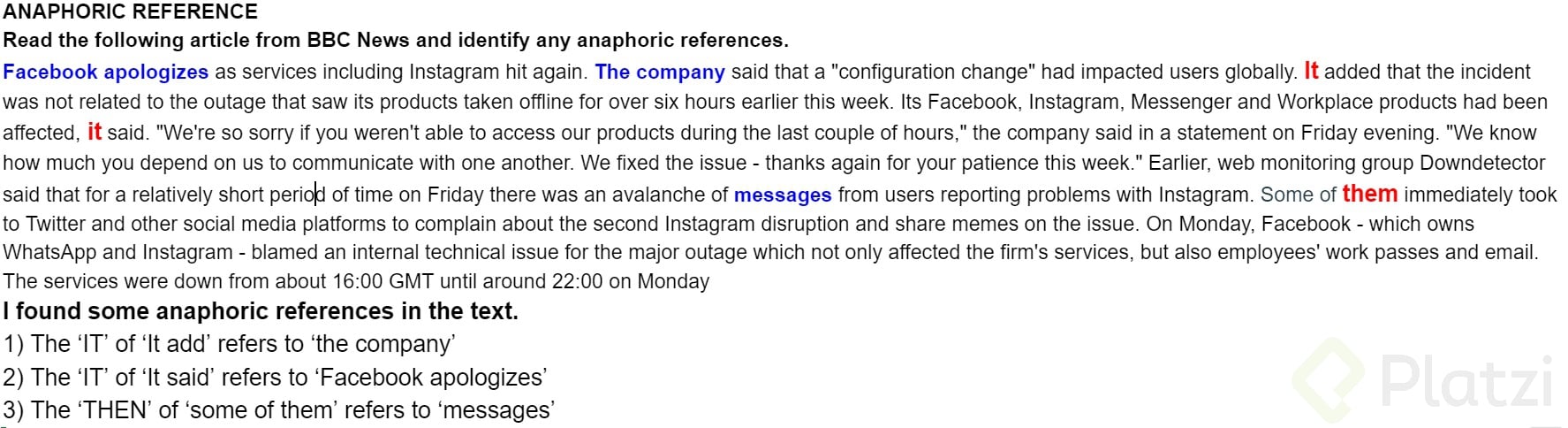
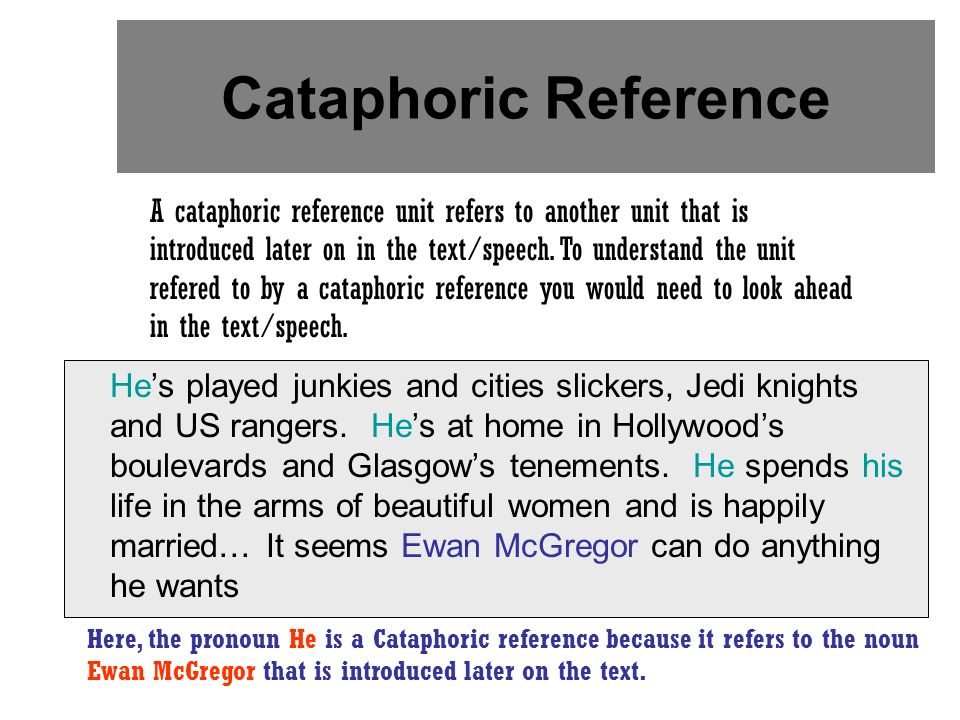
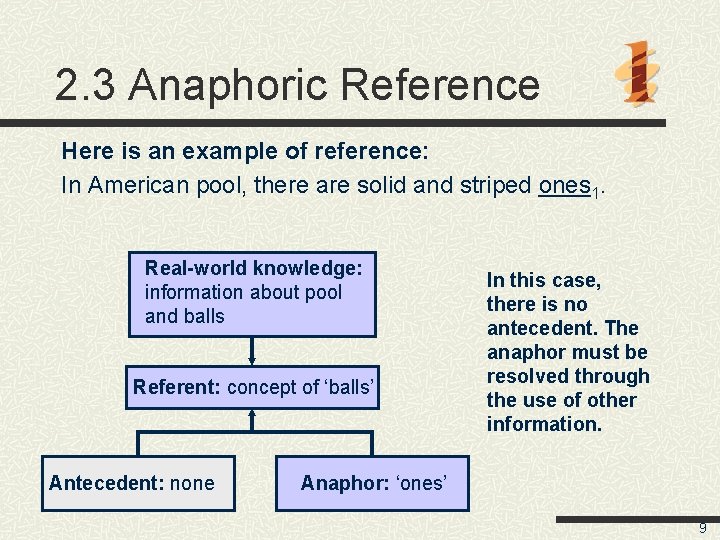
An anaphoric reference occurs when a word refers back to another word that was already mentioned [1:52]. Instead of repeating the same noun over and over, English relies on pronouns and other short words to keep sentences smooth and natural. The main reason we do this is to avoid sounding repetitive or redundant [2:09].
Consider these examples presented during the lesson:
- "I ordered a coffee and it tasted awful." — it refers back to coffee.
- "Mary called Peter, but he didn't answer." — he refers back to Peter.
- "We went to a party last weekend. It was entertaining." — it refers back to party.
In every case, the highlighted pronoun points to a noun that appeared earlier in the sentence or in the previous sentence. That backward-pointing relationship is exactly what makes the reference anaphoric [1:55].
How can you identify what a pronoun refers to?
The key is to ask yourself: "What is this pronoun replacing?" Look at the nouns available in the sentence and decide which one logically fits. Three practice sentences help illustrate this process [2:20]:
- "We couldn't do those exercises. They were very difficult." — They refers to exercises, not to we or the action of couldn't.
- "I sent him an email, but he never received it." — It refers to email, not to the person or the action.
- "I saw Mary crying. She was devastated." — She refers back to Mary.
Notice a pattern: the pronoun always matches the noun in number (singular or plural) and sometimes in gender. They is plural, so it connects to exercises. She is feminine, so it connects to Mary. It is singular and neutral, so it connects to objects like email or coffee.
What common pronouns work as anaphoric references?
- It — replaces singular things or ideas.
- He / She — replaces singular people.
- They — replaces plural nouns (people or things).
These are the most frequent, but words like this, that, these, those, and even one can serve the same purpose.
Why do learners sometimes struggle with this?
When a sentence contains more than one noun, choosing the correct referent can feel tricky. The strategy is straightforward: read the sentence aloud, substitute the pronoun with each possible noun, and see which version makes logical sense [3:15]. With practice, this becomes automatic.
How can you practice anaphoric references effectively?
Start by reading short paragraphs and circling every pronoun you find. Then draw an arrow from each pronoun back to the noun it replaces. This visual exercise builds the habit of tracking references across sentences. Over time, your reading comprehension improves because you always know who or what the author is talking about.
Writing benefits too: when you consciously use pronouns to replace repeated nouns, your sentences flow better and sound more natural. Just make sure the reference is clear — if a reader cannot tell which noun a pronoun replaces, the sentence becomes confusing rather than elegant.
Try applying this skill to your own writing and share your examples in the comments. Identifying anaphoric references is a small change that makes a big difference in both understanding and producing fluent English.