Diferencia entre adjetivos terminados en -ed y -ing
Clase 5 de 16 • Curso de Inglés Básico A2: Infinitivos y Presente Continuo
Contenido del curso
Clase 5 de 16 • Curso de Inglés Básico A2: Infinitivos y Presente Continuo
Contenido del curso

Sofia Ortiz Trujillo

Juan Salinas
Sofia Ortiz Trujillo

Julio Cesar Godinez

ALEXANDRA CAROLINA GONZALEZ ESCOBAR

Jenniffer Tatiana Duque Zamora

JORGE DANIEL SALAZAR TOSCANO
Manuel Avila

Héctor Alonso Padilla Ramírez
Daniel Gonzalez

Martin Rodríguez Hern'andez
Enrique Rodríguez Hernández
Elixheba Rubio

Nelson Bello

Zulma Daniela Garzon Valencia

Nasira Arias

Jose Luis Lanza Estrada

Alejandro Pineda

Isaac Adrian Contreras Arevalo

Walter de Jesús Marcia Lanzas
Walter de Jesús Marcia Lanzas
What does Rose think of these places?
-The elephant I felt amazed to see those fascinating giants in their natural habitat and being able to interact with them and feed them was so gratifying.
The temple The interesting architecture and design made me feel inspiried to learn more about Thailand's culture and religious beliefs
The mountain The ecosystem is breathtaking and full of biodiversity the air was so refreshing and the experience of being there was very relaxing
thank you for sharing reading this, I'm much clearer. :)
New vocabulary:

The elephant sanctuary is fascinating, rose feels amazed to see those fascinated giants in their natural habitat, she was so gratified. The temple are fascinanting, rose feels inspired to learn more about tailand´s culture The mountain have a breaktaking ecosistem, rose feels relaxed in this place
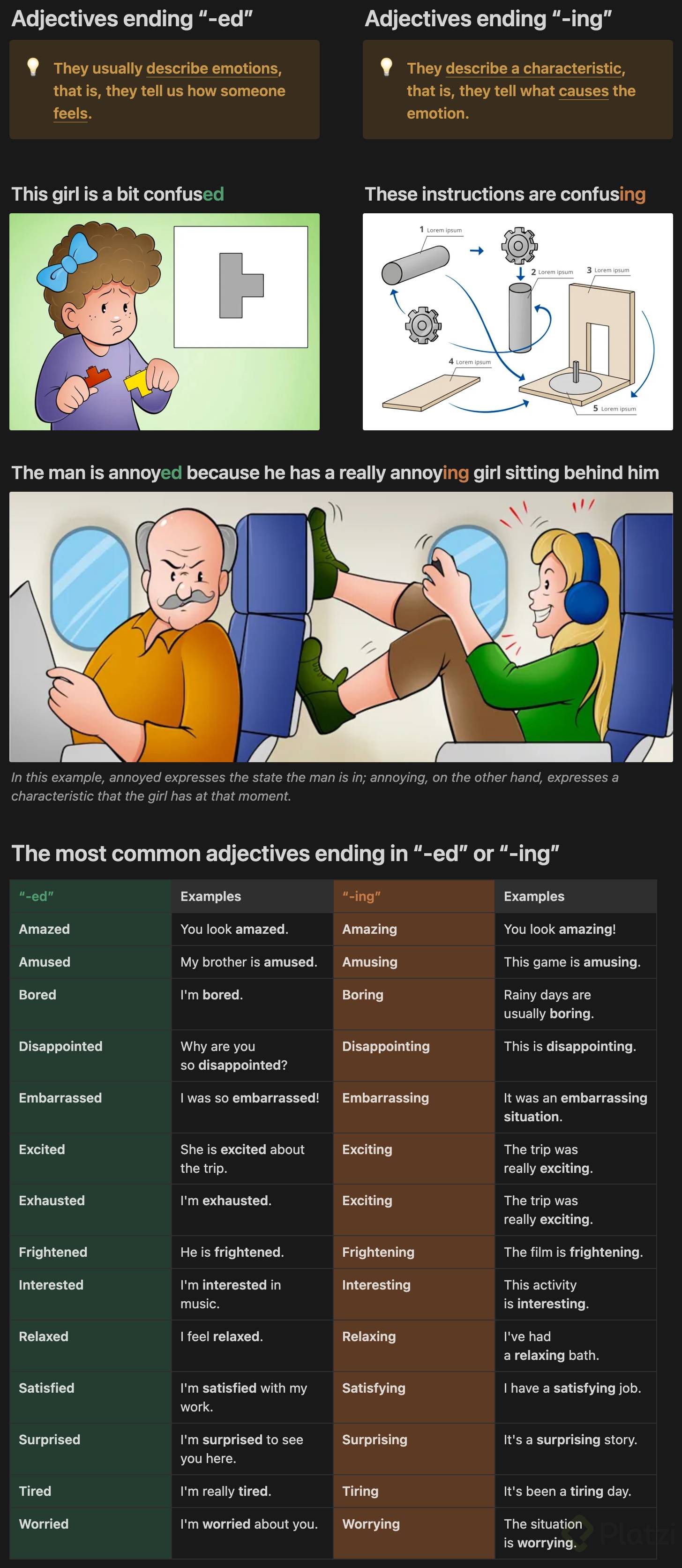
ED) for feelings and emotions ING) for describe things, places and, situations
This was an amazing class
She is bored, because she has been studying for too many hours
She was surprised to receive my phone call
The email was very confusing
All the amazing things in my first weekend, Thailand…
I was so excited to visit the elephant sanctuary
I feel amazed for the fascinating giants
Feed them was gratifying
A city full of fascinating temples, interesting architecture and design make me feel inspired to learn more
The air was so refreshing and the experience of being there very relaxing
I am thrilled to be here…
Elephant sanctaury--> fascinated by the natural habitat
temples--> inspired to learn more
mountains--> ecosystem is refreshing and very relaxing
Estos adjetivos describen características de cosas o situaciones, en contraste con los adjetivos que terminan en -ed, que describen emociones de personas.
Answer the question
Excitid Amazed facinating Gratifying. Fascinating Interesting Desing inspired breathtaking Refreshing Relaxing.
She is surprised and excited to visit the elephant sanctuary which was the first place she visited in Thailand. She was fascinated by the temples the interesting architecture and design that made her feel to learn about her culture and beliefs from Thailand. She was blown away by the ecosystem and biodiversity and the refreshing air and experience and that it was so relaxing to be there, she was thrilled to continue her adventure.
What does Rose think of these places?
What does Rose think of these places ?
What does Rose think of these places?
what does Rose think pf these places? 1.The elephant sanctuary: She felt amazed to see those fascinating giants 2. The temple: fascinating temples, the interesting architecture. she felt inspired to learn more 3. The mountain: The ecosystem breathtaking, The air refreshing. She was relaxed
She was surprised to receive my phone call The email was very confusing.
What does Rose think of these places?
• The elephant sanctuary She felt amazed for seeing the fascinating elephants, she also felt gratified when she feed them. • The temple She felt inspired by the fascinating and interesting architecture of the temples. • The mountain She felt relaxed by the breathtaking ecosystem and the refreshing air of the mountains.
What does Rose think of these places? The elephant sanctuary: She felt amazed to see those fascinating giants in their natural habital and being able to interact with them and feed them was so gratifying. The temple: The interesting architecture and design made me feel inspired to learn more about Thailand´s culture and religious beliels. The mountain: The ecosystem is breathtaking and full of biodiversity. The air was so refreshing and experience of being there was very relaxing.
She was surprised to receive my phone call.
The email was very confusing


