Mastering the English alphabet is the very first step toward confident communication. This practice session walks you through each letter, demonstrates how to spell names out loud, and introduces real examples from Spanish-speaking learners living in different countries.
How do you pronounce every letter of the alphabet?
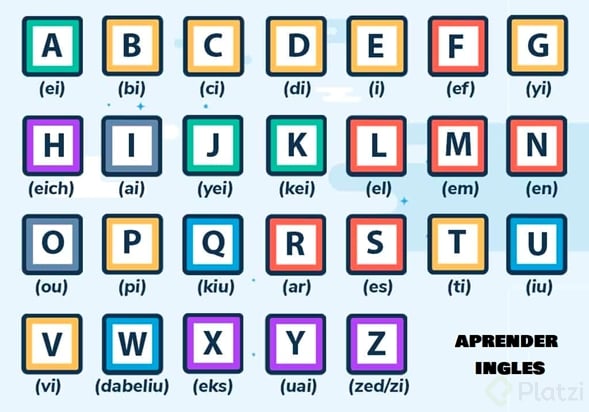
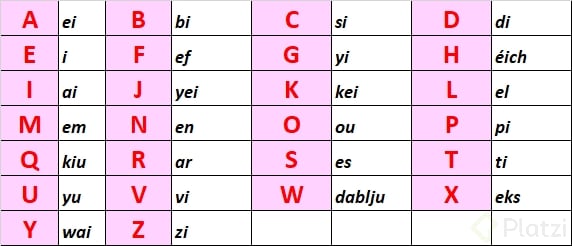
The session begins with a clear, slow repetition of all 26 letters [0:06]. Listening and repeating each one helps build accurate pronunciation from the start. The full sequence is practiced twice so learners can internalize the sounds:
- A, B, C, D, E, F, G — the first group establishes rhythm.
- H, I, J, K, L, M, N, O — pay attention to H ("aitch") and J ("jay"), which are often confused.
- P, Q, R, S, T, U, V — note that Q is pronounced "kyoo" and V sounds like "vee."
- W, X, Y, Z — W ("double-u") is the only letter with more than one syllable.
Practicing the alphabet aloud builds the foundation for spelling, which is essential when sharing personal information in English.
How do you spell your name in English?
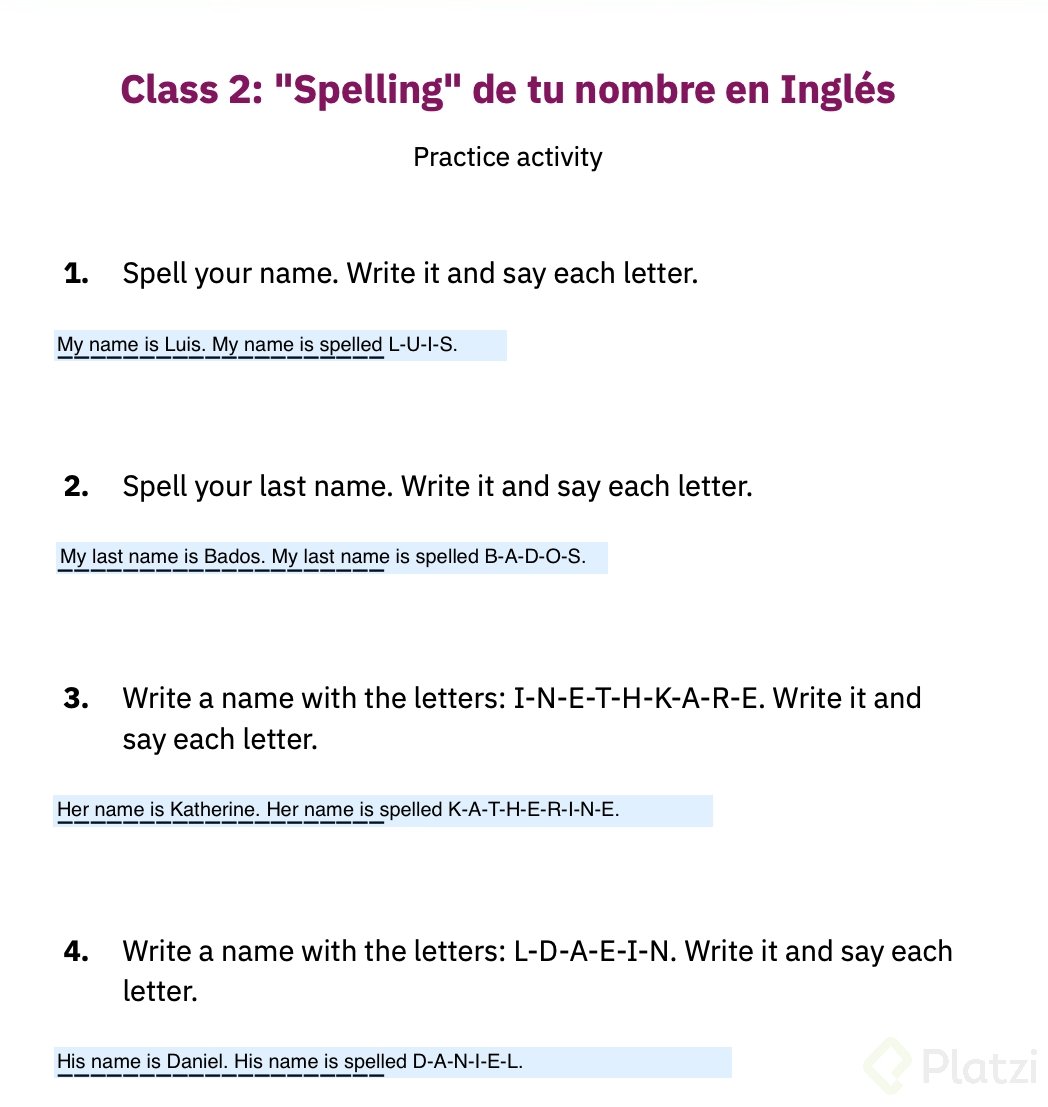
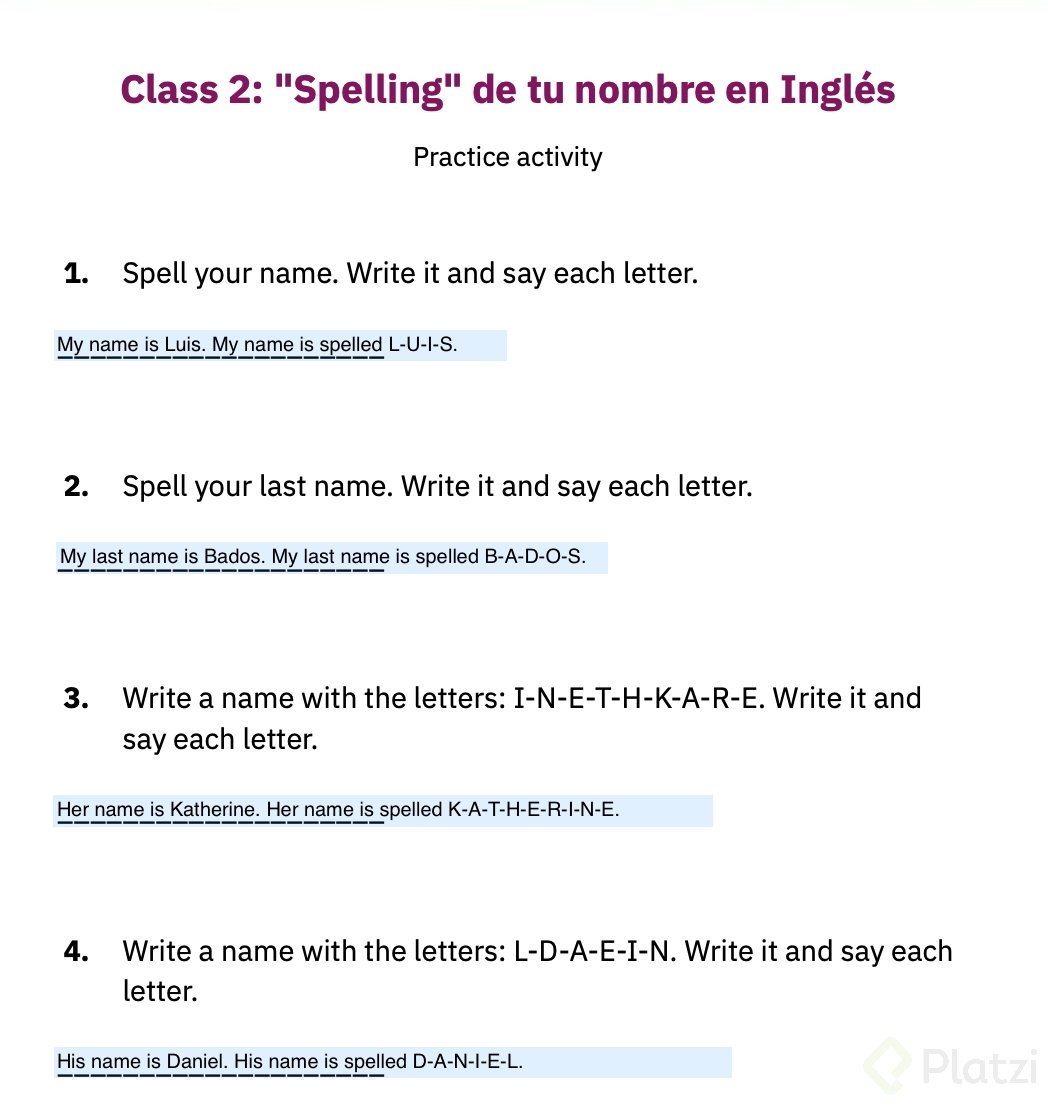
After the alphabet review, the focus shifts to spelling names letter by letter [1:01]. The instructor models with her own name: Gina, spelled G-I-N-A, and her last name Pedraza, spelled P-E-D-R-A-Z-A. This technique — saying each letter individually — is exactly what you need when someone asks "How do you spell that?"
Several real people then introduce themselves and spell their names:
- Adriana — A-D-R-I-A-N-A, from Colombia, living in Canada [1:17].
- Carmen — C-A-R-M-E-N, from Comayagua, Honduras [1:30].
- Diego — D-I-E-G-O, from Chile, living in San Francisco, California [1:42].
- Carli — C-A-R-L-I, from Bolivia [1:54].
Notice the simple sentence pattern each speaker uses: "Hi, I'm [name]. I'm from [place]." This is a basic but powerful self-introduction structure in English.
Why is spelling practice so important?
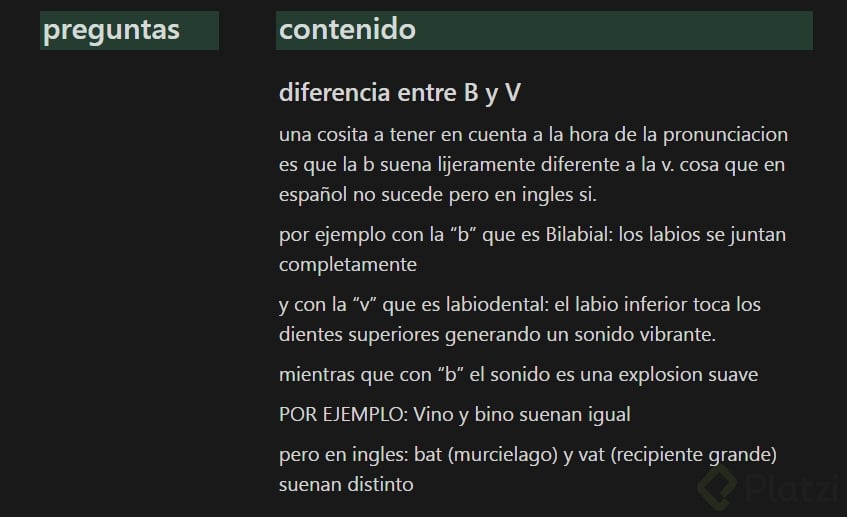
In everyday situations — at a doctor's office, a bank, or a coffee shop — English speakers frequently ask you to spell your name. Getting comfortable with saying letters quickly and clearly prevents misunderstandings. It also trains your ear to distinguish between similar-sounding letters like B and V, or M and N.
Can you spell these names on your own?
The final section challenges learners to listen and write the spelling themselves before checking the answers [2:05]. Four names with last names are provided:
- Robert Diaz — R-O-B-E-R-T, D-I-A-Z.
- Christina Silva — C-H-R-I-S-T-I-N-A, S-I-L-V-A.
- Frank Turner — F-R-A-N-K, T-U-R-N-E-R.
- Lucy Smith — L-U-C-Y, S-M-I-T-H.
Notice how some names include letter combinations that may surprise beginners: Christina starts with C-H, producing the "kr" sound, and Turner contains the U-R combination.
How can you keep practicing?
Try spelling your own first and last name out loud, letter by letter. Then practice with the names of friends, family members, or cities. The more you repeat, the more natural it becomes. Share your spelled-out name in the comments and see how others are practicing too.