Situaciones Hipotéticas con Pasado Perfecto y "As If"
Curso de Inglés Intermedio Alto B2: Discurso Indirecto y Condicionales
Contenido del curso
Future Perfect Passive & Hypothetical situations
- 2

Futuro Perfecto Pasivo: Uso y Ejemplos Prácticos
07:12 min - 3

Uso del Futuro Perfecto Pasivo en Proyectos Empresariales
03:17 min - 4

Dominio del Tercer Condicional en Inglés
07:24 min - 5

Uso del Participio Presente y "Having" + Participio Pasado en Inglés
08:14 min - 6

Situaciones Hipotéticas con "As If" y "As Though" en Pasado Simple
03:41 min - 7

Situaciones Hipotéticas con Pasado Perfecto y "As If"
Viendo ahora
Formal and informal English
- 8

Uso de "One" y "You" en Inglés: Diferencias y Ejemplos
03:16 min - 9

Uso de "Since" para Expresar Razones en Inglés
02:35 min - 10

Uso de "No matter" para Expresar Contraste en Inglés
05:13 min - 11

Uso de "Should" como Condicional Formal en Inglés
04:11 min - 12

Ejercicio de Escucha: Comprensión de Monólogo Laboral
02:45 min
Reports, beliefs and comments
- 13

Uso del Reported Speech en Voz Pasiva en Inglés Formal
06:38 min - 14

Uso de "on/at the point of" para eventos inminentes en inglés
03:40 min - 15

Uso de "Not Only... But Also" para Enriquecer Oraciones en Inglés
04:21 min - 16

Inversión de Verbo y Sujeto con Adverbios Negativos
04:25 min - 17

Reporte de Noticias y Conceptos Gramaticales en Video
01:24 min - 18

Práctica de conversación en inglés (contexto profesional)
00:00 min
Cleft Sentences
Course Outcomes
Situaciones Hipotéticas con Pasado Perfecto y "As If"
Resumen
Understanding how to express hypothetical situations in the past is a powerful skill that adds depth and nuance to your English communication. When you combine past perfect with expressions like as if and as though, you can describe perceptions and observations about events that may have happened before another moment in the past — even when you're not completely sure they did.
What is the past perfect and how does it work?
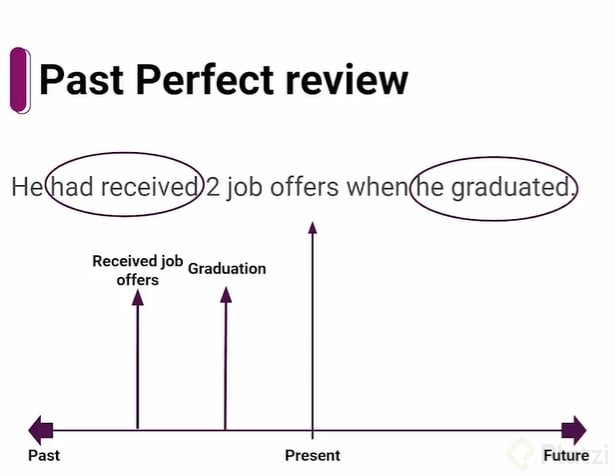
The past perfect is used to talk about events that happened earlier than a particular time in the past [0:25]. It is essentially the past of the past. The structure is straightforward: had + past participle.
For example:
- He had received two job offers when he graduated [0:40].
In this sentence, receiving the job offers came first, and graduation came after — but both events are in the past. The past perfect (had received) signals which event happened earlier.
How do as if and as though work with past perfect?
When you pair as if or as though with the past perfect, you describe hypothetical situations that may have happened before an event in the past [1:10]. The key word here is "may" — you are expressing a perception or an observation, not a confirmed fact.
Consider this example:
- My colleague looked as if he had worked all night [1:22].
Maybe when you saw your colleague yesterday, he had bags under his eyes and looked extremely tired. You are not sure he actually worked all night — perhaps he was sick or just having a bad day. But based on what you observed, it seemed that way.
Here are more examples from the lesson [1:55]:
- I sent her a message, but my friend seemed as though she hadn't checked her messages. You noticed she talked to you like normal, without mentioning the message, so it appeared she hadn't seen it.
- My friends looked at me as if I had done something horrible. You didn't actually do anything wrong, but the look they gave you made it feel that way.
Notice how each sentence expresses a personal perception rather than a confirmed reality. That distinction is what makes this structure so useful for storytelling and everyday conversation.
How can you practice building these sentences?
A helpful exercise from the lesson involves completing a sentence with the correct form [2:30]:
- I confirmed the time with him, but it sounded as if he had forgotten about our meeting.
The reasoning is clear: when you spoke with him, he did not mention the meeting at all, so it sounded like he had completely forgotten. The past perfect (had forgotten) places the forgetting before the conversation, and as if marks it as your interpretation rather than a certainty.
What patterns should you remember?
Keep these structures in mind when forming your own sentences:
- Subject + looked/seemed/sounded + as if/as though + subject + had + past participle.
- Use as if and as though interchangeably — they carry the same meaning.
- Always remember that the situation described is hypothetical or uncertain, based on perception.
To strengthen your command of this grammar point, try writing at least three sentences using as if or as though with the past perfect. Share them in the comments and take a look at what others have written — practicing together makes the learning process much more effective.