Práctica de Identificación y Ubicación de Objetos en Imágenes
Contenido del curso

Preséntate y presenta a otros en Inglés


Describe personas y sus rutinas



Vocabulario básico en Inglés


Practica el presente simple en inglés


¡Continúa practicando tu Inglés!

Recursos
Resumen
Identifying objects and describing their location are two essential skills when learning English. This practice brings together both abilities through a simple but effective exercise: first, you guess what an item is, and then you describe where it is in relation to another object. This approach reinforces vocabulary and spatial language at the same time.
How do you ask and answer "what's that" in English?
The structure what's that? is one of the first questions you learn in English, and it helps you identify objects around you. In this practice, different images are shown, and the goal is to name each item correctly [0:38].
- That's an apple. A common everyday object used as the first example.
- It's a glass. The second item introduced to set up a location question.
- It's a house. Recognizing buildings and structures.
- It's a tree. A natural element paired with the house.
When the item is a person, the question changes slightly to who is that? [3:08]. In the example, the answer is she's a woman. This distinction between what for objects and who for people is important to keep in mind.
What happens when an item is plural?
The question shifts to what are those? instead of what's that? [3:37]. The example used is those are fish. An important grammar note here: fish works as both singular and plural because it is an irregular noun [3:55]. You don't say "fishes" in standard English — the word stays the same regardless of quantity.
How do you describe where something is using prepositions?
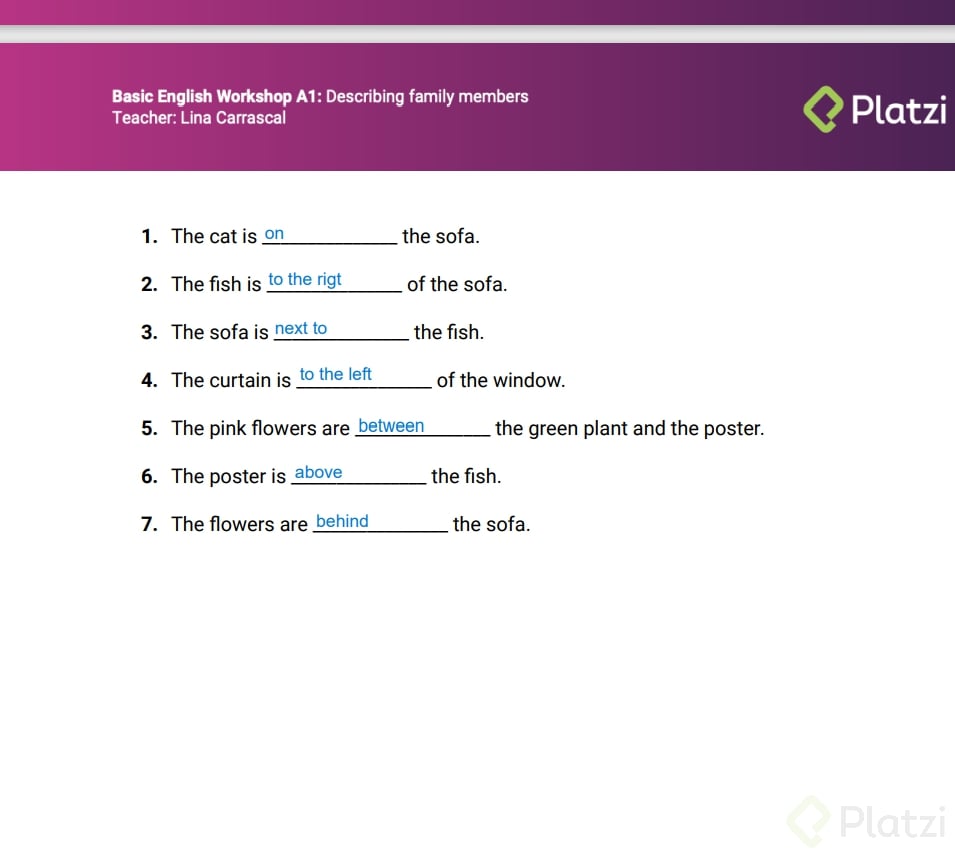
Once both items are identified, the next step is describing the position of one item in relation to another. This is where prepositions of place come into play.
- The apple is next to the glass. The preposition next to means right beside something [2:08].
- The tree is behind the house. The preposition behind indicates something is at the back of another object [2:55].
- The woman is near the fish. The preposition near expresses proximity without being immediately beside [4:22].
Each answer follows a clear pattern: subject + is + preposition + object. Practicing this structure helps you build sentences quickly and accurately when describing locations.
Why is this exercise useful for building fluency?
Combining identification and location in one exercise trains your brain to think in English in two steps. First, you recall vocabulary for common nouns. Then, you apply grammar structures with prepositions. This mirrors real-life conversations where someone might point at something and ask both what is that? and where is it?
A few tips to remember:
- Use that's for singular items and those are for plural items.
- Choose the correct question word: what for things, who for people.
- Pay attention to irregular nouns like fish that don't change in plural form.
- Practice different prepositions: next to, behind, near, in front of, between.
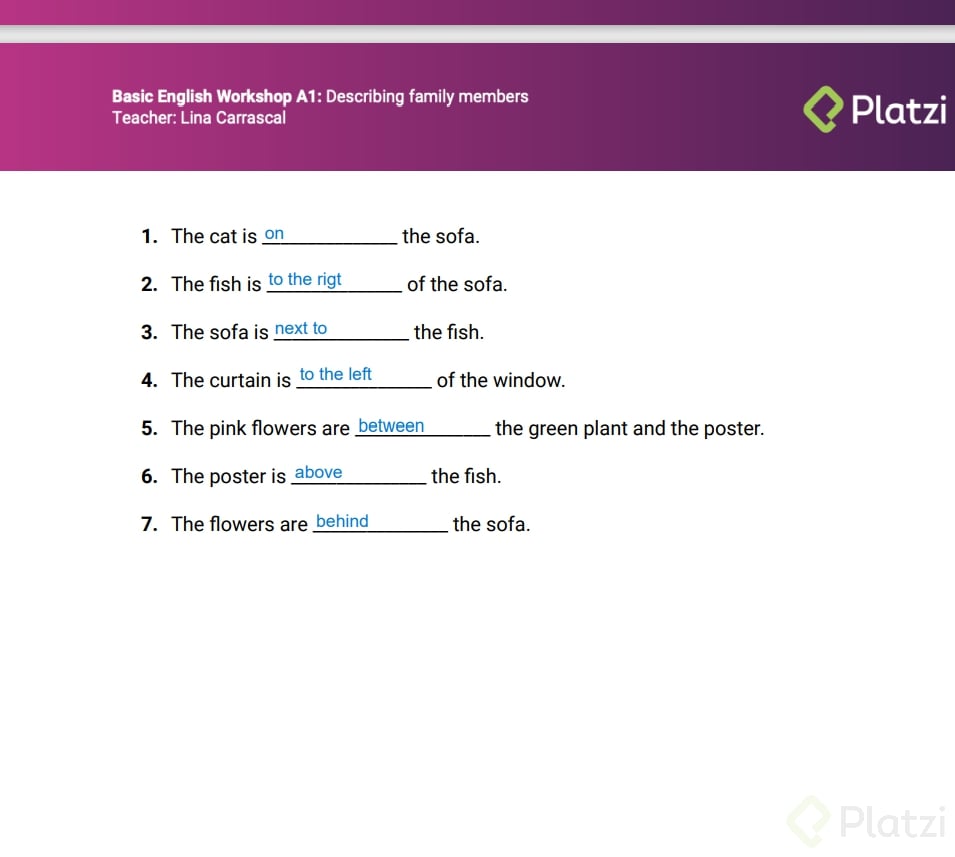
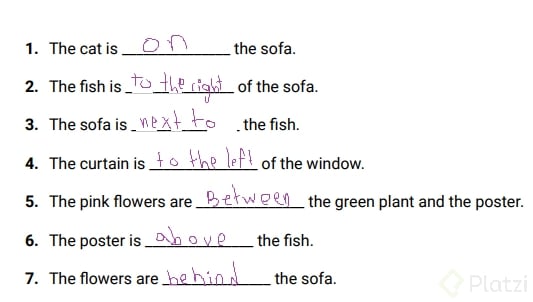
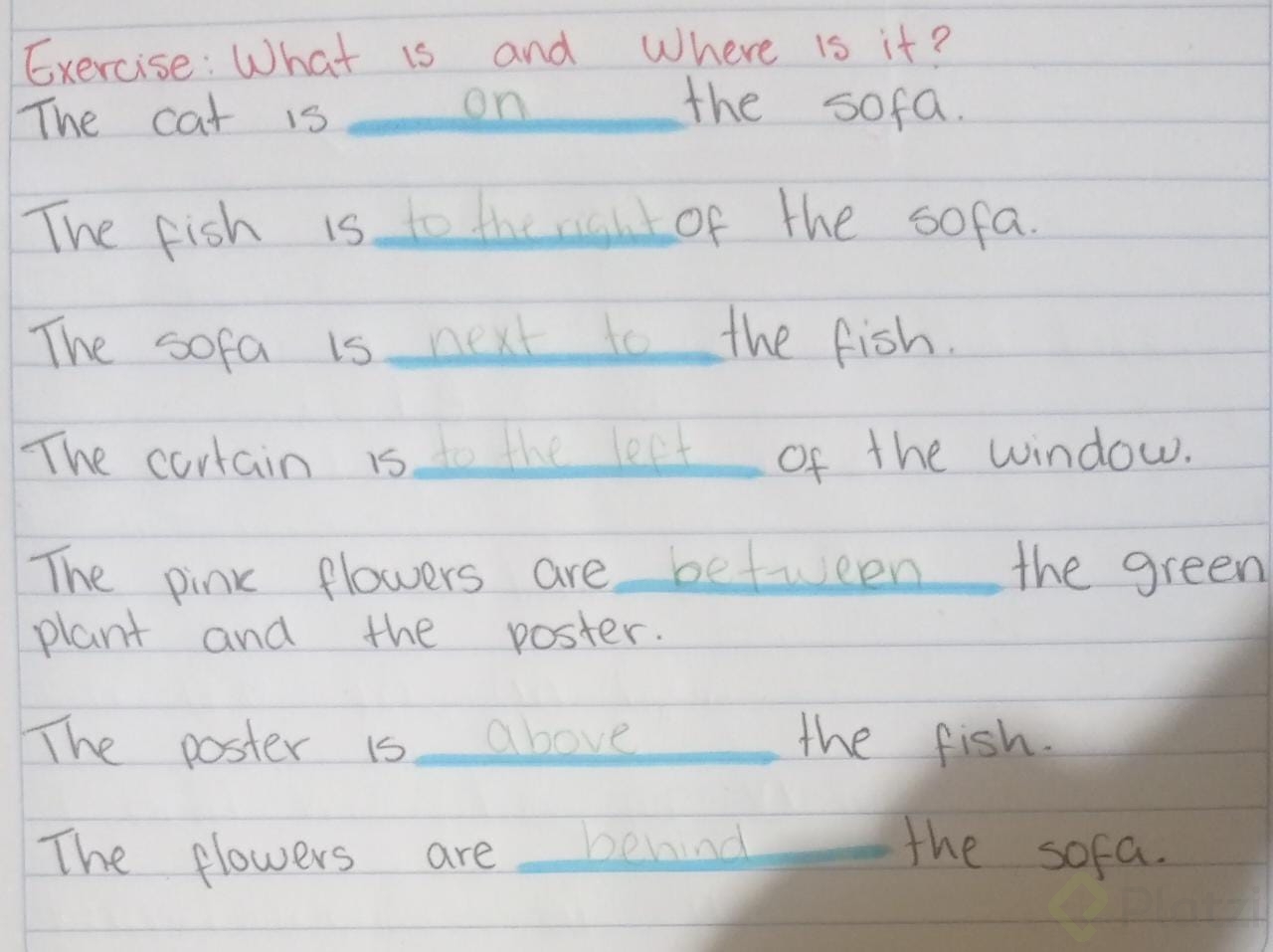
There is a worksheet available to keep practicing these structures. Completing it will reinforce everything covered here. Share your answers in the comment section and compare with other learners!