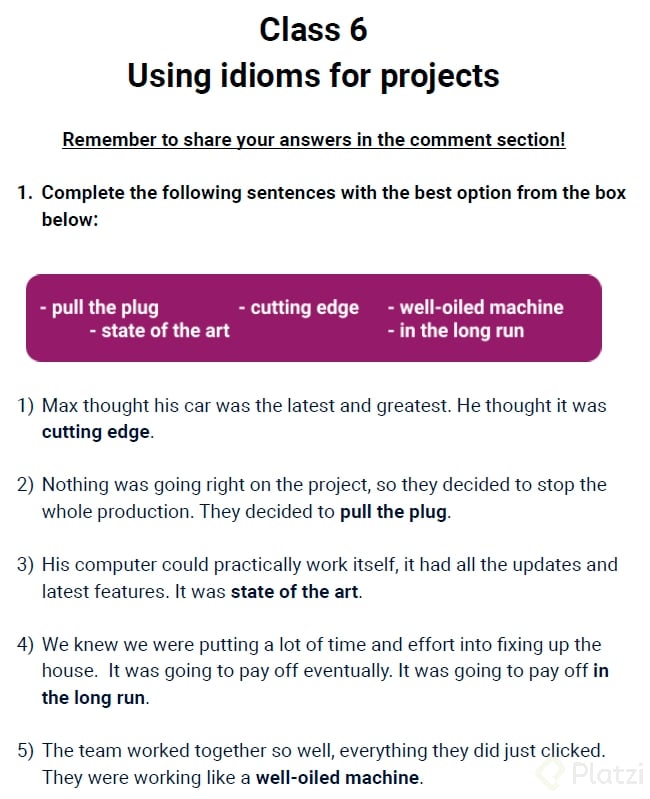
Mastering idiomatic expressions is one of the fastest ways to sound natural in English. These five idioms are commonly used in business, technology, and everyday conversation, and understanding them will boost both your listening and speaking skills.
What does "pull the plug" mean?
The idiom pull the plug means to stop a project suddenly or to take someone or something off of life support [0:14]. Even though you might picture literally pulling a plug from a wall, in everyday English it refers to ending something abruptly, especially when it's not going well.
- We pulled the plug on our project when we saw it was going to be a disaster.
Notice how the phrase works with the preposition on: you pull the plug on something.
How are "state of the art" and "cutting edge" different?
Both idioms describe the most up-to-date technology or advancements, yet they carry slightly different feelings.
What is "state of the art"?
State of the art [0:37] refers to something that represents the latest and most advanced stage of a technology or product. Think of every new iPhone release: each one is described as state of the art because it includes the newest features available at that moment.
What does "cutting edge" mean?
Cutting edge [1:41] is very close in meaning. It highlights that something is the latest, greatest version of its kind. A new electric car packed with self-driving capabilities, for instance, would be called cutting edge. While both idioms overlap, cutting edge often emphasizes innovation and being ahead of competitors.
What do "in the long run" and "well-oiled machine" express?
How do you use "in the long run"?
In the long run [0:55] means eventually or over a period of time. It signals that a result won't happen immediately but will come with patience.
- In the long run we will be able to meet demands, but now we are running behind.
This idiom is perfect for talking about goals, investments, or any situation where time plays a key role.
When is something a "well-oiled machine"?
A well-oiled machine [1:16] describes something—or a group of people—that operates very smoothly and efficiently. A sports team that wins every game because its players coordinate perfectly runs like a well-oiled machine.
- Our football team runs like a well-oiled machine. They're winning every game.
Note the common pattern: runs like a well-oiled machine. You can apply it to companies, teams, or even daily routines.
Can you match the idiom to its meaning?
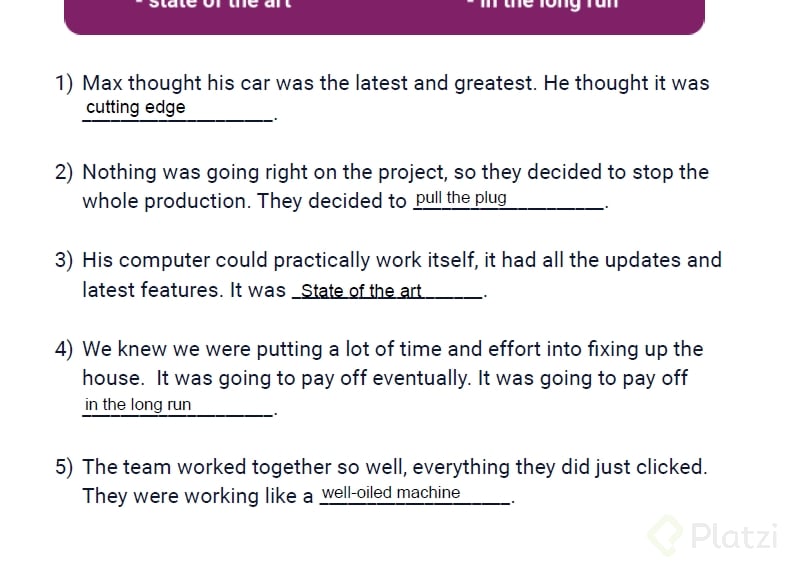
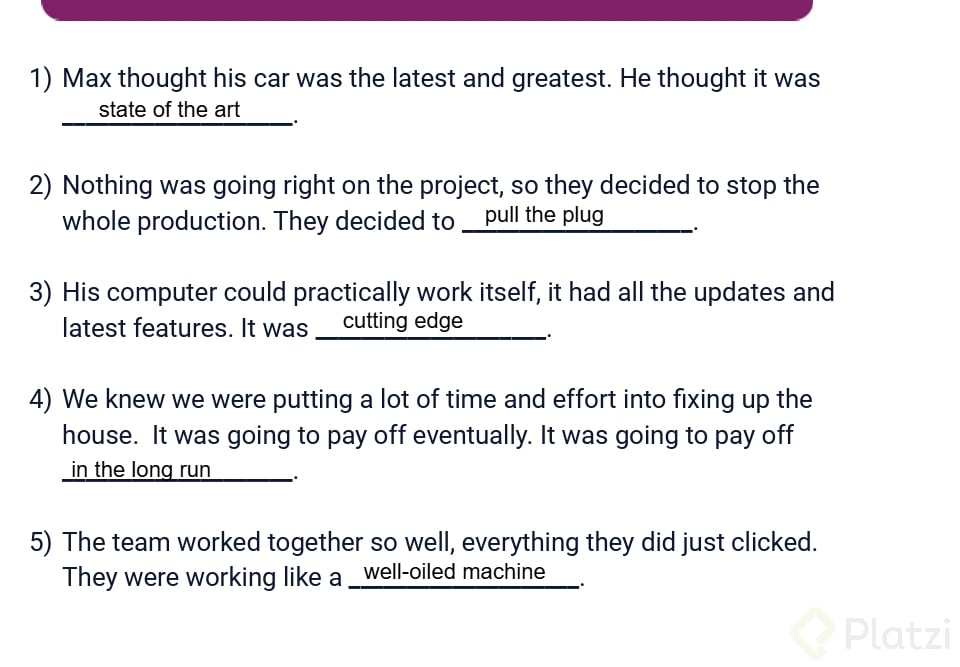
Here are four quick checks inspired by the practice exercises [2:14]:
- Pull the plug → stop the project, not start over.
- State of the art → latest technology and advancements, not simply "beautiful."
- Well-oiled machine → people working well together, not acting like mechanics.
- Cutting edge → state of the art, not just smooth-running.
If any of these tripped you up, revisit the examples above and try creating your own sentences. Writing personal examples is one of the most effective ways to make new vocabulary stick. Share your sentences in the comments and keep practicing!