Understanding how to combine sentences is one of the most important skills you can develop to make your writing clear and fluent in English. Without this ability, your ideas will feel disconnected and your writing will lack flow. Here you will learn the key structures and tools to connect your ideas effectively.
What is an independent clause and why does it matter?
An independent clause is a group of words that contains a subject, a verb, and a complete idea [0:27]. It can stand on its own as a sentence. For example:
- I drink coffee. "I" is the subject, "drink" is the verb, and the whole phrase expresses a complete thought.
- Mary and Anna study English. Two subjects, one verb, one complete idea.
Recognizing independent clauses is the foundation for building more complex sentences. Once you can identify them, you can start combining them properly.
What are the four sentence structures in English?
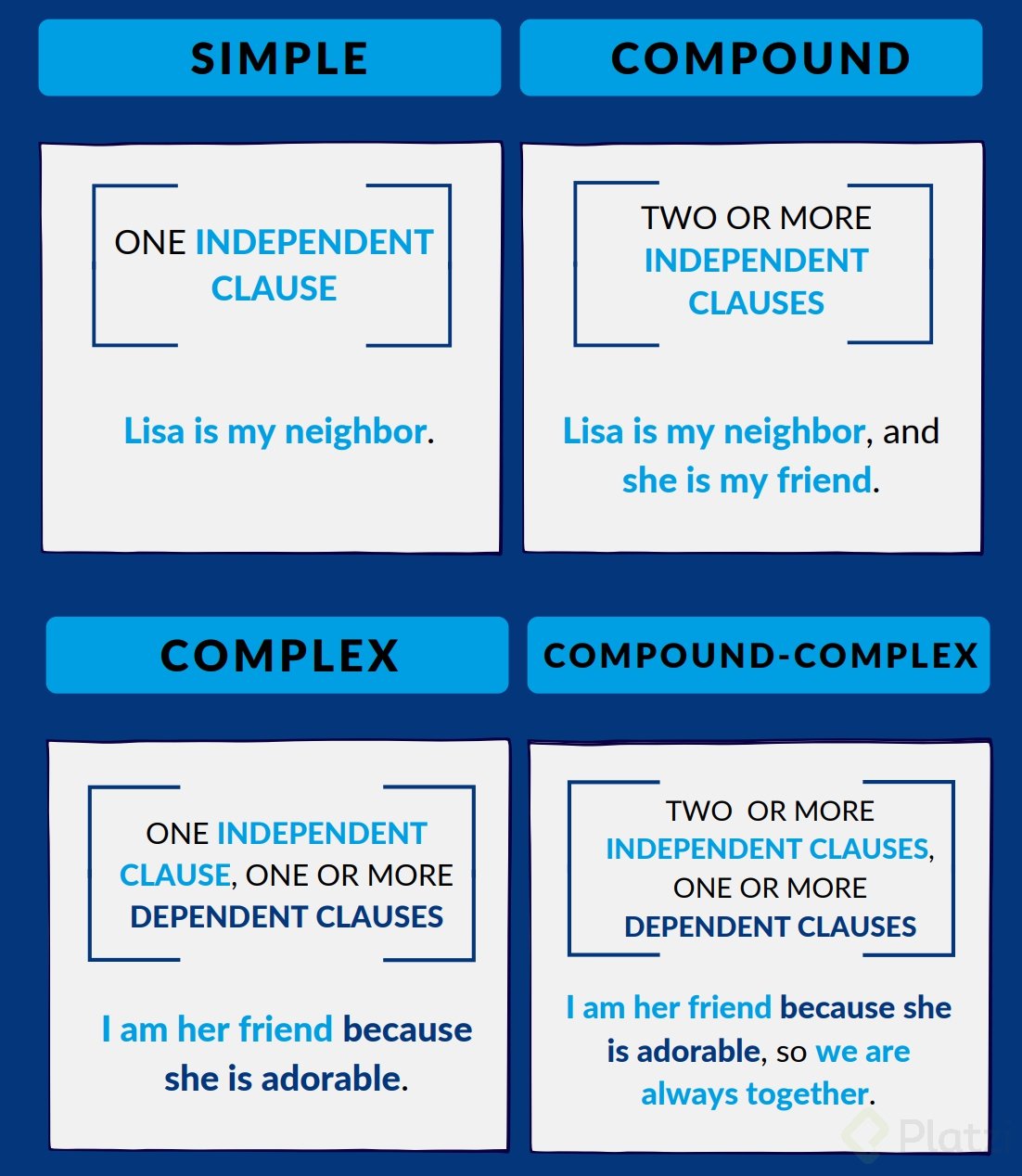
In English there are four main sentence structures [1:07]:
- Simple: contains only one independent clause.
- Compound: contains more than one independent clause combined in the same sentence.
- Complex and compound-complex are more advanced and involve dependent clauses.
For a basic level, the focus stays on simple and compound sentences. The simple structure works with a single independent clause, while the compound structure joins two or more independent clauses using specific connectors.
What is a run-on sentence?
A run-on sentence happens when two independent clauses appear in the same sentence without proper punctuation or a connector [1:30]. Consider this example:
We have a new student, he's from Italy.
This sentence has two complete ideas — "We have a new student" and "He is from Italy" — but they are not properly combined. This is a common mistake that makes writing confusing.
How can you combine independent clauses correctly?
There are three ways to fix a run-on sentence and properly combine your clauses [1:52]:
- Using a period: "We have a new student. He is from Italy."
- Using a semicolon: "We have a new student; he is from Italy."
- Using a coordinating conjunction: "We have a new student, and he is from Italy."
Each method is correct, but coordinating conjunctions make your writing sound more natural and fluent.
What are coordinating conjunctions and how do you use them?
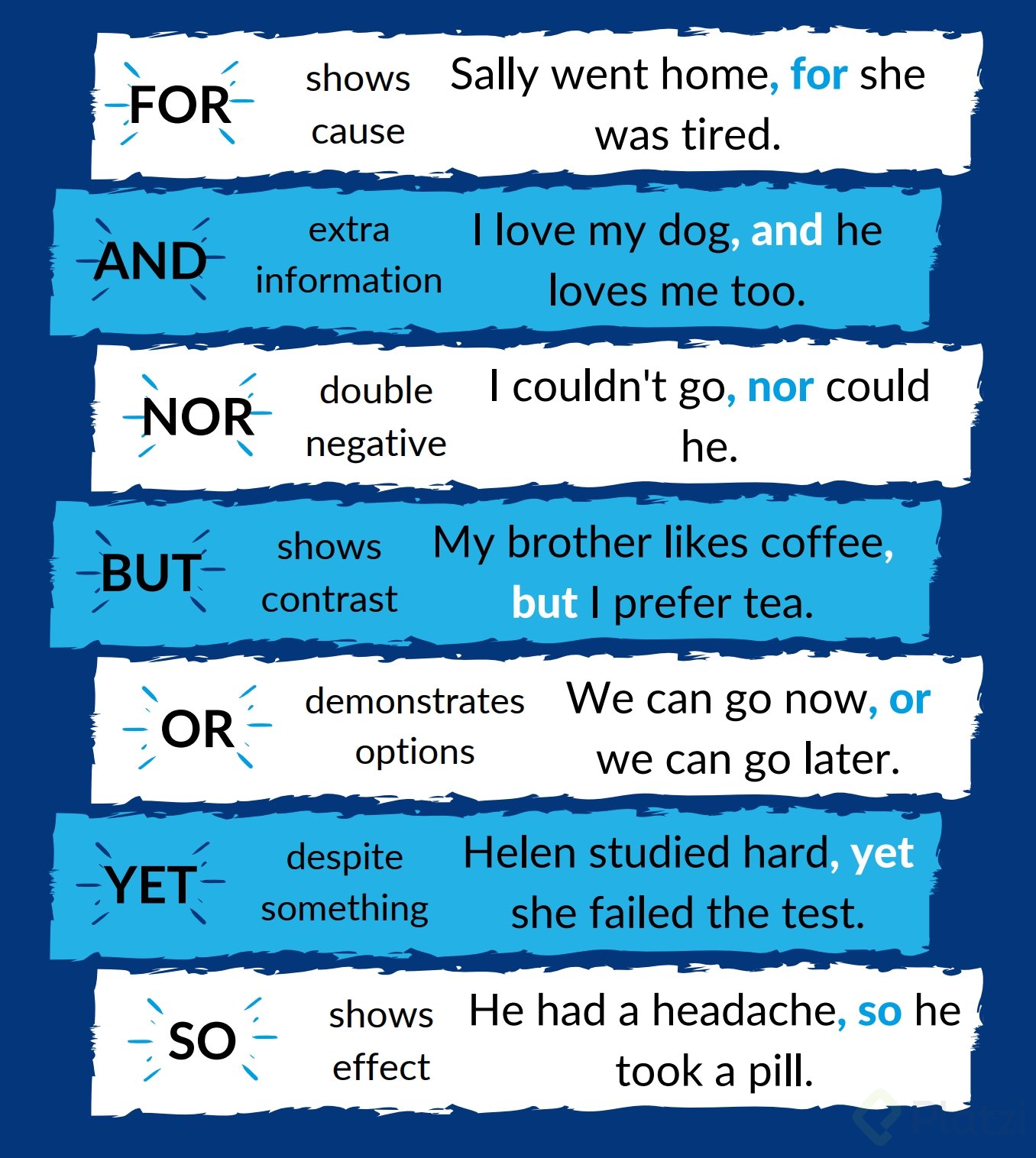
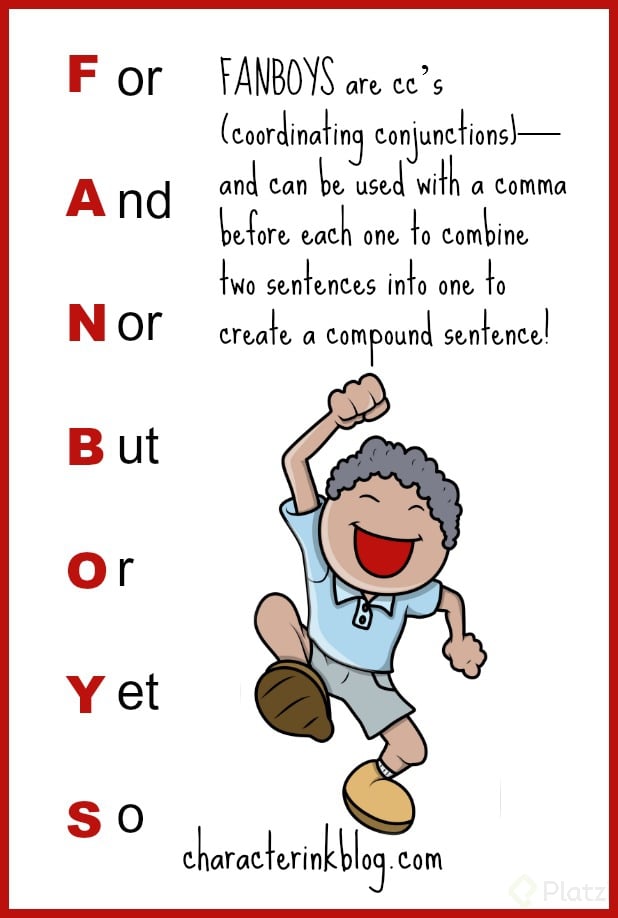
A coordinating conjunction is a word used to combine elements — in this case, independent clauses [2:24]. In English there are exactly seven coordinating conjunctions, and you can remember them with the acronym FANBOYS [2:38]:
- F — for.
- A — and.
- N — nor.
- B — but.
- O — or.
- Y — yet.
- S — so.
An essential rule to remember: always use a comma before the coordinating conjunction when you are combining two independent clauses [2:52].
How do FANBOYS work in practice?
Let's look at two practical examples from the lesson [3:02]:
Adding ideas with "and":
- Clause 1: "I live in Colombia."
- Clause 2: "You live in Mexico."
- Combined: "I live in Colombia**,** and you live in Mexico."
Here, and connects two ideas that are related and equal in importance.
Contrasting ideas with "but":
- Clause 1: "John wants to play soccer."
- Clause 2: "He is sick."
- Combined: "John wants to play soccer**,** but he is sick."
In this case, but signals a contrast — the second idea contradicts or limits the first one [3:22].
Each conjunction carries a specific meaning. "For" explains a reason, "nor" adds a negative alternative, "or" presents a choice, "yet" introduces something unexpected, and "so" shows a result. Choosing the right one makes your message precise.
Now that you understand how to identify independent clauses and combine them using periods, semicolons, and coordinating conjunctions, try writing your own compound sentences in the comments using each of the FANBOYS. Which conjunction do you find most useful?