Contenido del curso

Subjuntivo en Inglés


Características del Inglés nativo


Inglés para ocasiones especiales


Comunicación efectiva en Inglés
- 16

Clarifica información en inglés
04:20 min - 17

Frases en inglés para estimar sin saber
03:09 min - 18

"Minimal pairs" en Inglés
04:34 min - 19

Roleplay: Aclara información en Inglés
02:49 min - 20

Expresa distancia y emplea el "estilo indirecto" en Inglés
04:59 min - 21

Roleplay: Establece límites en Inglés
01:59 min - 22

Práctica de conversación en inglés (contexto profesional)
00:00 min
Inglés Avanzado

Recursos
Resumen
Understanding slang is one of the most common challenges for English learners, and also one of the hardest topics for teachers to explain. The reason is simple: slang is always evolving, and what feels current today may sound outdated in just a couple of years. So rather than memorizing a fixed list, the real skill lies in knowing where and how to find slang as it changes.
What is slang and why does it change so fast?
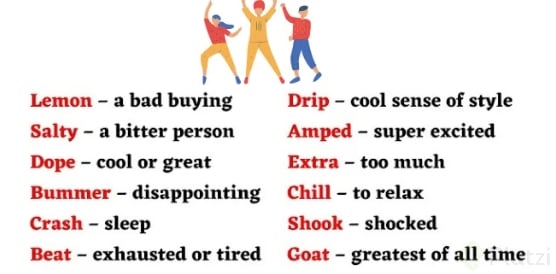
Slang refers to a group of words used in informal speech across many different cultural contexts, regions, and communities [0:12]. It is not tied to one country or one generation. Languages evolve, people evolve, and slang evolves with them. A word that was trendy five years ago might sound strange or even funny if you use it today.
Very few slang terms manage to survive more than a decade. In American English, the words dude and cool are rare examples of slang that have lasted 15, 20, or even 30 years [1:12]. In British, Canadian, and Australian English, the word mate is one of the few that has endured over time [1:27]. But these are exceptions, not the rule.
What types of slang exist?
Slang is not just one thing. There are several categories depending on where and how it is used [1:46]:
- Country-specific slang: words unique to American, British, or Australian culture.
- Internet culture slang: terms born on social media, forums, and memes.
- Particular interest groups: communities like gamers, musicians, or sports fans create their own vocabulary.
- Political slang: words used to describe certain groups, movements, or topics.
Each of these categories has its own pace of change, but all of them shift constantly depending on the year and the community.
Where can you learn slang effectively?
Instead of relying on a static word bank, the best approach is to expose yourself to real, current English [2:15]. Here are the most practical sources:
- Social media and YouTube: platforms where people speak naturally and informally.
- Urban Dictionary: a crowdsourced slang dictionary where you can look up unfamiliar words [2:34]. Keep in mind that it is not always the most accurate source — some entries may be outdated or very niche — but it is a great starting point when you hear something and think, "I do not understand what this means."
- Modern TV shows on streaming services: avoid older shows like Friends if your goal is current slang, because their language is more antiquated [3:05]. Instead, choose recently released series.
- Live streaming platforms like Twitch or YouTube Live: watching young people interact in real time lets you see exactly what slang is being used right now [3:17].
Why do TV shows and streams become outdated too?
The young people creating today's slang will no longer be the trendsetters in three or four years [3:30]. New generations bring new words, and the cycle keeps going. To stay with the times, you need to keep consuming fresh content regularly. A list of words recorded today would likely lose relevance by the time you review it months later.
This is exactly why learning slang is less about memorization and more about building the habit of observing how native speakers communicate in informal settings.
How to practice slang on your own
A useful exercise is to actively look up slang terms you encounter while scrolling through social media, watching streams, or reading informal articles [3:55]. Write them down, check their meaning on Urban Dictionary, and try to notice how often they appear in different contexts. Over time, you will develop an instinct for which words are widely used and which ones are fading out.
What is your favorite slang term right now? Share it in the comments and explain what it means — that way, everyone learns something new.