Vocabulario en inglés para empacar maletas
Contenido del curso

Preparación de un viaje


Recorriendo una nueva ciudad



Tradiciones y costumbres


Inglés para Viajes de Turismo

Recursos
Resumen
Preparing a suitcase in English is the perfect excuse to practice travel vocabulary, learn how to describe clothes by weather, and review the difference between I already packed and I must bring. If you are learning English and want to talk about your next trip with confidence, this is the kind of practical vocabulary that sticks because you can use it the moment you open your suitcase.
¿Qué ropa empacar según el clima del destino?
When you pack for a city with mixed weather, you need clothes for both warm and cold moments. Bogotá is a great example: sunny mornings and cold evenings in the same day.
- T-shirts for the sunny mornings.
- A jacket and a sweater for the cold evenings.
- Sneakers, because you will be walking a lot.
Notice how each clothing item connects to a reason. That is the natural way to use travel vocabulary in English: pair the item with the weather or the activity. It also helps you remember the words faster, because your brain stores them as small stories instead of isolated nouns.
What does toiletries mean in English? Toiletries are the personal care products you take when you travel, like shampoo, conditioner, and body wash. They usually go inside your suitcase in a small bag.
¿Cómo describir los artículos esenciales para un viaje en inglés?
Beyond clothes, there are smaller items that protect you from the destination's conditions. In a high altitude city, the sun hits harder, so sun protection becomes essential.
For a place like Bogotá, the must have items include a baseball cap, sunglasses, and plenty of sunscreen to avoid a sunburn. A toothbrush and some makeup round out the personal care list. Each of these words is high frequency vocabulary you will hear in airports, hotels, and pharmacies, so learning them in context pays off quickly.
And here is something interesting about the verb to pack. You can say I packed my sneakers when the action is already done, or I'll bring my baseball cap when you are still planning. Both verbs talk about putting things in your suitcase, but the tense changes the moment you are describing.
What is the difference between I packed and I'll bring? I packed is past tense, used for what you already put in the suitcase. I'll bring is future, used for what you still plan to take with you.
¿Qué documentos y objetos personales no pueden faltar?
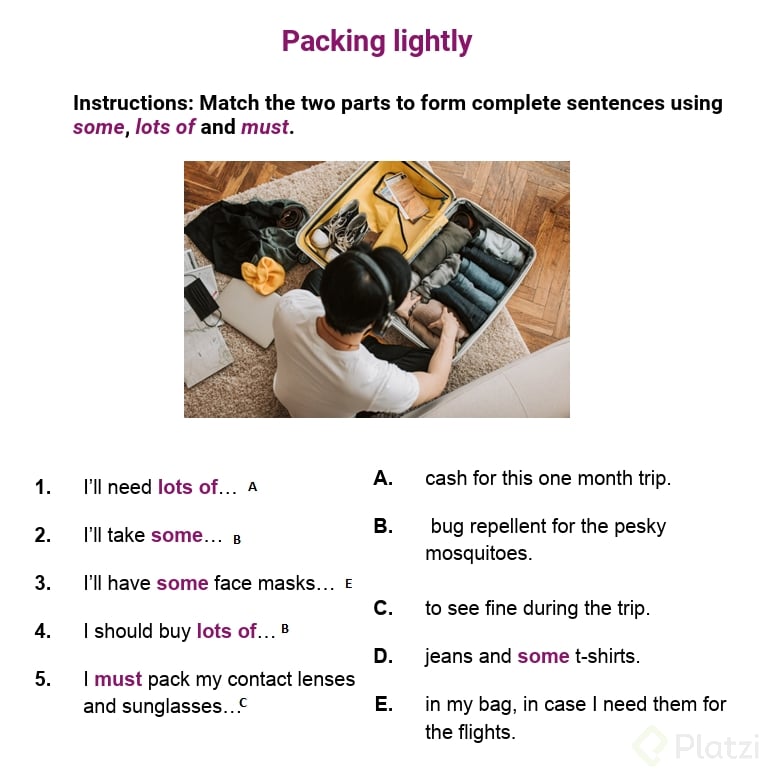
There is a category of items that goes beyond comfort: the things you legally and practically cannot travel without. In English, these are often introduced with the modal must, which expresses obligation.
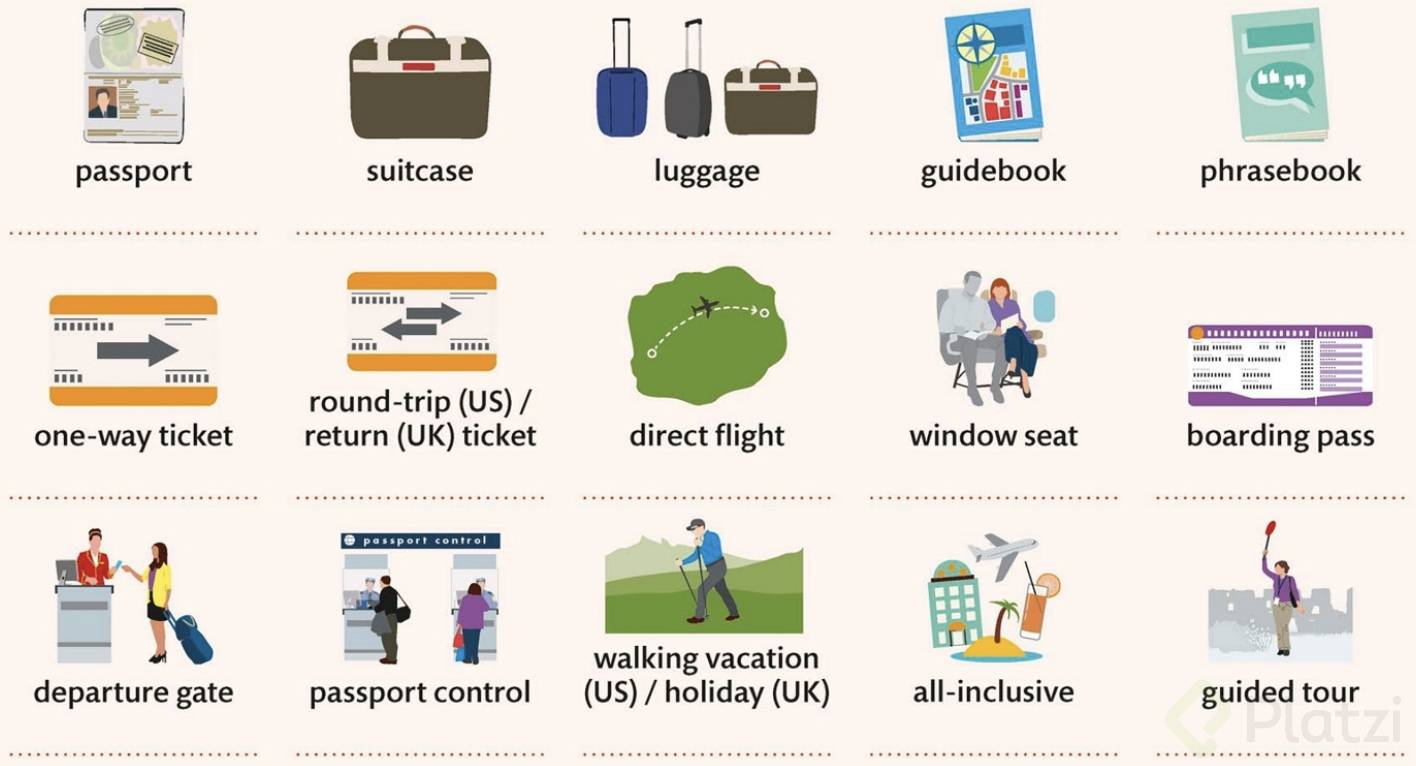
- Passport, the document that proves your identity abroad.
- Phone and phone charger, to stay connected.
- Wallet with credit cards and ID.
- Some local currency, like Colombian pesos if you travel to Colombia.
The phrase I must have my passport is stronger than I want to bring my passport. Use must when something is non negotiable, like documents or money. Use want to when it is a personal preference, like makeup or a specific outfit. This small distinction makes your English sound more precise and natural.
¿Cómo cerrar una conversación pidiendo opinión en inglés?
A nice conversational habit is ending with a question that invites the other person to participate. Phrases like What do you think? or Is there something else I need to pack? turn a monologue into a dialogue.
This works in real life and on social media. When you finish describing your suitcase, ask your audience: Let me know in the comments. It is a simple, friendly way to keep the conversation going and practice your listening skills with the answers you receive.
Ahora te toca a ti: ¿qué llevarías en tu maleta para un viaje a Bogotá? Cuéntalo en inglés en los comentarios.