Identificación de Sustantivos Abstractos y Concretos
Curso de Inglés Intermedio B1: Adjetivos y Preguntas Indirectas
Contenido del curso

¿Cómo se utiliza la voz pasiva?


¿Cuándo se utilizan las preguntas indirectas?


Sugerencias, inferencias y suposiciones en inglés.


¿Cómo puedo formar adjetivos y utilizarlos en oraciones?
- 15

Creación de Adjetivos a partir de Sustantivos y Verbos con Sufijos
05:06 min - 16

Orden correcto de adjetivos en inglés
03:49 min - 17

Identificación de Sustantivos Abstractos y Concretos
Viendo ahora - 18

Gerúndio ou infinitivo: quando usar cada um
05:20 min - 19

Superlativos y presente perfecto en español
04:58 min - 20

Cómo describir lugares con gerundios y adjetivos
00:42 min - 21

Práctica de conversación en inglés para describir y opinar
00:00 min
Consolida tus habilidades
- 22
Autoevaluación del curso
- 23

Adjetivos en Inglés y Preguntas Indirectas: Curso Intermedio
01:14 min
Recursos
Resumen
Understanding the difference between abstract nouns and regular nouns is more common in everyday English than you might expect. This concept helps you recognize how the language categorizes ideas, emotions, and things you cannot physically touch or see.
What are abstract nouns and why do they matter?
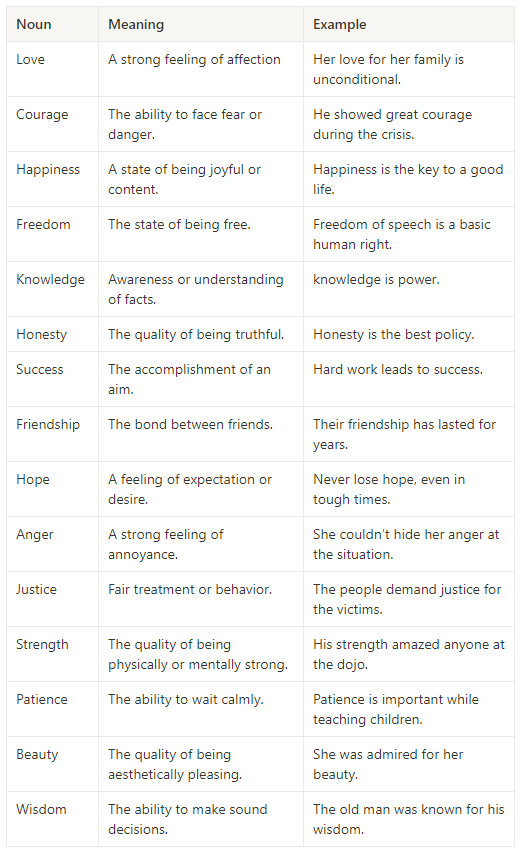
An abstract noun is a word that represents something intangible — something you cannot touch, feel, or physically interact with. It refers to ideas, concepts, emotions, or qualities rather than concrete objects or people. A clear example is the word happiness [00:18]. While happy is an adjective, happiness functions as a noun that names an idea, not a physical thing.
This distinction is essential because English classifies nouns into two broad groups:
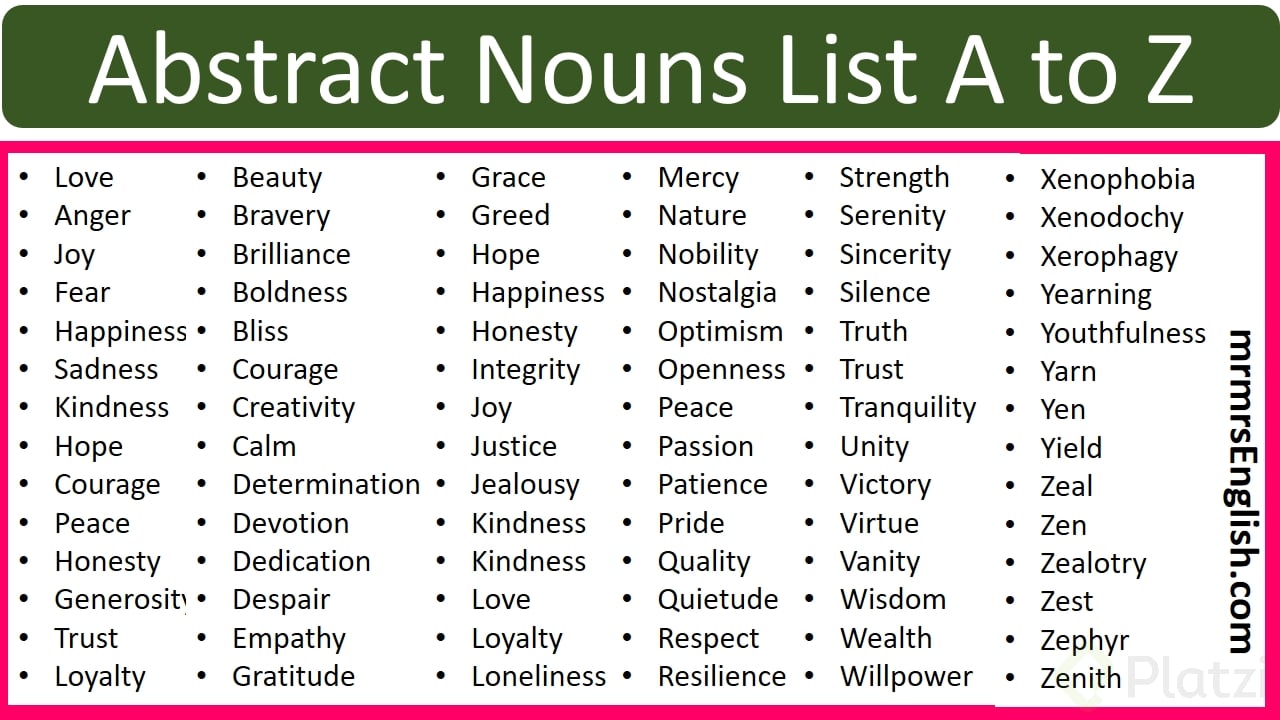
- Abstract nouns: represent intangible concepts like fiction, timing, happiness, or freedom.
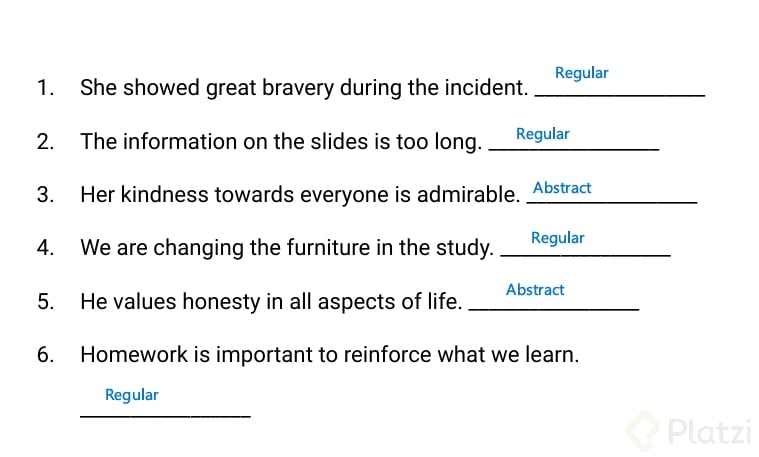
- Regular (concrete) nouns: represent tangible things you can see or touch like money or teachers [01:10].
How can you tell if a noun is abstract or regular?
The simplest test is to ask yourself: can I touch it or physically interact with it? If the answer is no, you are likely dealing with an abstract noun. Consider these examples from the lesson [00:55]:
- Fiction — you cannot hold fiction in your hands; it is an idea. Abstract noun.
- Timing — you cannot physically grab timing; it is a concept. Abstract noun.
- Money — you can hold coins or bills. Regular noun.
- Teachers — you can see and interact with them. Regular noun.
This quick mental check works in most situations and helps you classify nouns accurately.
Why should you practice identifying abstract nouns?
Recognizing abstract nouns improves both your reading comprehension and your writing skills in English. Many academic and professional texts rely heavily on abstract nouns like knowledge, justice, or creativity. When you can spot them, you process meaning faster and express complex ideas with greater precision.
To strengthen this skill, try reviewing a list of nouns and sorting them into abstract or regular categories. Pay attention to words ending in common abstract noun suffixes like -ness, -tion, -ment, or -ity — these endings often signal that a word represents an intangible concept.
What abstract nouns do you use most often in your daily conversations? Share your examples and keep practicing.
Identificación de Sustantivos Abstractos y Concretos