Contenido del curso

Talking about life and technology
- 2

Vocabulario y Expresiones de Moda Cotidiana en Inglés
09:10 min - 3

Descripción de Arte: Vocabulario y Técnicas
05:18 min - 4

Práctica de Comprensión Auditiva en Inglés: Análisis de Conversaciones
05:06 min - 5

Vocabulario en Inglés sobre Tecnología Avanzada
04:55 min - 6

Cómo dar presentaciones efectivas
08:07 min - 7

Vocabulario esencial de internet y redes sociales
06:24 min - 8

Comprensión Auditiva en Inglés: Diálogo en Fiesta de Año Nuevo
04:00 min - 9

Práctica de inglés conversacional cotidiano
00:00 min
Law and order
- 10

Vocabulario Legal en Inglés: Juicios y Tribunales
Viendo ahora - 11

Modal Verbs en Conversaciones Laborales
05:43 min - 12

Uso de los Verbos Modales en Diferentes Contextos
06:32 min - 13

Vocabulario y Expresiones de Derecho Contractual en Inglés
07:27 min - 14

Tipos de Abogados y Sus Especialidades en Derecho
05:09 min - 15

Idiomas en el ámbito legal: significados y ejemplos
05:51 min - 16

Cuestionario Interactivo: Repaso de Términos Legales en Inglés
03:11 min
Learning financial English
- 17

Vocabulario Bancario y Expresiones en Inglés Financiero
08:04 min - 18

Negociación en Inglés: Claridad y Condiciones en Propuestas
07:35 min - 19

Negociación en inglés: manejo de situaciones difíciles
08:57 min - 20

Inglés Financiero para Negocios: Vocabulario y Expresiones Clave
05:47 min - 21

Role Play Bancario: Apertura y Uso de Cuentas
08:23 min - 22
Práctica de inglés para negociación comercial
00:00 min
See you next time!

Vocabulario Legal en Inglés: Juicios y Tribunales
Resumen
Understanding how to talk about law and order in English opens the door to reading news, following legal dramas, and holding professional conversations with confidence. From the roles inside a courtroom to the stages of a legal process, mastering this vocabulary set is a practical step for any English learner ready to expand beyond everyday topics.
What is a trial and what types exist?
A trial is the formal process of examining evidence and deciding whether someone has broken the law [0:52]. It takes place inside a courtroom, and we say the trial begins when a case is submitted to the court and proceedings start.
There are four main types of trials [1:17]:
- Civil: resolves disputes among people in a society.
- Criminal: addresses accusations, usually when the government charges a person with a criminal activity.
- Juvenile: involves a person who is under the minimum legal age to be considered an adult.
- Traffic: covers violations that happen on the road, such as speeding in a residential area.
When someone says a person is on trial, it means that individual is currently in court for allegedly breaking the law [2:22]. A mistrial, on the other hand, occurs when a court case must be stopped because the crime cannot be proven [2:37]. Before everything formally starts, a pre-trial hearing establishes the procedures and processes for how the case will be handled [3:00].
Who are the key people inside a courtroom?
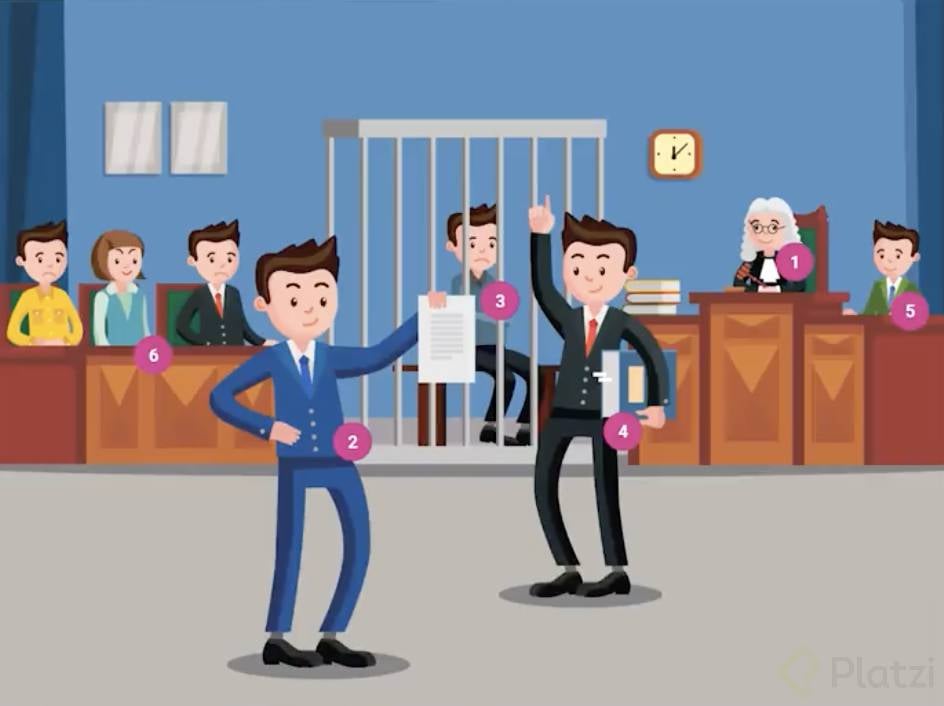
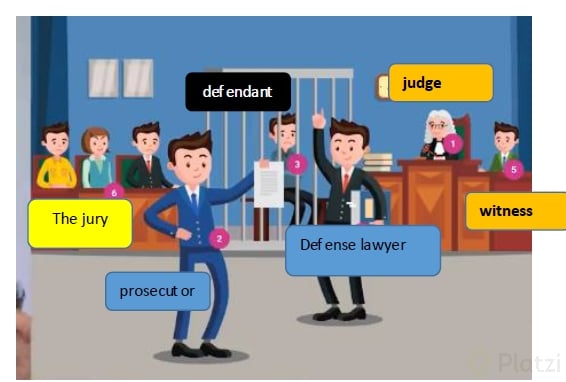
Every courtroom has clearly defined roles, and knowing them helps you follow any legal story in English.
- Judge: the most important person in the courtroom, in charge of the entire trial [3:20]. The judge can find you guilty — meaning your crime is proven — or innocent, meaning it is shown you have not broken any law. A useful tip: always address the judge as "Your Honor" [3:55].
- Jury: a group of usually 12 members of the public chosen to hear the case and decide the outcome [4:08]. In countries like the United States, legal citizens can be summoned to serve, a responsibility known as jury duty [4:23].
- Defendant: the person accused of breaking the law [4:40].
- Defense lawyer: the attorney representing the defendant in court [5:00].
- Prosecutor: the lawyer conducting the case against the defendant [5:30].
What are charges and a plea?
Charges are the list of crimes the defendant is accused of committing; there can be more than one [4:52]. A plea is the initial statement made by the defendant or the defense lawyer declaring whether the accused is innocent or guilty [5:10].
What happens during a court hearing?
The entire process of carrying out a case in a court of law is called a court hearing [5:45]. During this process, several elements come into play:
- Evidence: the set of facts related to the case used to prove whether a crime was committed [5:55].
- Witness: a person who saw or has knowledge of the crime in question [6:07].
- Testify: the act of providing information by the witness, and the formal statement itself is called testimony [6:15].
What happens at the end of a trial?
Toward the end of proceedings, the jury retires to deliberate [6:30]. This means the jury members leave the courtroom and enter a designated room to discuss the case and reach a decision.
That final decision is the verdict [6:42]. Once the verdict is delivered, two outcomes follow:
- To convict: the judge or jury formally declares that the defendant is guilty of the crime [6:55].
- Sentence: the punishment the defendant receives, which can range from fines to years in jail or even life in prison [7:05].
Practicing these terms with real headlines — like a truck driver caught speeding or a businessman accused of running a scam — makes the vocabulary stick. Try identifying each courtroom role and legal stage the next time you read a news article in English, and share your sentences in the comments to keep building fluency.