







Maria Alejandra Liscano
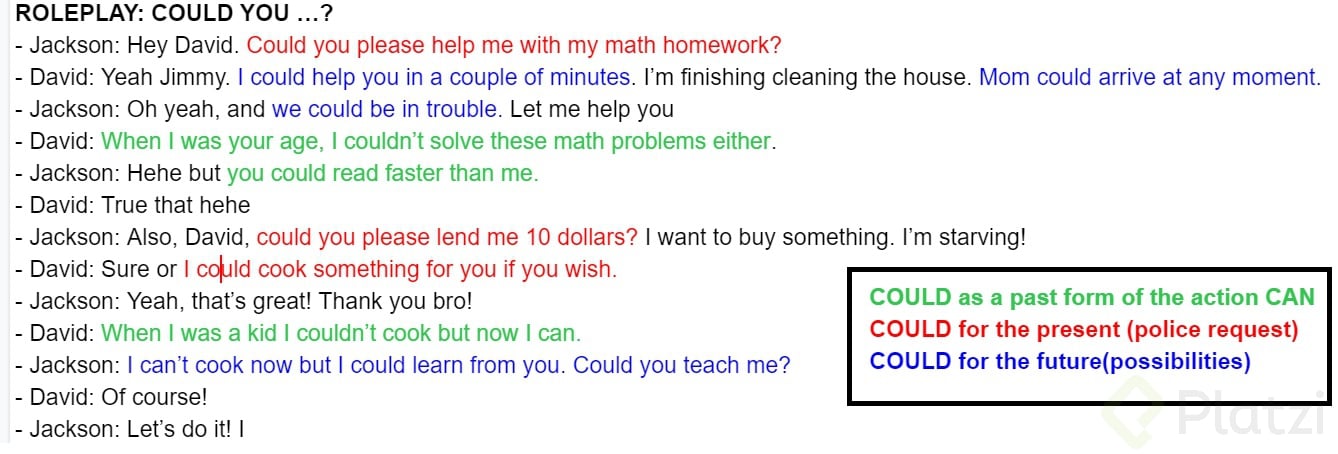
Could is the past form of "can" "Could" for polite requests and suggestions
- Polite requests
- Suggestions
We can also use "might" and "may"

Josué Jeremías Sánchez Soriano

Maydy Julisa Nicté
nice Ale
El verbo modal could es una de esas piezas del inglés que confunde porque cambia de intención según el tiempo verbal. Aprenderás a usar could para hablar de habilidades pasadas, hacer peticiones corteses en el presente y expresar posibilidades a futuro, todo con ejemplos prácticos sacados de un role play real entre dos hermanos.
¿Qué es could y por qué tiene tantos usos?
Could funciona como la forma pasada de can, pero también se cuela en el presente y en el futuro con intenciones distintas. Esa flexibilidad es justo lo que lo hace útil… y a veces tramposo.
La clave está en leer el contexto. No es lo mismo decir I could swim when I was five que Could you pass me the salt? o Rachel could be the new manager. Cada oración pertenece a un tiempo distinto y comunica una intención diferente.
¿Could siempre significa pasado? No. Could es la forma pasada de can, pero también se usa en presente para peticiones corteses y sugerencias, y en futuro para hablar de posibilidades. El tiempo lo define el contexto, no la palabra.
¿Cómo uso could para hablar de habilidades en el pasado?
Cuando could funciona como pasado de can, expresa una habilidad o capacidad que tenías (o no tenías) antes. Es la forma más directa de usarlo.
En el role play, David le dice a su hermano menor: When I was your age, I couldn't solve these math problems either. Ahí couldn't señala una incapacidad concreta en su infancia. Otros ejemplos del mismo tipo:
Fíjate en el patrón. Siempre hay una referencia temporal pasada que ancla la oración: when I was a kid, 10 years ago, back then.
¿Cuándo debo usar could en el presente?
En el presente, could aparece para suavizar lo que dices. Tiene dos funciones principales: peticiones corteses y sugerencias.
¿Cómo hago una petición cortés con could?
Cambiar can por could hace que tu petición suene más formal y educada. Ambas son correctas, pero could baja el tono y suma cortesía.
En el role play, Jimmy le pide ayuda a su hermano así: Hey, David, could you please help me with my math homework?. Y más adelante: Could you please lend me $10?. Compara:
La estructura es simple: could + sujeto + verbo en infinitivo sin to.
¿Y para dar sugerencias?
Aquí could propone una opción sin imponerla. Es perfecto cuando quieres recomendar algo sin sonar mandón.
David lo usa cuando dice: I could cook something for you if you wish. No está obligando, está ofreciendo. Otro ejemplo clásico es You could ask your teacher for help: una sugerencia abierta, no una orden.
¿Cuál es la diferencia entre can y could en una petición? Las dos funcionan, pero could es más cortés y formal. Úsalo con desconocidos, en contextos profesionales o cuando quieras sonar más amable.
¿Cómo expreso posibilidades futuras con could?
Para el futuro, could se vuelve sinónimo de might y may. Sirve para especular, plantear escenarios posibles que no son seguros.
En el role play, Jimmy advierte: Mom could arrive at any moment, y David responde: And we could be in trouble. Ninguno está afirmando algo seguro; ambos hablan de posibilidades reales pero inciertas. Otros ejemplos del mismo tipo:
La diferencia con el futuro definido (will) es que could nunca compromete. Solo abre la puerta a que algo pase.
¿Qué ejemplos del role play debo identificar?
El diálogo entre David y Jimmy mezcla los tres usos en menos de un minuto. Vale la pena reconocer cada intención:
Un detalle interesante: Jimmy le dice a David but you could read faster than me. Ahí could compara una habilidad pasada entre dos personas, manteniendo la misma lógica del primer uso.
¿Cómo practico could de forma efectiva?
La mejor manera es escribir tus propios ejemplos en los tres tiempos. Piensa en algo que no podías hacer de niño y que ahora sí, en una petición educada que harías hoy y en una posibilidad que ves en tu futuro cercano.
Escribe tres oraciones, una por cada uso, y compártelas en los comentarios para comparar con las de otros estudiantes. ¿Cuál de los tres usos de could se te complica más?
Maria Alejandra Liscano
Could is the past form of "can" "Could" for polite requests and suggestions
We can also use "might" and "may"
Josué Jeremías Sánchez Soriano
Maydy Julisa Nicté
nice Ale

Gabriel Obregón

Maria Fernanda Álvarez
Excellent!

Emerson Javier García Mendoza
Exclenteee!!

Norma Natalia Moreno Espinoza
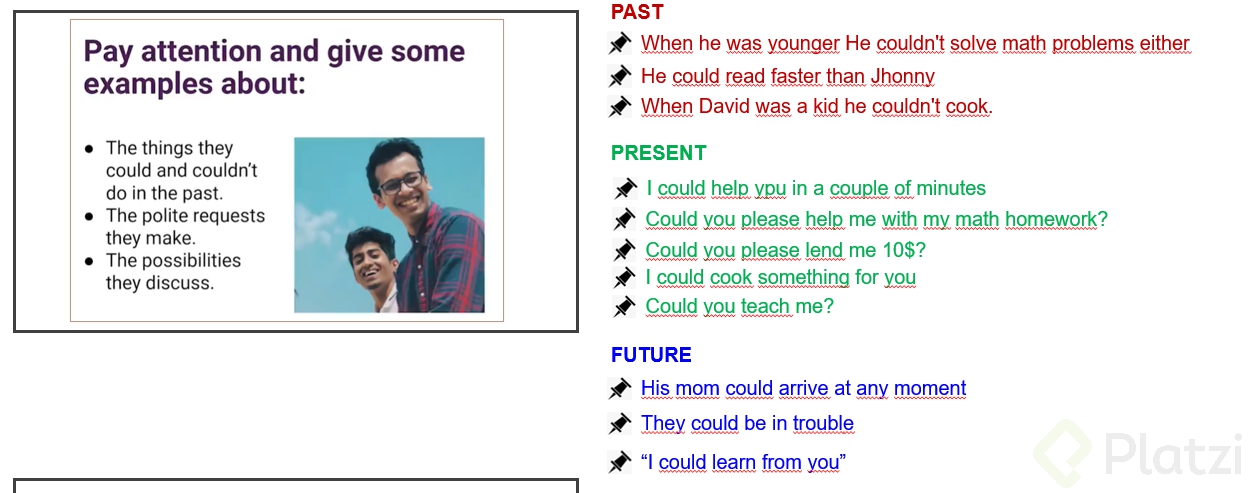
The things that they could and couldn’t do in the past I couldn’t solve these maths problems either. You could read faster than me When I was a kid I couldn’t cook.
The polite requests they make Could you please help me with my math homework? Could you please lend me 10 dollars? Could you teach me?
The possibilities they discuss. I could help you in a couple of minutes. Mom could arrive at any moment. We could be in trouble. I could cook something for you if you wish. I could learn from you.

Luis Olivares
The things the could and couldnt in the past →
The polites request that they make →
The possibilities they discuss →

Juan Camilo Maldonado Perez
Thanks bro, it's very useful.

Yael Martínez
The things they could and couldn’t do in the past: - David couldn’t solve those problems either - David could read faster - David couldn't cook when he was a kid The polite request the make: - If he could help him with his math homework - If he could lend him 10 dollars - If he could teach him to cook The possibilities they discuss: - Mom could arrive in any moment and they could be in trouble

Yeison Betancourt
Time to practice!
The things they could and couldn't do in the past
The polite request they make
The posibilities they discuss

Carlos Miguel Colque Montoya
Here my answers: The hings they could and couldn't do in the past:
The polite request they make:
The possibilities they discuss:
Norma Natalia Moreno Espinoza
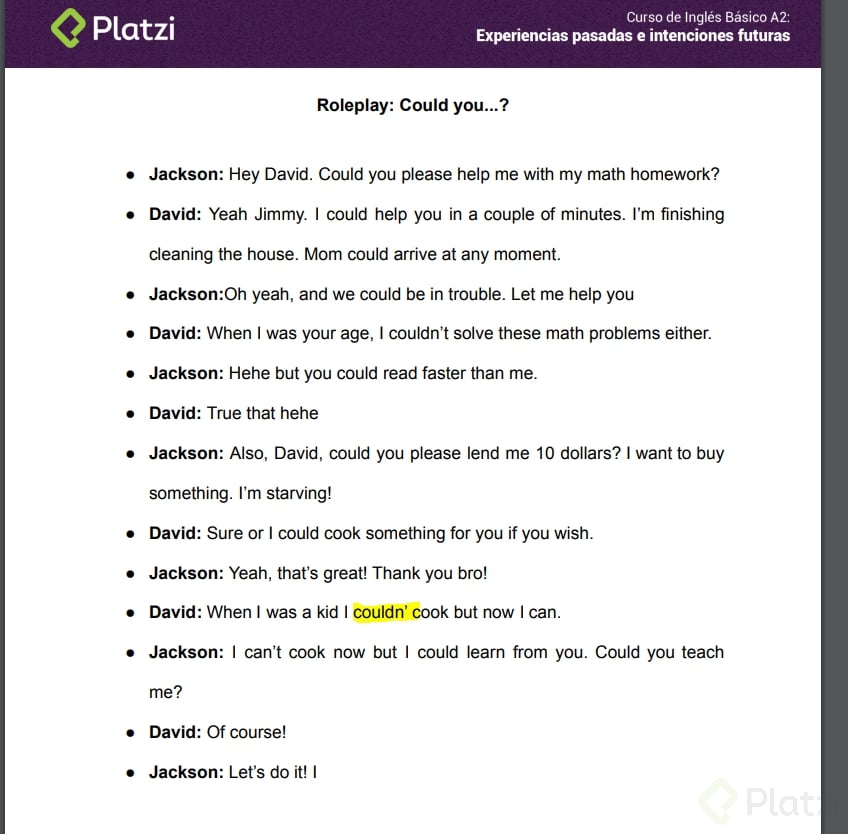
In this part of the class resources (pdf), It is missing a "t" or could we say couldn't without t?

Eloy Chávez Dev
Thanks for reporting it, we'll fix it soon :)
Norma Natalia Moreno Espinoza
Thank you, could has the t now :)

Raúl Adolfo Sánchez Rodríguez

Norma Yamileth Diaz Escobar
When I was a kid I couldn't cook but now I'm trying to learn. Could you bring me some things from the store, please? I could you a great professional in a couple of years

Fredy Frasser
Things they can do in the present that they couldn't do in the past: David couldn't solve math problems when he was young either, but now he can solve them. David could read fast. Requests and suggestions they make: If David could lend Jackson $10. If David could teach Jackson how to cook. The possibilities they are discussing. Both could be in trouble if they don’t do the dishes.

Wendy Marisol Ordoñez Martínez
"Could" for polite requests and suggestions
Polite requests
Suggestions

Víctor Miguel Rodríguez González
Could you please help me with my homework? (is a polite request)
I could help you in a couple of minutes. (is an answer of the last sentence)
Mom could arrived at any moment ("could" be used like might/can/may in precent)
We could be trouble. ("could" be used for express something possible in future).
I couldn´t solve these math problemas either. ("could" be used for express "can" but in past)
But you could read faster than me ("could" be used for express "can" but in past).
Also, David, could you please lend me $10? ("could" be used for express a polite form of "can" in a question).
I could cook something for you if you wish ("could" be used for express a polite form of "can").
When I was a kid, I couldn´t cook, but now I can. ("could" be used for express "can" but in past).
But I could learn from you. ("could" be used for express a polite form of "can").
Could you teach me well? ("could" be used for express a polite form of "can" in a question).
Eliseo Cruz Navarro
i couldn´t speak very well when i was a kid.
could you do something for me?
I f you want we could play together a videogame.
he is sad because he couldn´t solve the problem.

Sindy Barragán
Could you please help me with my math homework?
I couldn’t solve the math problems either
We could be in trouble, let me help you
Could you please lend me ten dollars?
I could cook something for you
When I was a kid I couldn’t cook, but now I can
I could learn from you; can you teach me?

RUNA FUCHIGAMI
could- might- may

Jason Martinez
Examples:

Ivan Andres Suarez Alfonso
When I was a kid I couldn’t drive a motorcycle but now I can.
Eight years ago I couldn’t exercise.
Could you bring me that key?
Could you speak more slowy?
You could be a big manager in a couple years
I could be the best guitar teacher

Saul Alberto Monroy Beltran
Hi everybody!
In the past:
The polite requests:
The possibilities: