Build a B2B Proposal Generator with AI
Contenido del curso


Prototipado con IA


Adquisición
- 7

Creación de contenido visual con IA en diferentes canales
09:37 min - 8

Enriquecimiento de leads B2B con IA
12:27 min - 9

Build a B2B Proposal Generator with AI
Viendo ahora - 10

Programmatic SEO Without Getting Penalized
07:43 min - 11

SEO programático aplicado
16:33 min - 12

Crea y lanza mini-productos de IA en tu web
10:44 min
Agentes de Growth


Build a B2B Proposal Generator with AI
Resumen
B2B sales teams lose hours crafting personalized proposals after every client call. Building an AI proposal generator with Lovable and Gamma cuts that time, hyperpersonalizes each pitch, and helps you close deals faster, especially when buyers are ready to decide in two weeks instead of three months.
Why does an AI proposal generator move the needle in B2B sales?
The original insight came from a real team friction: reps were spending more time formatting decks than chasing better leads or following up. Some clients have sales cycles as short as two weeks, while the average sits around three months. If you take days to send a proposal, you can lose the deals that were ready to move fast [1:02].
The growth lever here is acquisition, right at the lead-to-customer stage. The metrics you impact are proposal-to-customer conversion rate and deal velocity. Both directly tied to revenue.
What is a growth lever in B2B sales? It is the specific stage of the funnel where you focus your experiments. In this case, acquisition, because the proposal is what turns a lead into a paying customer.
How do you scope an experiment with appetite and constraints?
Before touching any tool, define the shape of the bet. The appetite was two weeks for a first version, since the goal was to validate whether the idea has real potential, this is experimental work [2:10].
The constraints kept the scope honest:
- No AI chatbot inside the proposal to answer client questions in this phase.
- The output is just the generated presentation, nothing more.
- Execution stays inside the growth team using AI, no developers involved.
- The team owns the full process from ideation to prototype.
This framing matters because experimental work needs tight boundaries. Otherwise you build forever and learn nothing.
Which tools connect Lovable and Gamma through an API?
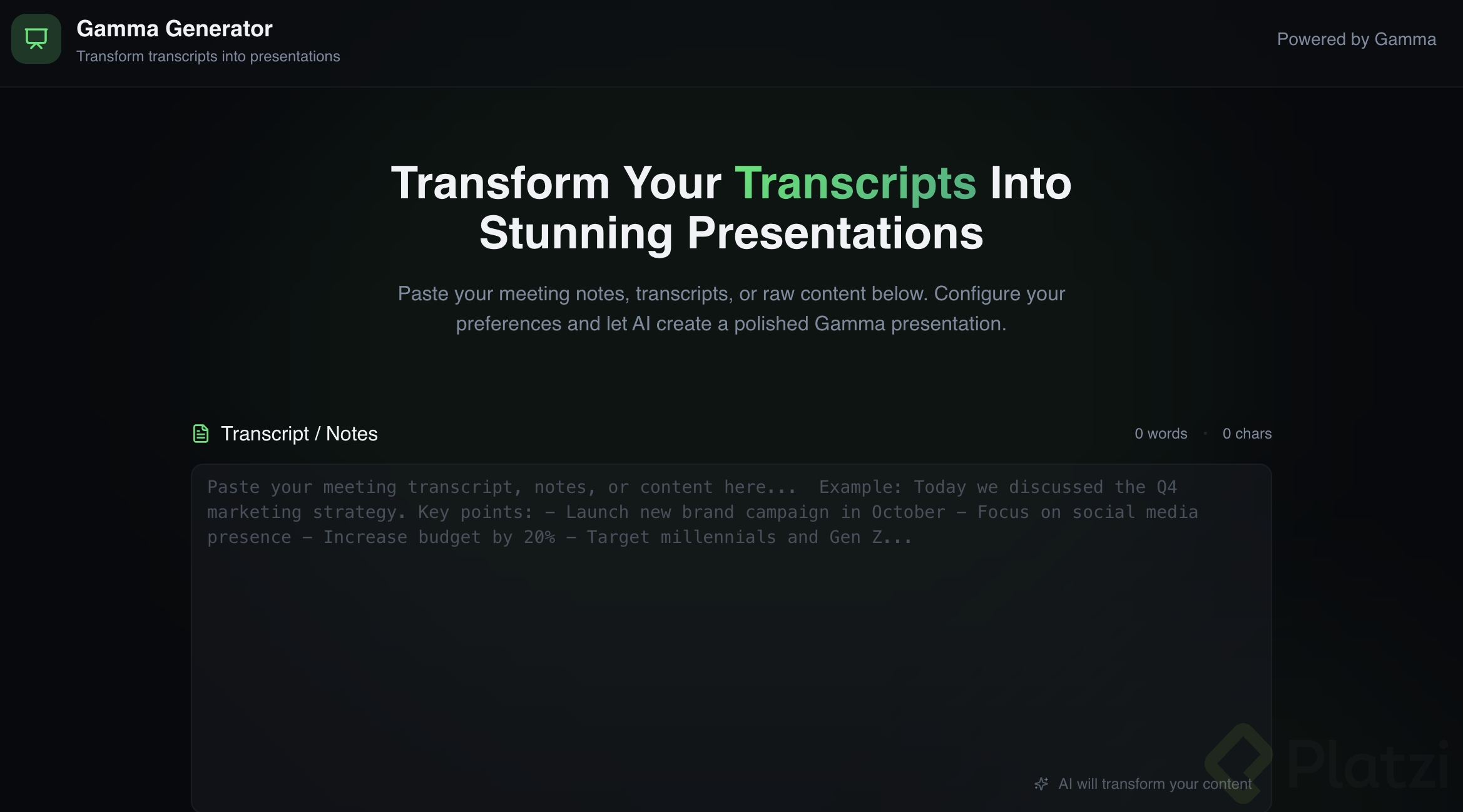
The stack is simple: Lovable for prototyping the interface and Gamma, an AI platform that creates documents, pages, and presentations, for the final output. The bridge between them is an API [3:15].
An API, or Application Programming Interface, is the structured way two platforms talk to each other. Developer teams built APIs precisely so different tools could speak the same language. It sounds technical, but in practice you only need one thing: the API key, a unique code that authenticates your account. Lovable handles the rest.
What is an API key? It is a secret code that identifies you when one tool calls another. Treat it like a password, if someone else gets it, they can use your account and your paid resources.
How should I read API documentation before prompting?
Before building, read the docs or ask Lovable to read them for you. The first attempt at pasting the Gamma link gave a generic summary. Pointing Lovable to the specific section about document generation unlocked a real technical analysis and concrete build options like Document Generator, Social Post Creator, and Content Automation Hub [4:30].
The lesson: feed the AI the exact piece of documentation that matters, not just the homepage.
Why does the same prompt give different results twice?
Generative AI is non-deterministic. The same prompt will not return the same output twice, and you can see it clearly when you run the same short instruction across two sessions [5:45].
In one version, Lovable built an interface with an AI assistant and structured slide generation. In another, it produced the proposal as hypertext with editing options for tone, pricing, and length, but without any API connection. Same input, different outcomes.
The takeaway is direct: the more specific your prompt, the more reliable the result. Spell out the functionalities you want, the step-by-step flow, and the expected output. Open-ended prompts produce open-ended surprises.
How do I write a better prompt for Lovable?
A shortcut that works well: ask ChatGPT or Claude to read the API documentation and write the Lovable prompt for you. You give it the goal, for example, create a presentation generator from a transcript using the Gamma API, and it returns a structured prompt with the final result clearly defined.
Write prompts in English when possible. These tools were trained mostly on English, and responses tend to be sharper. If you are not comfortable, draft in Spanish and translate before pasting.
And if you fall into a loop where nothing works, do not keep patching. Start a new file from zero, applying what you learned. Iteration is faster than fighting a broken context.
How do I generate the API key in Gamma and connect it?
Go to gamma.app, create an account if you do not have one, and head to Settings and members, then API Keys [7:50]. Note that API access lives behind paid plans, though Gamma offers a premium trial you can use to test.
Create the key, copy it, and paste it directly into Lovable when it asks. Never share API keys publicly, anyone who gets one can spend your credits or create content under your name on platforms like OpenAI or Claude.
Once the key is connected, Lovable has what it needs to push transcripts to Gamma and pull back generated presentations.
What does the first AI generated proposal actually look like?
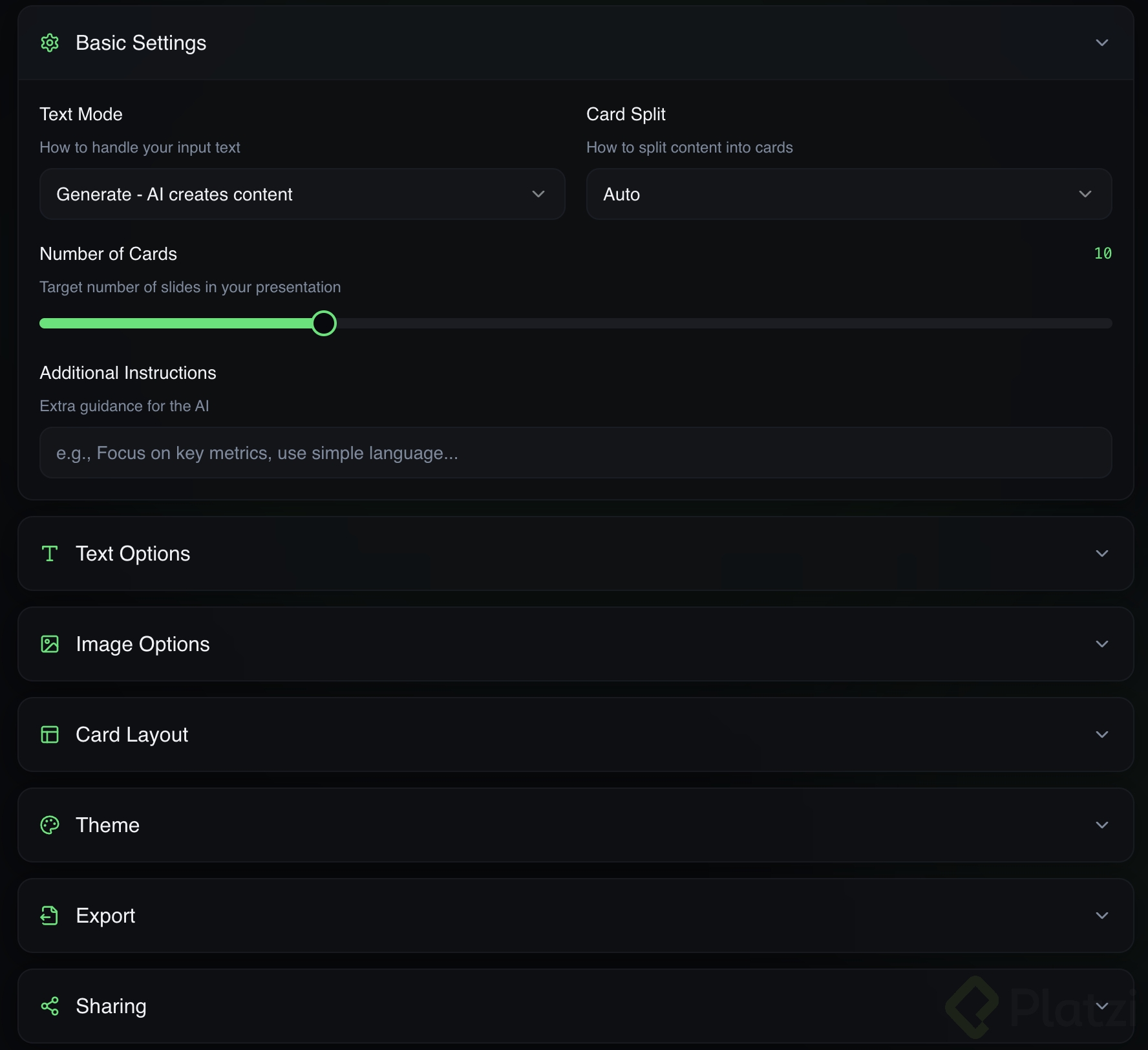
After pasting a transcript and hitting generate, the result opens directly in Gamma as a fully editable presentation, with AI generated images and clean layout [9:30]. The structure is solid even on the first run, though the framing leaned more toward a content summary than a commercial proposal in this test.
From here, two paths to improve it:
- Iterate with extra prompts focused on commercial framing, pricing sections, and tone.
- Add default themes, generation history, and chat mode to plan changes without touching code.
- Build an automation that pulls call transcripts directly, removing the manual paste step.
The hypothesis held: an AI tool can autogenerate a personalized proposal from a transcript in minutes. Now it is your turn to build your own generator and share both the final presentation and the design of the tool you created.