Knowing how to pitch an idea in a professional setting is a skill that separates good communicators from great ones. Whether you are proposing a social media strategy or describing the qualities of a new app, the right expressions make your suggestions sound confident, polished, and persuasive. Here you will find practical vocabulary and structures to make suggestions and describe products like a pro.
How do you make suggestions beyond "let's" and "can we"?
Most learners already know basic phrases such as "Let's use social media" or "Can we use social media?" These work fine in casual conversations, but when you want to sound more sophisticated in a meeting, two alternative expressions stand out.
What does "what if" communicate?
"What if" introduces an idea as a possibility [1:42]. Pay attention to two details:
- The intonation rises slightly on "what if," making the idea sound open and inviting.
- The verb that follows uses the past form to create a hypothetical tone: "What if we used social media to attract younger readers?"
More examples:
- What if we offered exclusive discounts?
- What if we gave them exclusive discounts?
How does "I was thinking" soften a proposal?
"I was thinking" pairs naturally with the modal verb could rather than can [3:00]. Using could keeps the suggestion tentative and collaborative:
- I was thinking we could post some reels on Instagram to advertise the event.
- I was thinking we could collaborate with local businesses to design the solution. [3:37]
Both structures help you present ideas without sounding pushy, which is essential in team discussions.
Which product development terms should you know?
When a solution involves creating a product, specific terminology becomes necessary. Two key terms appear frequently in professional contexts.
What is a target audience?
The target audience [4:17] refers to the specific group of individuals a product or service is aimed at. For the bookstore case study, that group is people aged 15 to 25 who typically read online and need motivation to explore physical books. Identifying your target audience is always the first step before designing any strategy.
Why does market research matter?
Market research [5:00] is the process of collecting and analyzing data to understand what is happening with customers, competitors, and the overall market. The word research here means to investigate thoroughly. Solid market research guides every decision in product development.
How can you describe the qualities of a product?
Imagine you need to develop an app for a bookstore. Three adjectives help you communicate the qualities that matter most [5:30].
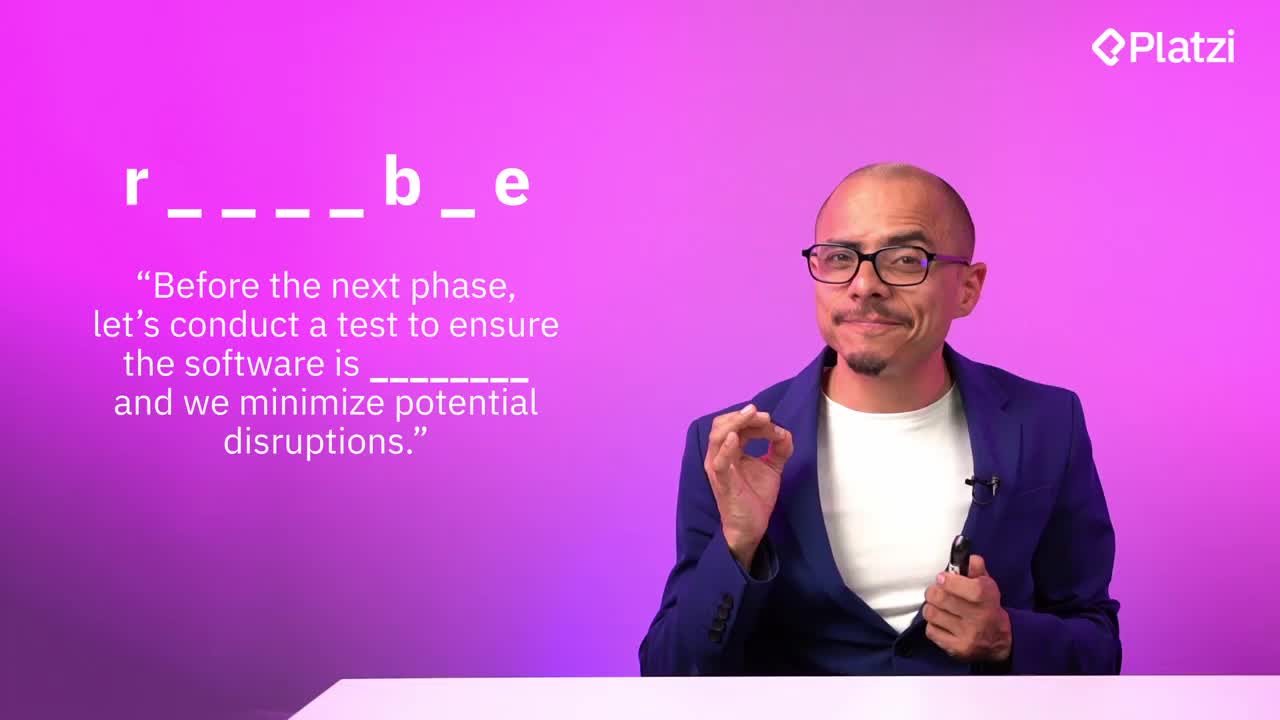
- Reliable: the app does not crash when users are purchasing books. It is predictable and consistent.
- User-friendly: the interface features intuitive navigation, making it easy for customers to find the books they love.
- Accessible: the app includes features like text-to-speech options for users with visual impairments, ensuring inclusivity for people with different abilities and disabilities.
Practice saying them aloud: user-friendly, accessible, reliable. Getting comfortable with the pronunciation builds confidence during presentations.
How can you combine suggestions with product vocabulary?
The real power comes from mixing these structures together. Try building sentences like:
- What if we designed a reliable platform so customers never lose their shopping cart?
- I was thinking we could make the website more accessible by adding screen-reader support.
- What if we ran market research to understand our target audience better?
Head to the comment section and write at least two or three sentences that combine a suggestion expression with one of the product-related terms. Experiment, share your examples, and see how others approach the same challenge.