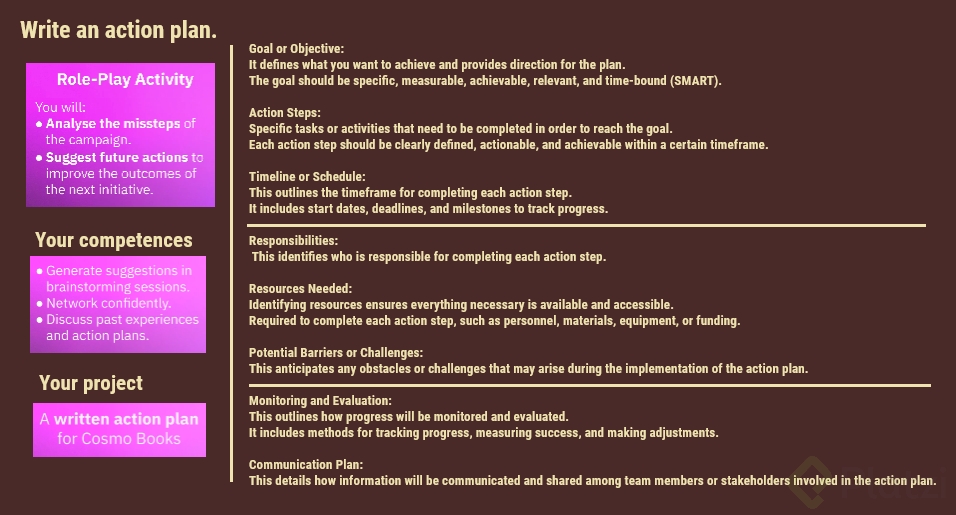
Completing a professional English course represents a significant milestone in building the confidence and tools needed to perform effectively in business environments. The focus here is on practical abilities that make a real difference: generating suggestions during brainstorming sessions, networking with confidence, discussing past experiences, and creating action plans for future success.
What communication skills matter most in professional settings?
The course highlights three core competencies that professionals need to stand out [0:06]:
- Generating suggestions in brainstorming sessions: the ability to contribute ideas clearly and persuasively when collaborating with a team.
- Networking confidently: approaching new contacts, maintaining conversations, and building meaningful professional relationships.
- Discussing past experiences: articulating previous accomplishments and lessons learned in a way that demonstrates growth and expertise.
These are not isolated skills. Together, they form a communication toolkit that allows professionals to thrive in any professional setting [0:20]. Whether you are in a meeting, at a conference, or in a job interview, these abilities work in combination to project competence and credibility.
How does an action plan showcase your professional potential?
One of the most valuable exercises mentioned is the creation of a comprehensive action plan for a real-world client [0:30]. This is more than a theoretical assignment. It is an opportunity to apply everything learned and demonstrate proficiency in a tangible, practical way.
An action plan in this context means outlining specific steps, goals, and strategies tailored to a client's needs. The process involves:
- Identifying the client's challenges.
- Proposing clear, actionable solutions.
- Communicating recommendations with precision and professionalism.
This kind of deliverable is exactly what future employers look for when evaluating candidates [0:38]. It shows the ability to move from understanding a problem to presenting a structured path forward.
Why is communication the key to business success?
The closing reminder is simple but powerful: communication is key [0:48]. In the world of business, technical knowledge alone is not enough. The professionals who advance are those who can express ideas clearly, listen actively, and adapt their message to different audiences.
A strong learning attitude and consistent hard work build the foundation, but it is the ability to communicate effectively that transforms potential into results. Every brainstorming session, every networking conversation, and every action plan is a chance to put these skills into practice and grow professionally.
What communication skill do you find most challenging in your professional life? Share your thoughts and keep building on what you have learned.