Master the speaking section with confidence: understand its linear, non-adaptive format and learn how to excel at the listen and repeat task using clear rubrics and simple habits. Build accuracy, intelligibility, and focus with examples and criteria straight from the test.
What defines the speaking section and task types?
The speaking section is linear and non-adaptive, so everyone gets the same questions in a fixed order. Tasks are designed to work for a wide range of proficiency levels, allowing different test-takers to perform within the same structure.
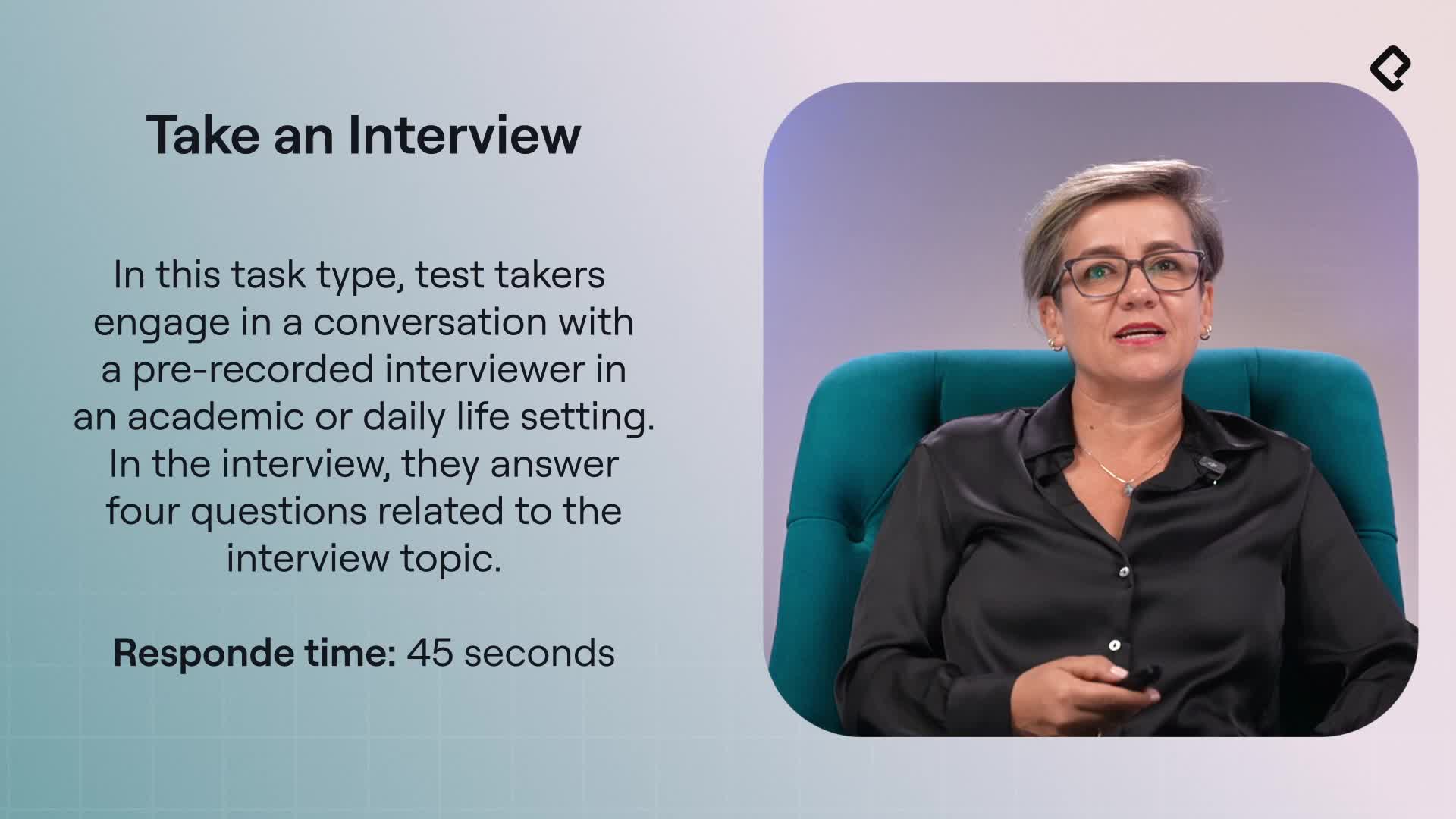
- There are two task types: listen and repeat and take an interview.
- Order is fixed: you receive the same prompts in the same sequence.
- Design supports different levels: scenarios and prompts scale in complexity.
Why does the format matter for preparation?
- You can plan timing and responses because the order is predictable.
- Familiarity with task rubrics directly affects your score.
- Knowing expectations helps you respond with precision and consistency.
What is the listen and repeat task?
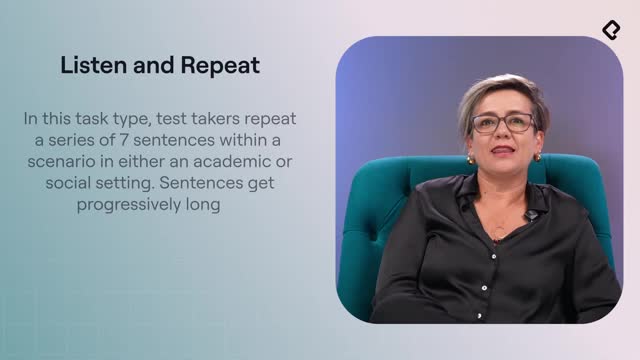
In this task, you repeat sentences within a scenario in an academic or social setting. Each series of sentences appears with a visual representation of the setting and grows progressively longer and more complex.
- After each sentence, there is a two-second pause.
- You repeat exactly what you heard, once.
- This measures your ability to process the sentence and accurately, intelligibly reproduce it.
What instructions and examples appear?
- Typical instruction: “now please repeat the sentence you hear.”
- Example sentences and key vocabulary:
- “We have a variety of wildlife.”
- “Please, no outside food or drinks, and do not feed the animals.”
- “Avoid banging or tapping on the displays and enclosures.”
What skills are evaluated here?
- Listening precision: focusing on exact words and structure.
- Immediate memory: holding a sentence across the pause.
- Pronunciation and intelligibility: producing clear, understandable speech.
- Grammatical accuracy: reproducing forms without changes.
How do scoring rubrics and tips improve performance?
Knowing the criteria is essential to meet scorers’ expectations and maximize your score.
How does the scoring work?
- Level 5: exact repetition of the prompt. No paraphrasing. No missing words. No unintelligible mispronunciations.
- Level 4: minor changes in words or grammar that do not substantially change meaning. Self-correction at the end can still earn a four.
- Level 3: less fully correct, but still a complete sentence.
What tips increase your score right away?
- Avoid taking notes. The listen-and-repeat window is too short for note-taking.
- Concentrate on listening carefully to the speaker.
- Repeat exactly what you hear.
- Repeat the sentence only once.
- If time remains, do not repeat again.
- Check the Class Resources section for rubrics and practice prompts.
Want more targeted practice or feedback on pronunciation and accuracy? Share your questions or a sample sentence in the comments.