Get up to speed on the latest TOEFL iBT enhancements with clear, actionable guidance. Learn how the Home Edition is smoother and more secure, how multi-stage adaptivity refines reading and listening measurement, why scores now arrive under 72 hours, and how the new band scale maps directly to CEFR levels.
What changed in TOEFL iBT Home Edition?
The experience is more friendly and secure from start to finish. Check-in and identity processes are simplified, and security is strengthened without adding friction to students.
- Streamlined check-in and consolidated application for a quicker start.
- Redesigned interface for a cleaner, student-friendly flow.
- Second camera requirement for better visibility during testing.
- Entrust used for identity verification.
- Proctors hired directly and equipped with AI tools for stronger security and support.
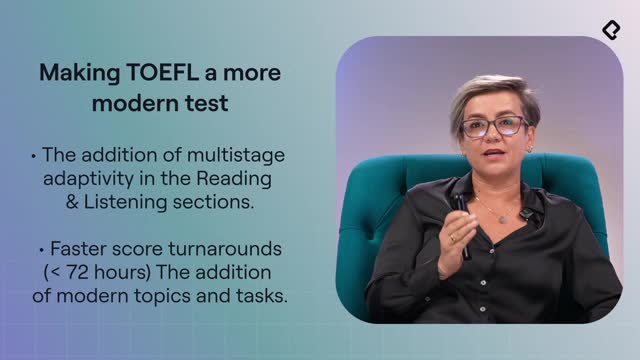
- Personalized testing experience through adaptivity in reading and listening.
- Rapid score delivery: faster turnaround in under 72 hours.
- Fair and relevant content featuring modern topics so all students can demonstrate skills, regardless of background.
You should know these terms.
- Proctoring: live monitoring by trained staff during the test.
- Identity verification: confirming you are the test taker, now through Entrust.
- Personalized testing: the test adjusts section difficulty based on performance.
How does multi-stage adaptivity work in reading and listening?
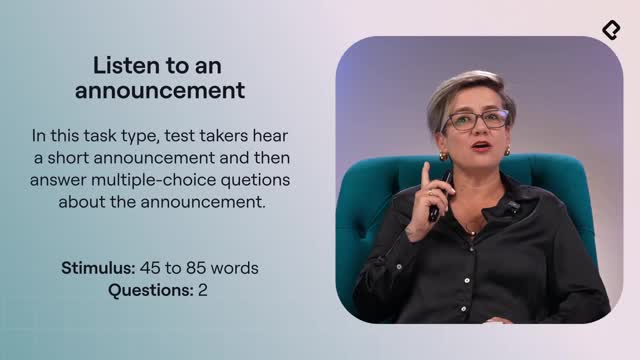
Reading and listening now use a multi-stage adaptive model that adjusts difficulty by stage, while writing and speaking remain linear.
What happens across the stages?
- The test begins with a routing section (stage one).
- Performance in stage one directs you to a higher or lower difficulty section next.
- Even lower-level sections include a range of difficulty so students can still show their best.
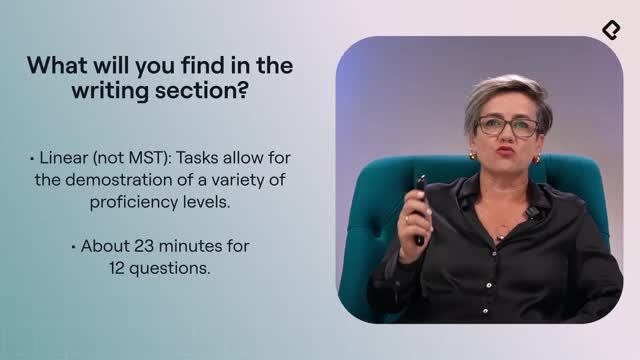
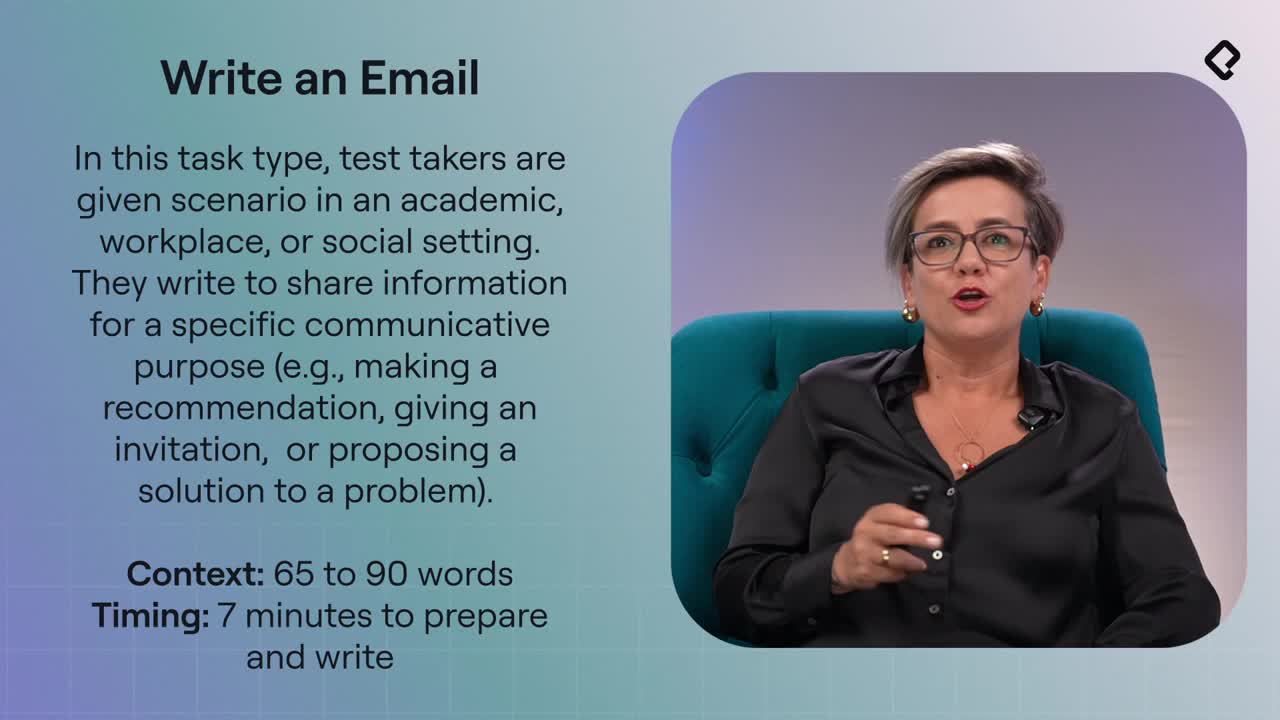
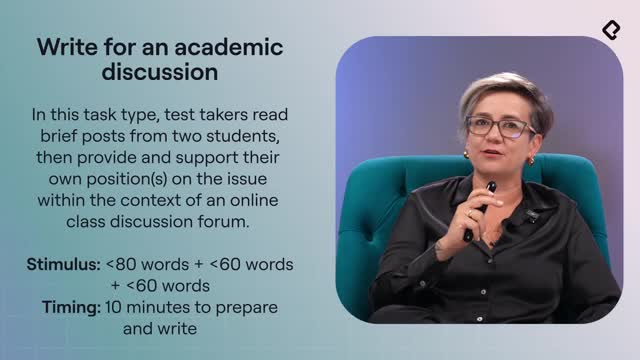
- Speaking and writing stay non-adaptive and follow a fixed order.
Important structure notes.
- Writing comes before speaking, different from the legacy version.
- Everyone receives the same test questions and the same test sequence during the test.
What timing and item counts should you expect?
Overall testing time is under two hours, including brief setup time like adjusting headphones. Because reading and listening are adaptive, item counts may vary.
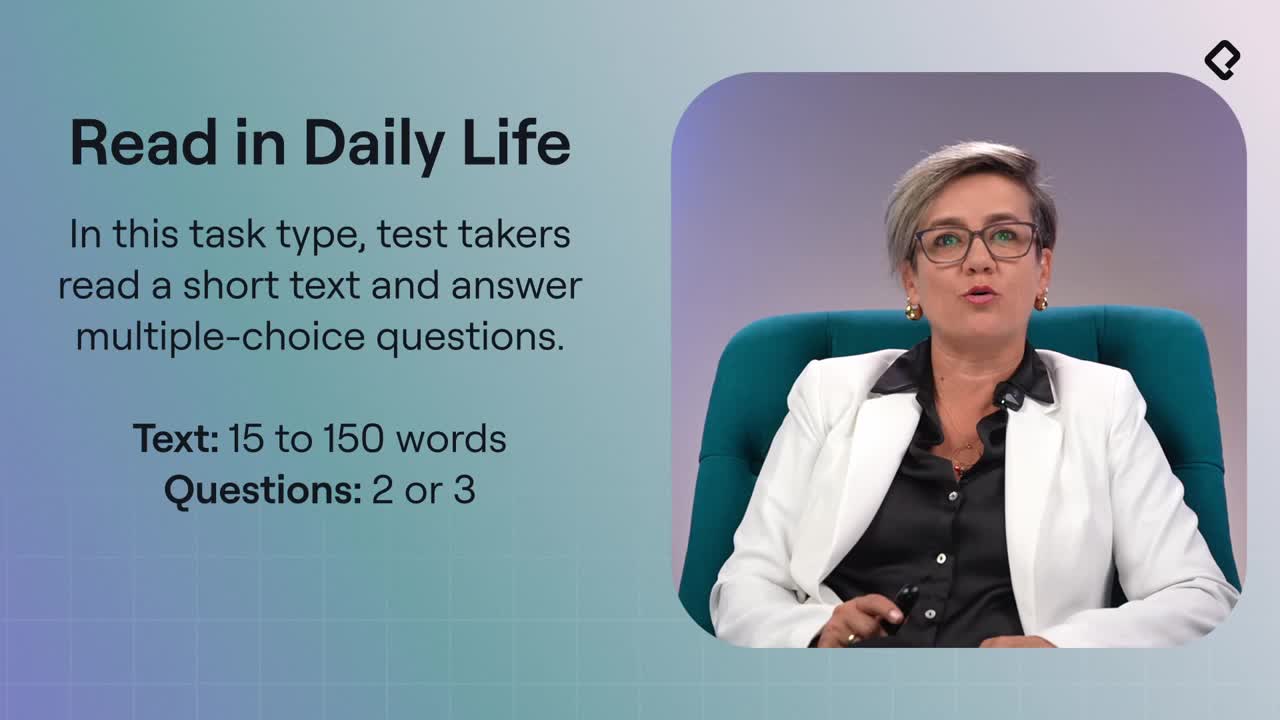
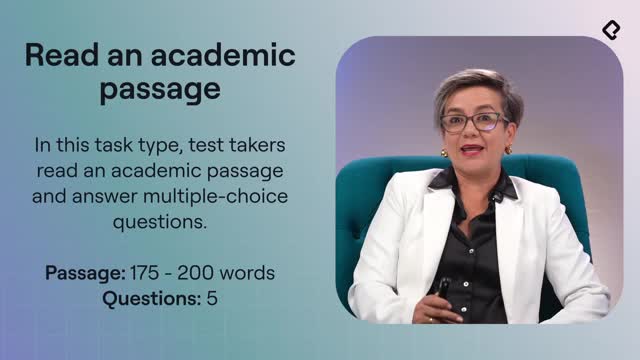
- Reading: about 27 minutes, 35–45 questions.
- Listening: about 27 minutes, 35–45 items.
- Writing: about 27 minutes, 12 questions.
- Speaking: about 8 minutes, 11 questions.
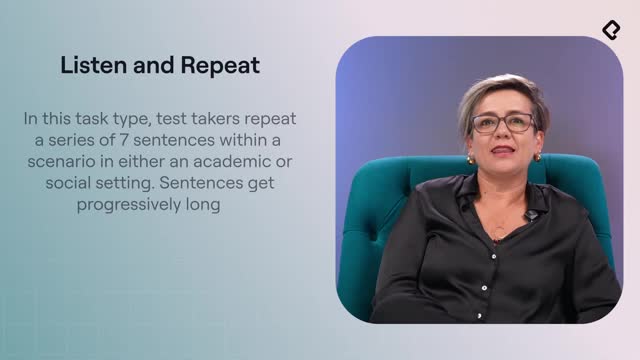
- Includes 7 questions for the listening and repeat.
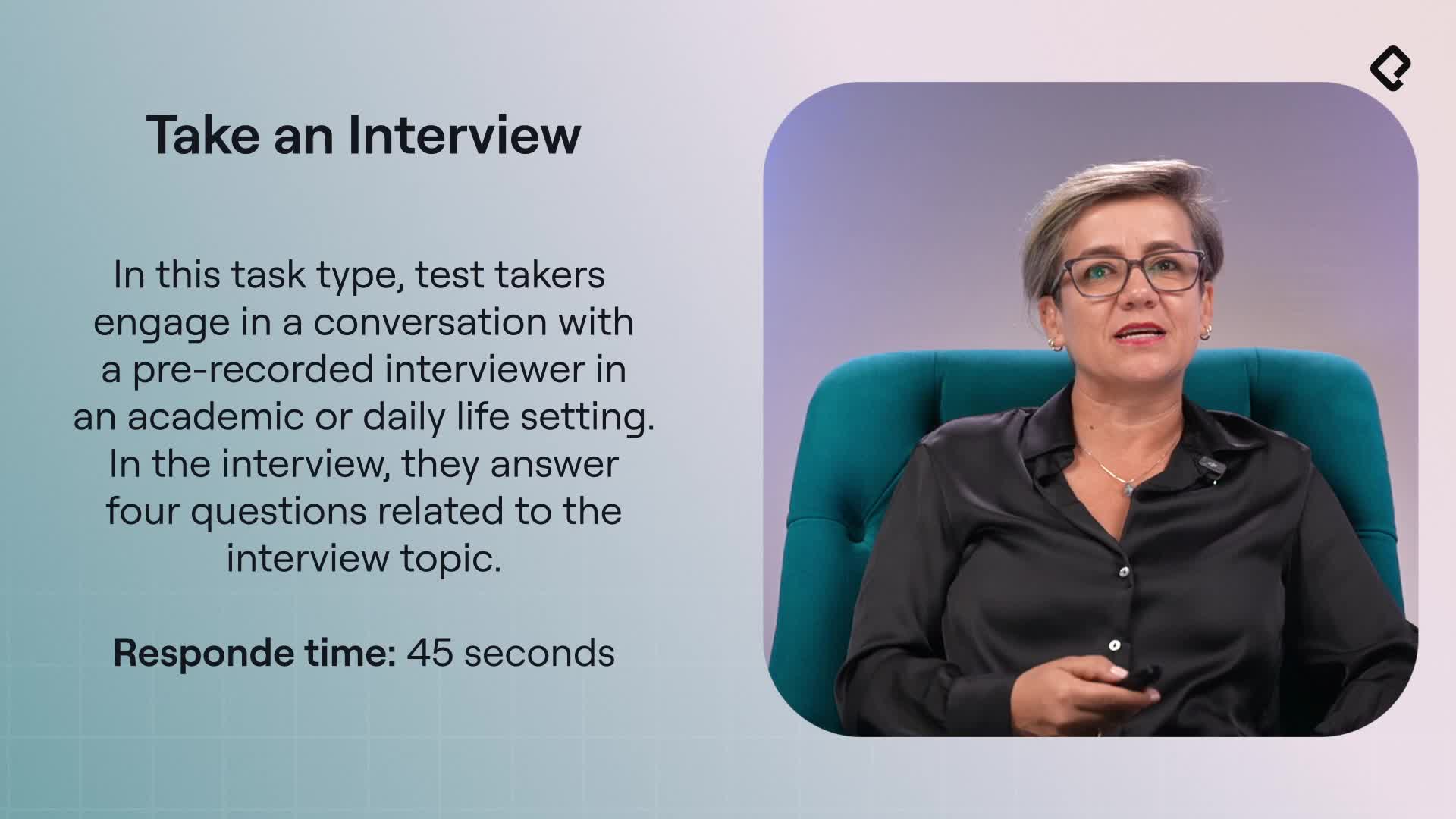
- Includes 4 questions for the take and interview task.
Key skills to practice.
- Time management: plan for short, focused sections.
- Adaptive awareness: perform steadily in the routing section to reach an appropriate next stage.
- Task familiarity: know the linear flow for writing and speaking.
How are scores reported and mapped to CEFR?
Scores are now more transparent and easier to interpret globally. A one to six band scale applies to each section, reported in half-point increments. Your overall score is the average of the four sections, rounded to the nearest half band. These scores map directly to CEFR.
What is CEFR and why does it matter?
- CEFR is an international standard describing language ability from A1 to C2.
- It groups learners into basic (A), independent (B), and proficient (C), each split into two levels.
- TOEFL measures proficiency across the entire A1–C2 range, and the official mapping appears on your score report and on the TOEFL website.
Useful vocabulary.
- Band: a score level from 1.0 to 6.0, including halves.
- CEFR mapping: direct conversion from TOEFL bands to A1–C2.
What score do you need?
- TOEFL is a proficiency assessment, not pass–fail.
- Institutions set their own requirements. Your target score depends on where you apply.
- Example given: 4.0 or 4.5 typically corresponds to B2. Some universities or immigration services may require B2, C1, or higher.
Practical steps.
- Identify your target institution’s requirement in CEFR terms or in TOEFL bands.
- Align your preparation with the required band for each section.
- Use quick turnarounds to plan application or immigration timelines.
Ready to practice the first test section, reading, and work through task number one, complete the words. Share your questions or concerns in the comments to focus the next session on what you need most.