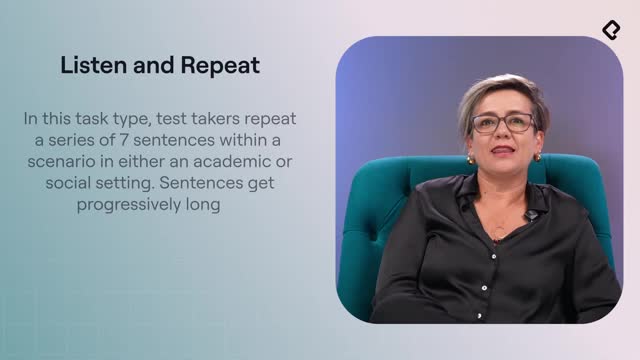
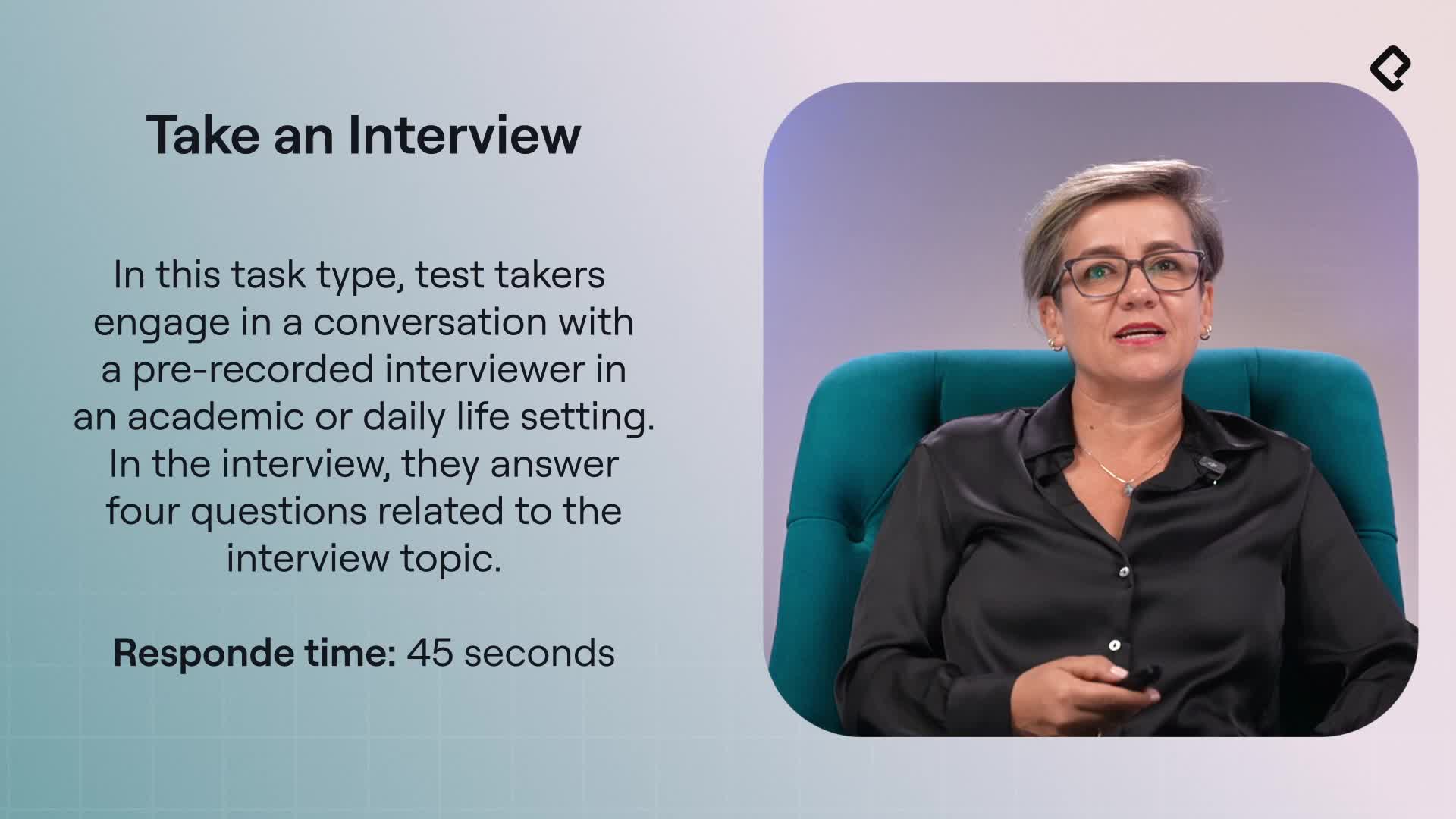
Strong listening brings results: understand the tasks, anticipate the accents, and apply clear strategies to choose the most appropriate response. This guide explains exactly what you will hear, how you will be tested, and what to focus on to improve.
What will you face in the listening section?
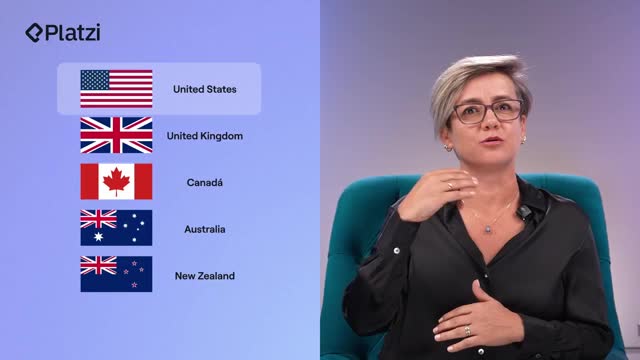
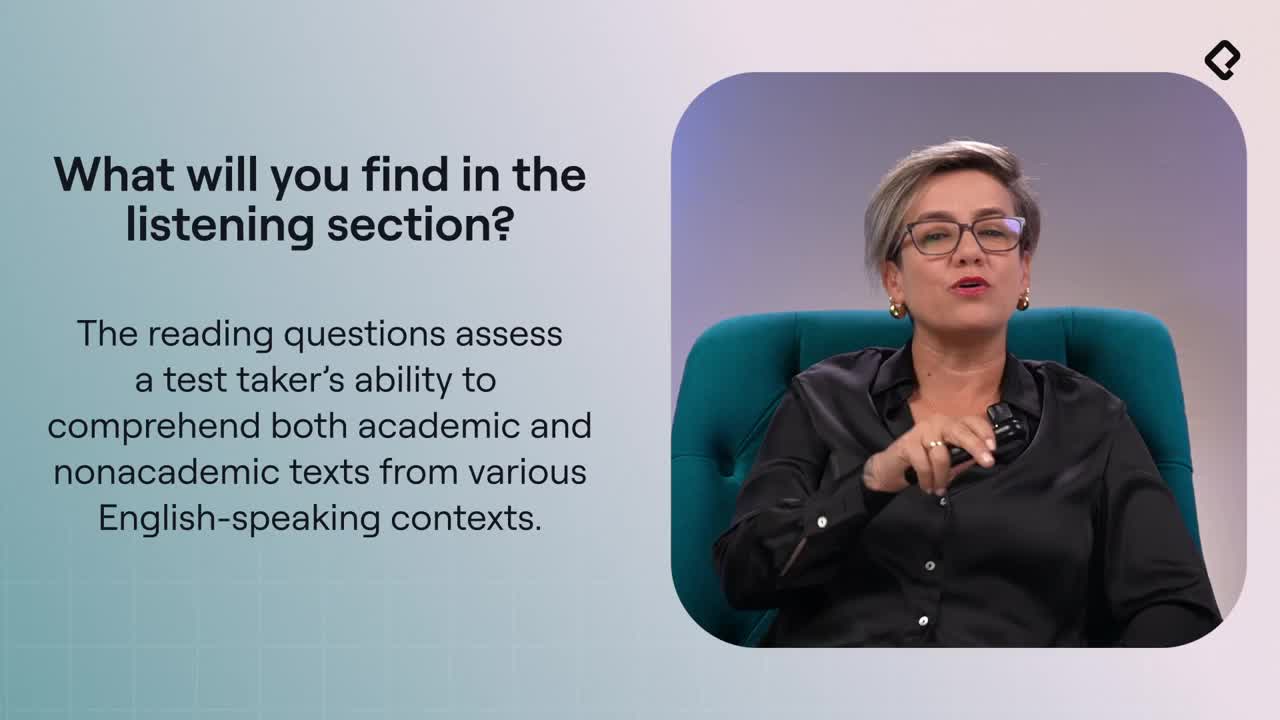
You will hear monologues and dialogues from classrooms and real-life situations. Voices include accents from North America, the UK, Australia, and New Zealand. The goal: check how well you understand conversations and talks, both literal meaning and what speakers imply.
- Listen and choose a response: one brief sentence, then one question to answer.
- Listen to a conversation: about 35–200 words. Two questions after each.
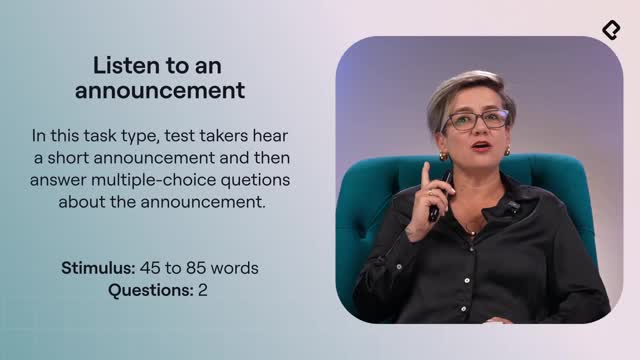
- Listen to an announcement: about 45–85 words. Two questions after each.
- Listen to an academic talk: about 175–250 words. Four questions after each.
Which vocabulary should you notice?
- Monologue: one person speaking.
- Dialogue: two people interacting.
- Announcement: short informational message.
- Academic talk: longer, lecture-style speech.
- Appropriate response: the reply that fits the speaker’s meaning.
- Implied meaning: what the speaker suggests, not just the literal words.
- Prompt: the brief audio you hear once.
- Note-taking not allowed: you must listen carefully in real time.
How does listen and choose a response test your skills?
This task measures your ability to understand a very short question or statement and pick an appropriate response from four written options. The audio is played only once and is not shown on screen.
- You hear one sentence: it can be a statement or a question.
- You read four possible responses: choose the most appropriate one.
- Focus on both literal and implied meaning.
- Note-taking is not allowed: stay attentive.
What examples illustrate appropriate response?
- “Didn’t I just see you in the library an hour ago?” Correct answer: A.
- “Where did that book on your desk come from?” Correct answer: A: “It was a gift from my sister.”
These show a key idea: the right answer may not be a direct echo. It must be appropriate to the speaker’s intent.
Which strategies and keywords should you remember?
A few simple habits make a big difference in this short, high-focus task.
- Listen carefully: the prompt is short and played once.
- Identify the question type quickly: who, what, where, when, why, how.
- Aim for the appropriate response, not just a literal reply.
- Expect varied accents: North America, the UK, Australia, New Zealand.
- Context matters: classroom vs real-life situations.
Ready to practice more listening tasks or share what challenges you most? Add your questions and ideas below.