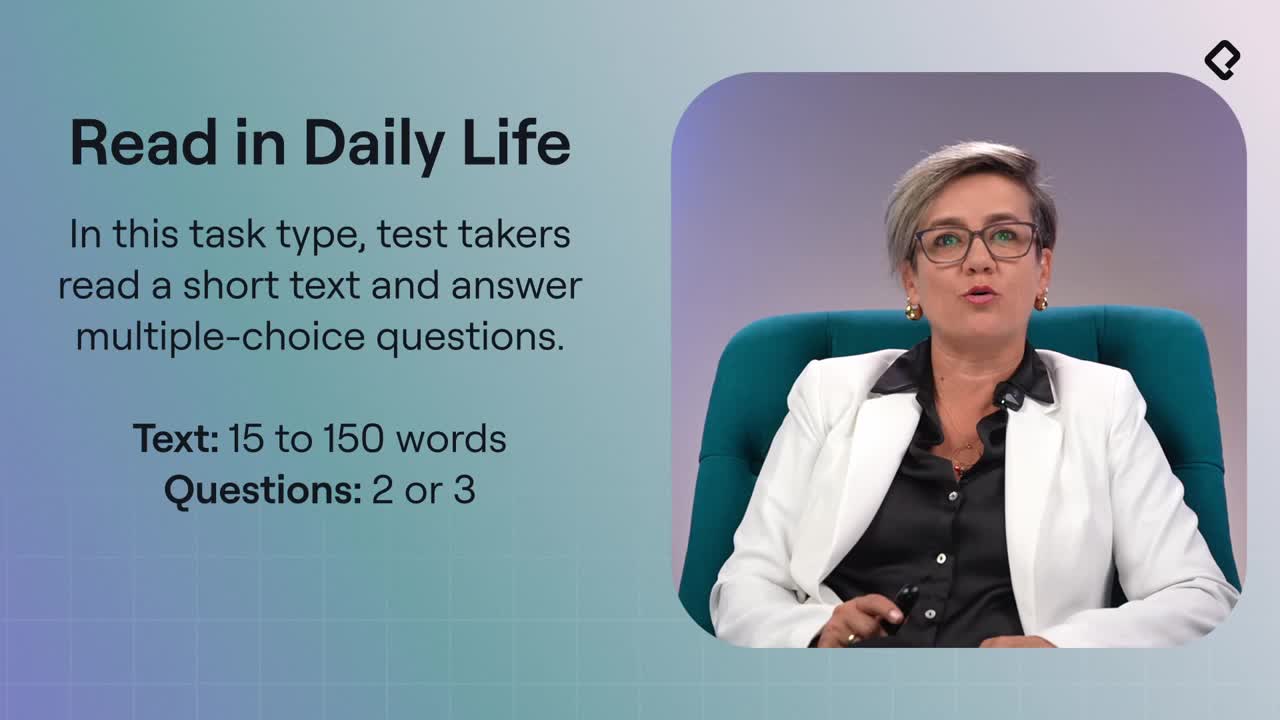
Strengthen your TOEFL iBT Reading performance with clear tactics, real question formats, and essential ESL vocabulary. Learn how to find the main idea, track supporting details, use grammar and transitions for inference, and identify rhetorical purpose with confidence.
What is the TOEFL iBT reading last task?
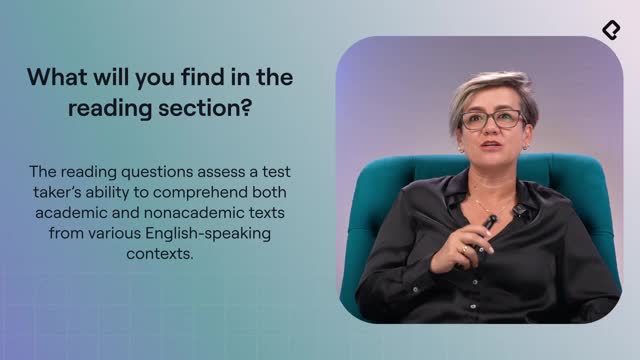
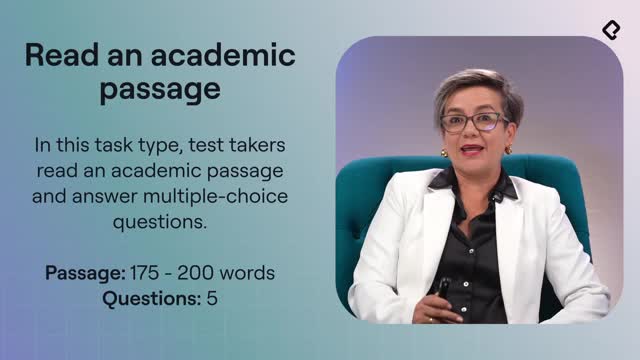
Short academic passages (about 175–200 words) are followed by five multiple-choice questions. Topics are engaging and textbook-like: life sciences, physical sciences, social sciences, history, art and music, business and economics. You are tested on the main point, factual information, vocabulary in context, inferences, relationships between ideas, and the purpose of part or all of the text.
You also need strong academic vocabulary, plus figurative and idiomatic expressions, and the ability to read grammatical complexity. Expect to recognize rhetorical structure across sentences and paragraphs.
Key ESL vocabulary and examples you will see:
- Main idea: identify the central message.
- Factual information: locate explicit details.
- Vocabulary in context: e.g., the word milestone in the first sentence.
- Inference: deduce what is implied by grammar and context.
- Rhetorical structure: how the text is organized.
- Rhetorical purpose: e.g., why the author mentions cleaner fish.
- Relationships between ideas: follow transitions and connecting words.
How do the main question types work?
Understanding what each question asks saves time and improves accuracy. Use the passage’s organization, topic sentences, and grammar cues to guide your choices.
What is a main idea question?
You read the whole passage and decide what it is mostly about. Example: question 1 required the main idea (correct answer: B). Avoid narrow details; focus on scope and overall organizational structure.
What is a vocabulary in context question?
You choose the meaning that best fits the sentence. Example: the word milestone in the first sentence (correct answer: A). Read before and after the word. Replace the option in context and check if the sentence still makes sense.
What is a rhetorical purpose question?
You explain why the author includes a detail or example. Example: “Why does the author mention cleaner fish?” (correct answer: A). Link the example to the author’s aim: illustrate, contrast, provide evidence, or clarify.
Other common checks you will face:
- Factual detail (EXCEPT): choose the one option that is NOT stated. Example: “All of the following are true about elephants except …” (correct answer: B). Verify wording, qualifiers, and absolutes.
- Factual detail: direct retrieval. Example: “Why did scientist put colored marks on animals’ bodies?” (correct answer: B). Find the exact line and restate it.
- Inference and relationships between ideas: use transitions and connecting words to link causes, effects, contrasts, and results. Grammar often signals implied meaning.
Which strategies improve reading comprehension and score?
Build habits that keep you focused on the big picture while avoiding traps. Practice under time and review what led to errors. Use the resource section for more exercises, and remember that mistakes are expected and help reveal strengths and weaknesses.
- Identify the main topic and organizational structure.
- Look for topic sentences and supporting details.
- Pay attention to transitions and connecting words.
- Focus on the big picture: major ideas and overall organization.
- Do not get stuck on tiny details or one unknown word.
- Practice regularly and reflect on why each correct answer works.
Want targeted feedback? Share in the comments which question type (e.g., main idea, vocabulary in context, rhetorical purpose, EXCEPT) you want more practice with and an example that challenged you.