Master the TOEFL iBT Reading Daily Life task with confidence. Understand what texts you’ll see, the exact skills assessed, and simple ways to practice effectively—so you can scan fast, find key details, and choose the best answer.
What is the Reading Daily Life task?
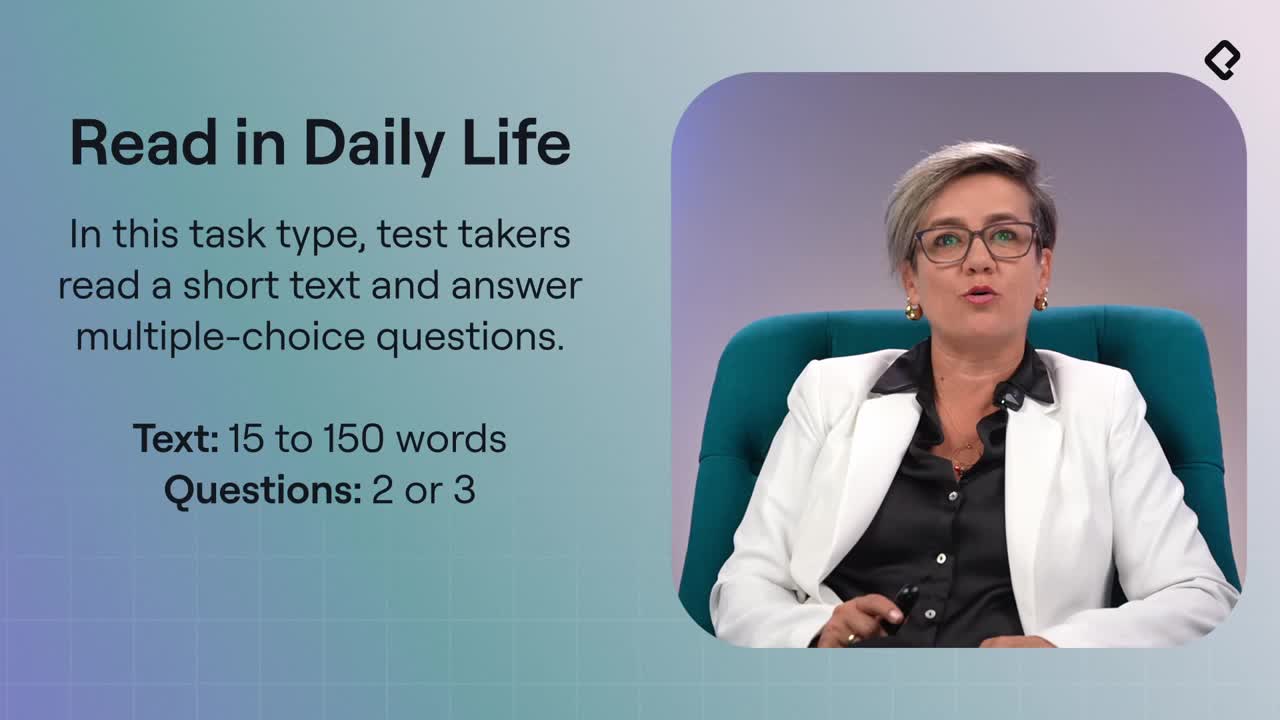
This task uses short, non-academic, real-world texts that people encounter globally. You might see posters, social media posts, menus, emails, ads, or news articles. These are not standard essays; they often use bullet points or sections, so you can scan and jump around instead of reading every word.
- Real-world text types: posters, social media posts, menus, emails, ads, news articles.
- Structure: bullet points or multiple sections to scan quickly.
- Length: typically 15–150 words.
- Questions: usually two or three multiple-choice questions.
Which skills are assessed and how to practice?
You will answer questions that check a range of reading skills. Focus on what each skill asks you to notice and how the text type guides your approach.
- Understanding factual information: locate and confirm directly stated details.
- Vocabulary in context: interpret word meaning based on surrounding text.
- Making inferences: connect clues to understand implied ideas.
- Identifying the purpose: determine why a part or the whole text was written.
- Recognizing formal and idiomatic language: notice tone and common expressions.
- Interpreting telegraphic language: read concise, note-like wording.
- Skimming and scanning for key details: move quickly to find what matters.
Practice tips from the session:
- Always check the text type first.
- Ask: “What is this thing? Is it an email? a sign? an advertisement?”
- Use structure to guide you; scan headings, bullets, and sections.
- Visit the Resource section to access additional practice for this task.
How do example questions look in practice?
Examples included two notices and one social media post. You were asked to pause, read, and choose the best options. If you missed some, don’t worry: this was for practice and skill-building.
- Notice example 1: correct answer B.
- Notice example 2: correct answer C.
- Social media post, question 1 (main purpose): correct answer B.
- Social media post, question 2 (reason for the popularity of the Thompson family stall): correct answer C.
- Social media post, question 3 (additional features besides food and crafts): correct answer A.
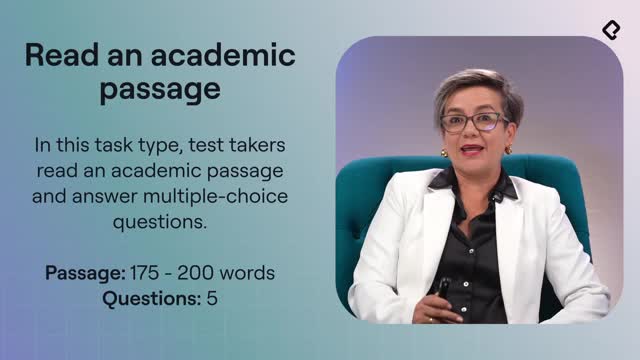
Up next: types of questions for the Read an Academic Passage task.
Have a question or a tip that helps you scan faster? Share it in the comments and tell others which text type challenges you most.