Master the writing section with clear steps, timing, and real examples. Here, you’ll see how a linear test format, practical task types, and focused tips help you show your best English. Learn what matters most and how to avoid common mistakes.
How is the writing section organized?
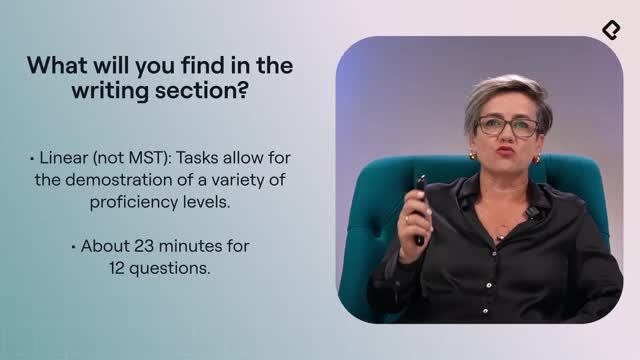
The writing section is linear, not multi-stage adaptive. Everyone follows the same sequence and sees the same questions. You have approximately 23 minutes to respond to 12 questions. Tasks reflect real communication in offices, laboratories, and classrooms, and include forms like social media, instant messages, emails, and written course assignments.
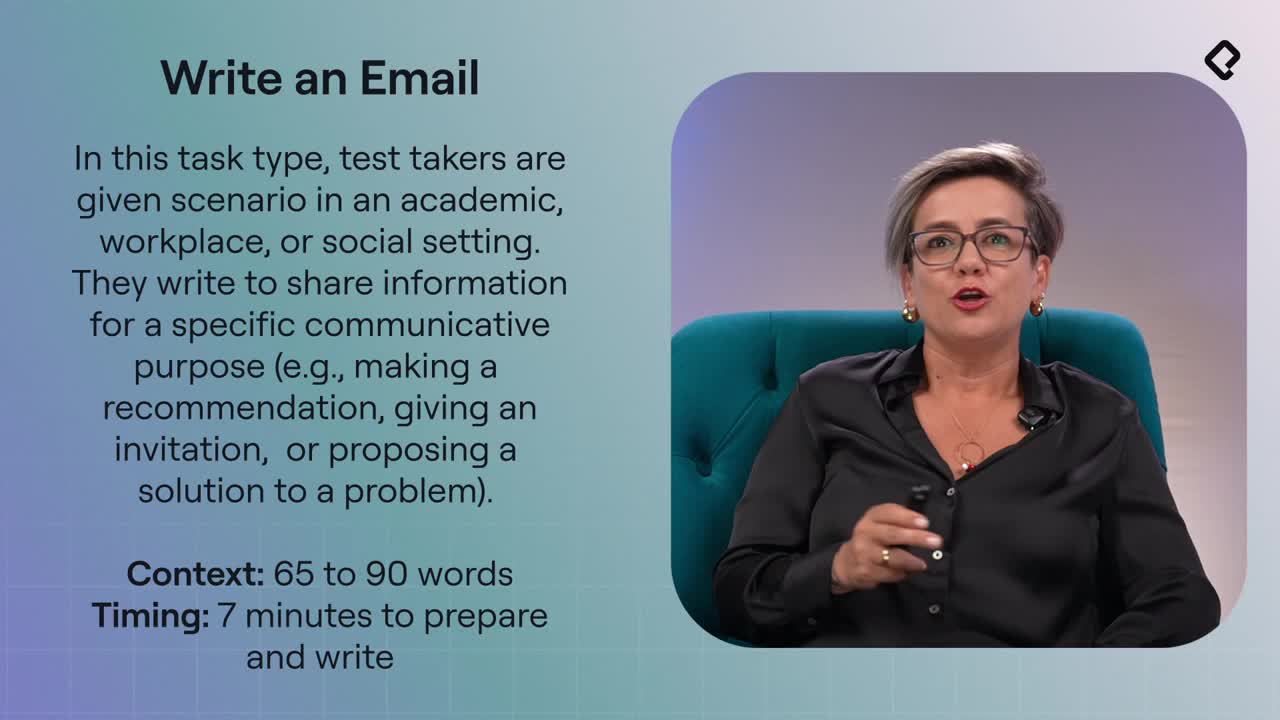
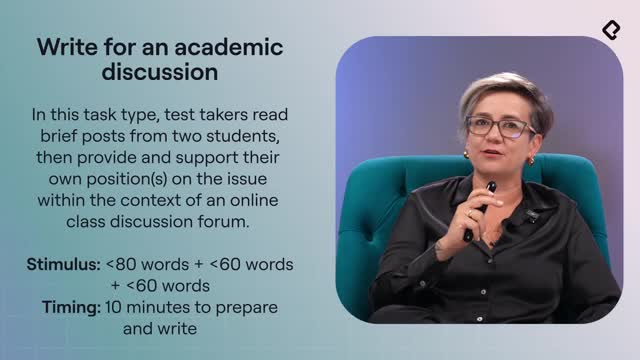
The three task types are: build a sentence, write an email, and write for an academic discussion. Each task lets you demonstrate a range of proficiency, from basic structure to clear, context-appropriate language.
How does the build-a-sentence task work?
You receive an introductory question or statement and a set of words and phrases to drag into blanks to form a grammatical sentence that is an appropriate response. Sometimes there is an extra word or phrase that you should not use. Scoring is right or wrong with no partial credit.
Which examples show the correct responses?
- Prompt: “Excuse me, do you work here?” Correct response: “What can I do to help you?”. The sentence must be grammatical and context-appropriate.
- Example with extra option: “The tour guides who showed us around the old city were fantastic.” The word “was” appears as an option but is not part of the correct sentence.
Key vocabulary to notice: question or statement, drag, blanks, grammatical sentence, extra word or phrase, no partial credit.
What tips improve your score on this task?
- Read all parts carefully: the first sentence of the dialogue, the incomplete sentence, and the options provided.
- Build a sentence that is grammatically correct and fits the context as a natural response.
- Review the sentence you formed before submitting.
- Watch for an extra word or phrase that is not needed.
What comes next in the writing tasks?
After build a sentence, you will work on write an email, followed by write for an academic discussion. These tasks reflect everyday needs to write, review, and edit English for clear communication in academic and professional settings.
Have a question or want feedback on a sentence you built? Share it in the comments and join the discussion.