Using inclusive language
Curso de Inglés Avanzado C1: Recursos Conversacionales y Lingüísticos
Contenido del curso

Linguistic Resources Part 1


Research skills & Descriptive Essay



Linguistic Resources Part 2


Fronting


Outcomes

Recursos
Resumen
Using the right words can shape how people feel in any conversation, whether social or professional. Inclusive language is not just a trend; it is a responsibility for every language learner who wants to communicate with respect and clarity. Understanding what to say—and what to avoid—makes a real difference in how others perceive you and how connected they feel during an interaction.
Why does inclusive language matter in English?
Inclusive language encourages and promotes respect for every person in society. It relies on vocabulary that avoids exclusion, stereotyping, or making anyone feel less valued compared to others. In practical terms, it means choosing words that are free of descriptions that portray people as weak, dependent, or inferior. As English learners, adopting these habits early builds stronger communication skills and a more empathetic professional presence.
How can you focus on the person, not their characteristics?
One of the most important principles is person-first language [1:33]. Instead of saying "a blind person", you can say "a person who is blind". This small shift moves the attention away from a characteristic and places it on the individual. The same applies to expressions like "a disabled person"; saying "a person who is disabled" [2:18] respects their identity beyond any condition.
- Instead of "a woman salesperson", say "a woman on our sales team" [2:03].
- Avoid derogatory terms like crazy or insane; use "a person with mental illness" instead [2:41].
- Every adjustment reinforces the idea that people are more than a single trait.
What are universal phrases and why should you use them?
Another key practice is choosing universal phrases [3:05] that anyone can understand regardless of their background. Industry jargon, acronyms, and culture-specific idioms can leave people feeling excluded. Consider the idiom "to hit it out of the park" [3:30], which means to do something really well. If your listener has no knowledge of baseball, the meaning is completely lost.
The same applies to overly complex vocabulary. Saying "a synergistic team" [4:04] sounds impressive, but a simpler alternative like "a team that works really well together" communicates the same idea without confusion. Clarity is always more inclusive than sophistication.
How does gender neutral language improve communication?
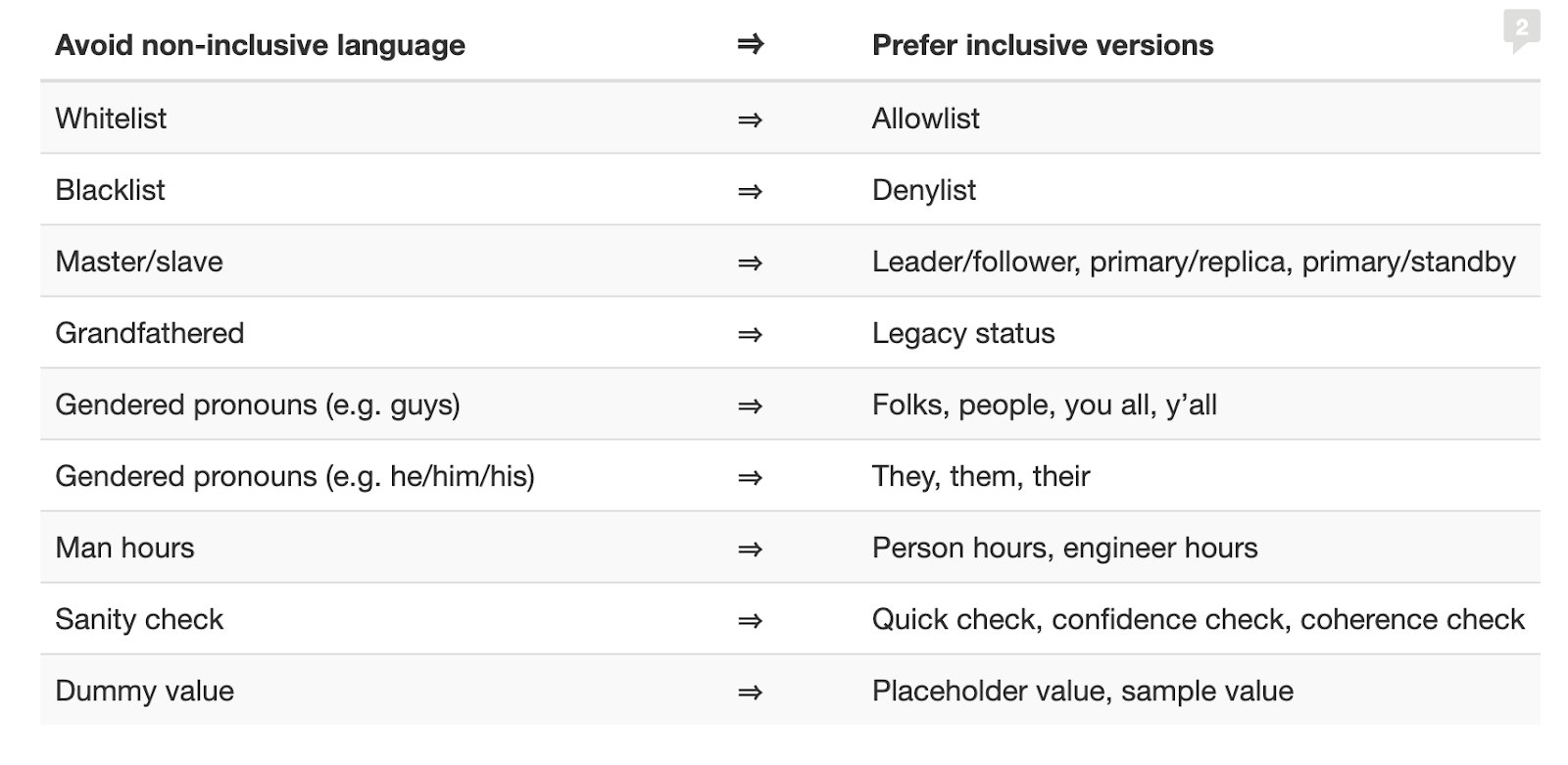
Gender neutral language [4:23] removes the assumption that a group is composed only of men or only of women. A common example is using "guys" to address a mixed group. More inclusive alternatives include everybody, people, teammates, or folks.
Some traditional English words carry a male-centered bias that many speakers overlook [4:58]:
- Mankind becomes humankind.
- Forefathers becomes ancestors.
- Manmade becomes artificial.
- Chairman becomes chairperson.
These substitutions are simple yet powerful. They ensure that every person in the room feels acknowledged, not sidelined by the vocabulary chosen.
Which words and phrases should you avoid?
Language carries weight, and certain words can leave a lasting negative impression [5:27]. Here are specific terms to replace:
- Instead of addict, say "a person with substance abuse disorder" [5:43]. Recognizing it as a disorder, not a label, changes the entire tone.
- Instead of old, use senior [6:03]. The word old can imply weakness.
- Avoid calling anyone over 18 girls; use women instead [6:13].
- Do not refer to women as females [6:24]. It sounds clinical and dehumanizing; women is always a safe choice.
- Replace man-hours with human hours [6:40] to acknowledge that work is not exclusive to men.
- Words like ladies or gals can sound patronizing [6:55]. Women or folks are better alternatives.
Every word you choose either builds connection or creates distance. Think about a moment when you could have used more inclusive language—perhaps at work, in a classroom, or even in casual conversation. Share that experience in the comments and reflect on how a different word choice might have changed the outcome.