Contenido del curso
Artículos y sustantivos en inglés
- 2

Uso del Artículo "El" en Frases en Español
04:14 min - 3

Reglas para Cambiar Sustantivos de Singular a Plural
05:58 min - 4

Uso de "Mucho" y "Muchos" con Sustantivos Contables e Incontables
05:55 min - 5

Uso de "Cuál" y "Qué" en Preguntas Interrogativas
05:01 min - 6

Uso de "De quién" para Preguntar Propiedad de Objetos
01:49 min - 7

Uso de Artículos y Pronombres en Español
00:44 min
Habla del futuro y expresa sugerencias en inglés
- 8

Verbos de Percepción: Usos y Práctica en Oraciones
04:31 min - 9

Uso de "Let's" para Sugerencias e Invitaciones en Inglés
03:37 min - 10

Preposiciones de Movimiento en Español
04:56 min - 11

Uso de "Will" en Inglés para Hablar del Futuro
Viendo ahora - 12

Uso del "voy a" para expresar intenciones y planes futuros
07:08 min - 13

Uso de Let's, Preposiciones y Futuro en Inglés Básico
00:35 min - 14

Práctica de conversación en inglés (contexto cotidiano y de oficina)
00:00 min
Expresa solicitudes y peticiones en inglés
- 15

Adverbios de Movimiento y Dirección: Uso y Ejemplos Prácticos
01:57 min - 16

Peticiones y Ofertas Educadas con "Quisiera" en Español
02:47 min - 17

Uso correcto de "por favor" en órdenes y peticiones
03:28 min - 18

Uso del "Porque" y Frases Verbales en Español
02:48 min - 19

Expresiones de Tiempo: Pasado, Presente y Futuro
08:15 min
Práctica tu Inglés
Uso de "Will" en Inglés para Hablar del Futuro

Resumen
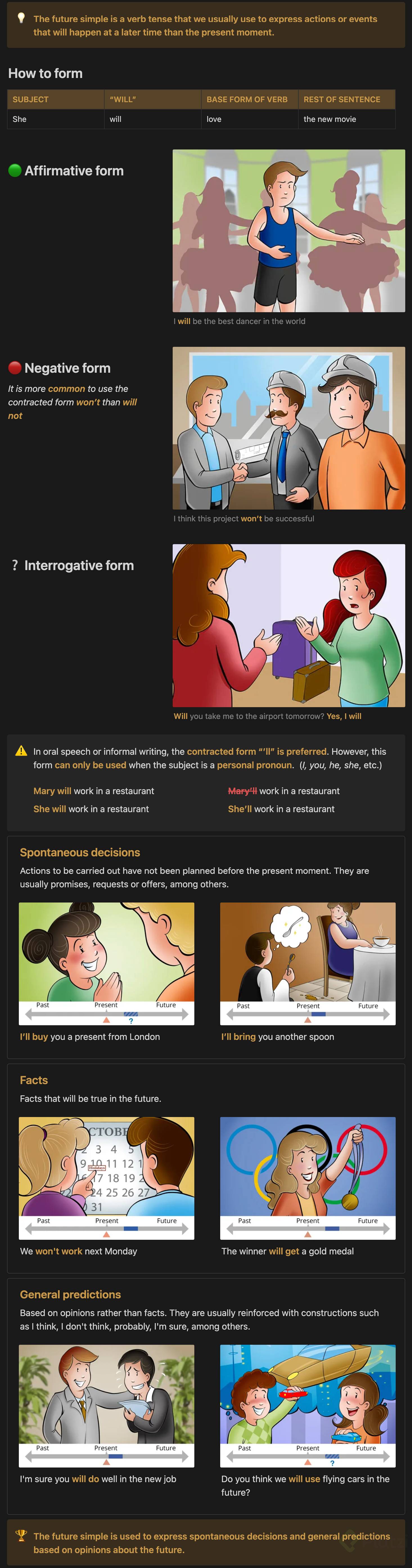
Understanding how to use will is essential for talking about the future in English. Whether you are making a promise at work, offering help to a colleague, or predicting the outcome of a game, will is the tool you need. Let's break down its different uses and how to form questions with it.
What are the main uses of will?
There are five key uses of will to talk about the future. Each one serves a different communicative purpose, and recognizing them will help you sound more natural in everyday English.
How do instant decisions work with will?
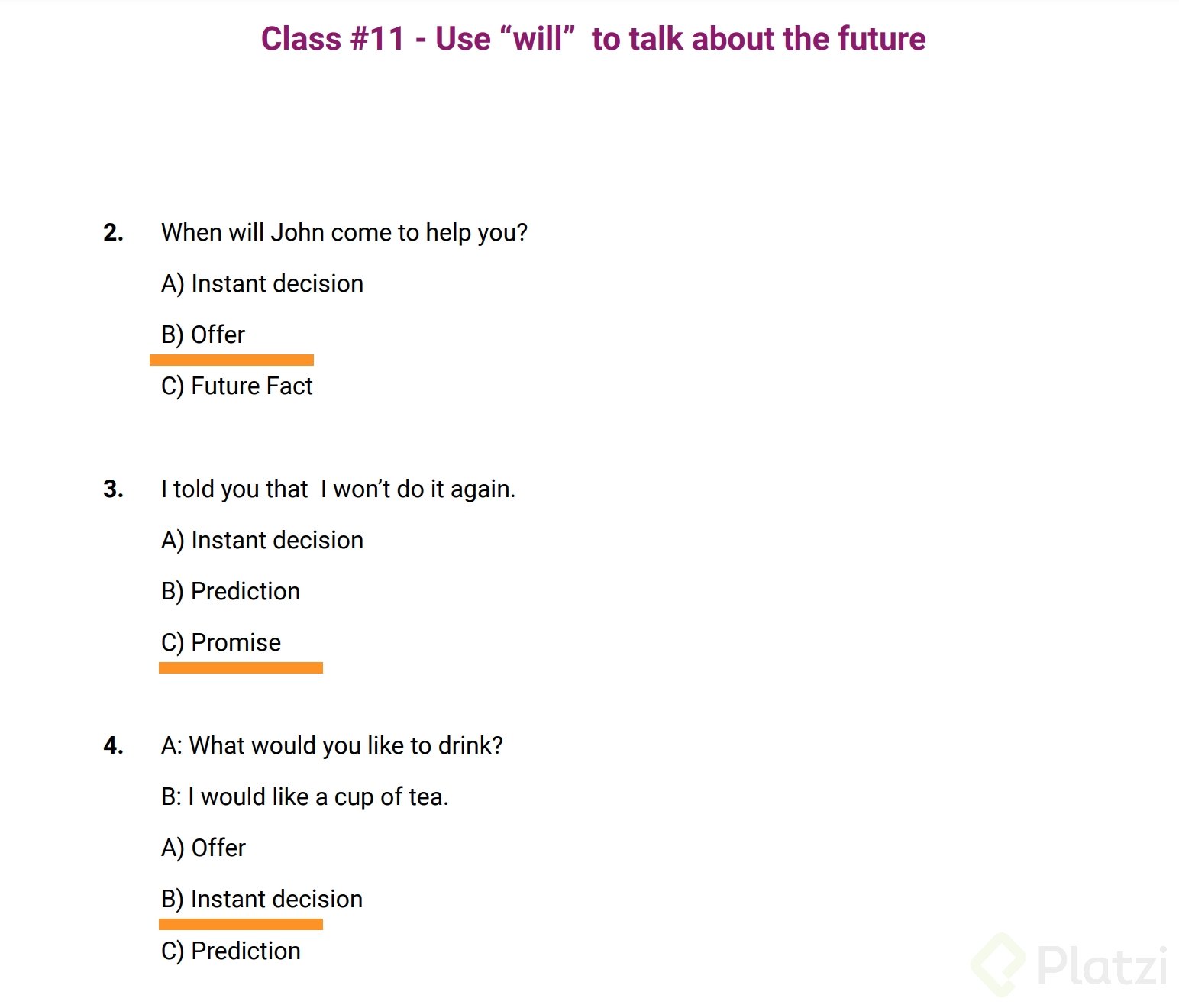
An instant decision is something you decide to do at the moment of speaking, without planning it in advance [0:52]. For example:
- "I will take a coffee, please." — You're at a café and the waiter asks what you'd like. You decide right there.
- "I'll call her right away." — Your boss tells you to contact a client, and you respond immediately.
Notice that I'll is the contracted form of I will, commonly used in spoken English.
What about promises, offers, predictions, and future facts?
- Promise [1:14]: "I will finish it on time." You're running late, so you reassure someone by making a commitment.
- Offer [1:25]: "Since it's raining, I will give you my umbrella." You volunteer to help someone without being asked.
- Prediction [1:35]: "I think Cristiano Ronaldo will win the Ballon d'Or." This is your personal opinion about what might happen.
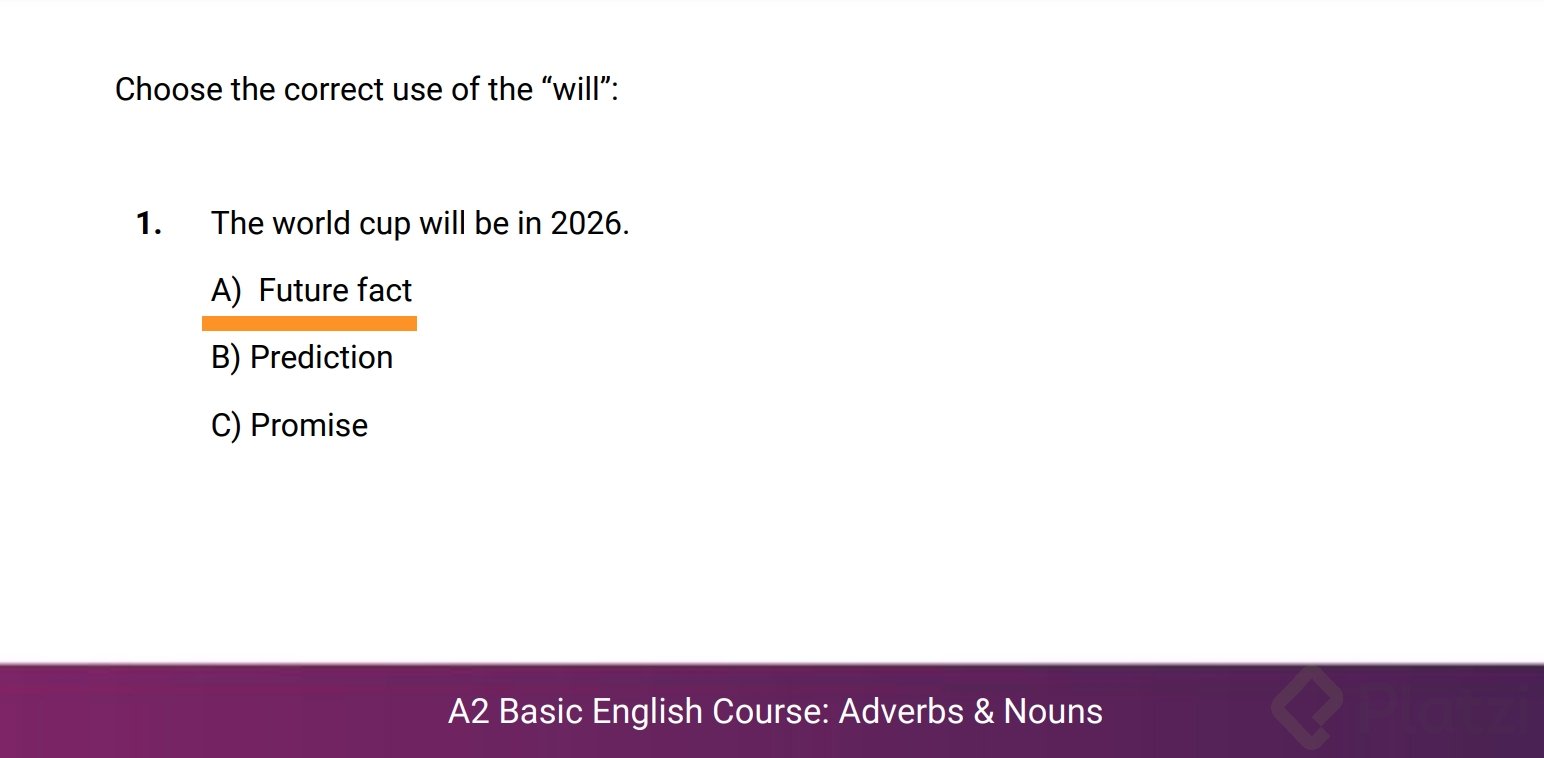
- Future fact [1:48]: "We won't be home all week." You know this for certain because of a business trip.
A quick tip: the negative form of will is won't (will not). Use it whenever you need to express something that is not going to happen [1:58].
How do you form questions with will?
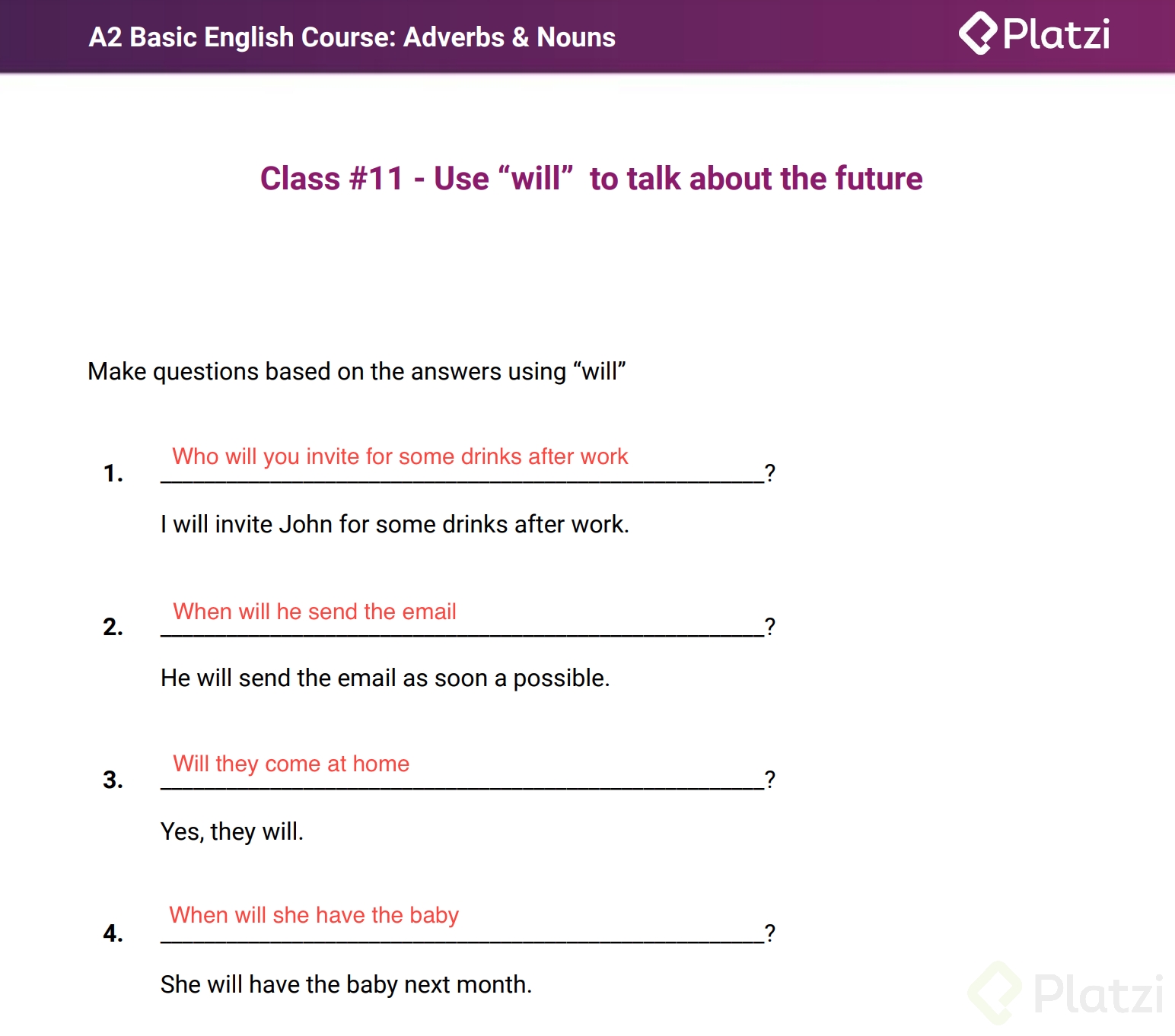
Making questions with will follows a clear structure [2:05]:
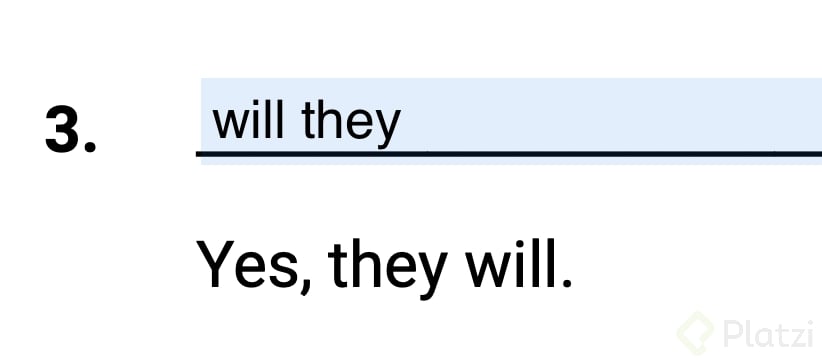
- Yes/no questions: Will + subject + base verb + complement.
- Wh-questions: Wh-word + will + subject + base verb + complement.
Can you see will questions in action?
Here are some practical examples from professional and everyday situations [2:25]:
- "Will Valerie walk to work today?" — Asking about someone's plans because of the weather.
- "Who will you call for help?" — A wh-question using who.
- "Will he join us for lunch?"
- "Will you promise you won't tell anyone?"
- "When will they come to fix the computer?"
- "Who will win the next tournament?"
- "Will Lisa need my support tomorrow?"
Notice how the base form of the verb always follows will — never add -s, -ed, or -ing after it.
How can you practice using will effectively?
The best way to master will is to identify the purpose behind each sentence. Ask yourself: am I making a prediction, a promise, an offer, an instant decision, or stating a future fact? This simple habit will sharpen your accuracy.
Try creating your own sentences for each use. For instance, think of a prediction about your favorite sport, an offer you could make to a friend, or a promise you want to keep at work. Share your examples in the comments and let's practice together!