Mastering the distinction between the aw sound (as in part) and the uh sound (as in cut) is one of the most practical skills you can develop to improve your English pronunciation. These two vowel sounds are often confused by learners, yet they change the meaning of words entirely. Here you will find clear guidance on how to produce each sound, real examples, and exercises to test your ear.
How do you produce the "aw" sound correctly?
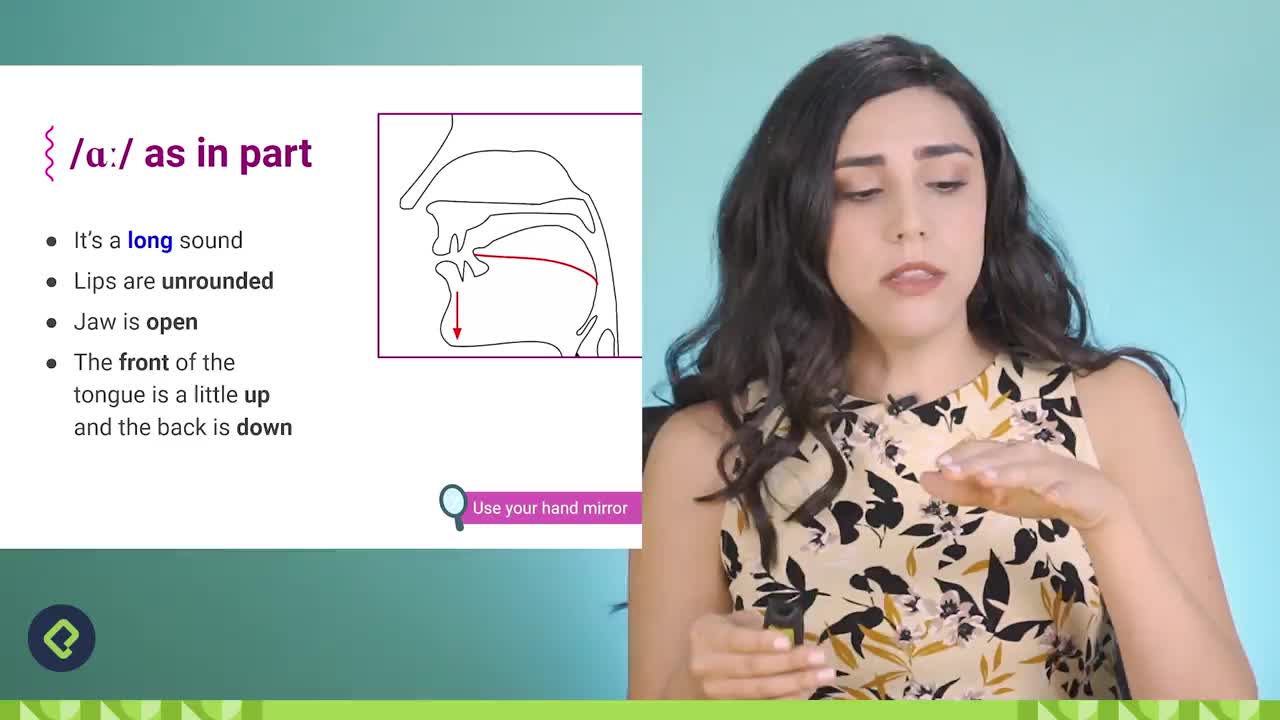
The aw sound, as heard in the word part, is a long vowel sound [0:12]. To produce it properly, keep these points in mind:
- Your lips stay unrounded.
- Your jaw is open wide.
- The front of your tongue rises slightly, while the back stays down.
Using a hand mirror while practicing helps you confirm your mouth is in the right position. Listen to the way this sound stretches in words like car, star, heart, and palm [0:30]. Each of these words holds that open, extended vowel that gives the aw sound its characteristic length.
What makes the "uh" sound different?
The uh sound, found in the word cut, is a short vowel sound [1:05]. Although the lip and jaw positions seem similar — unrounded lips and an open jaw — the tongue behaves differently:
- Your tongue stays down with the back rising slightly.
- The sound is notably shorter in duration.
Practice with words like luck, sun, blood, and cup [1:22]. Notice how blood is pronounced with a quick, clean uh — not a drawn-out vowel. This brief, punchy quality is the key difference from the aw sound.
Can you hear both sounds in one sentence?
The example sentence "Not another money problem" [1:52] beautifully combines both sounds. Not carries the long aw vowel, while another, money, and problem all use the short uh sound. Repeating this sentence out loud trains your ear and your mouth to switch between the two.
How can you practice telling these sounds apart?
A great technique is the odd one out exercise, where you identify which word does not share the same vowel sound as the others [2:14].
- Park, run, cot, butt: park is the odd one — it has the long aw sound.
- Won, sun, March, month: March stands out with its long aw sound.
- Mother, father, art, market: mother is different — it uses the short uh sound [2:52].
- Part, smart, card, brother: brother breaks the pattern because, like mother, it has the short uh sound [3:10].
These exercises reveal a common pattern: words spelled with ar (like car, star, part, March) tend to carry the long aw sound, while words like mother, brother, sun, and cup use the short uh.
Why does this distinction matter for your pronunciation?
Mixing up these sounds can lead to misunderstandings. Saying heart with a short vowel or cut with a long one changes the word entirely. Practicing with a hand mirror and recording yourself are two strategies recommended throughout the lesson [0:38]. When you listen back to your recordings, pay attention to whether your long sounds truly stretch and your short sounds stay crisp.
Try completing sentences using the correct vowel sound, record your answers, and share them for feedback. Consistent practice with these two foundational sounds will sharpen your overall English pronunciation significantly.