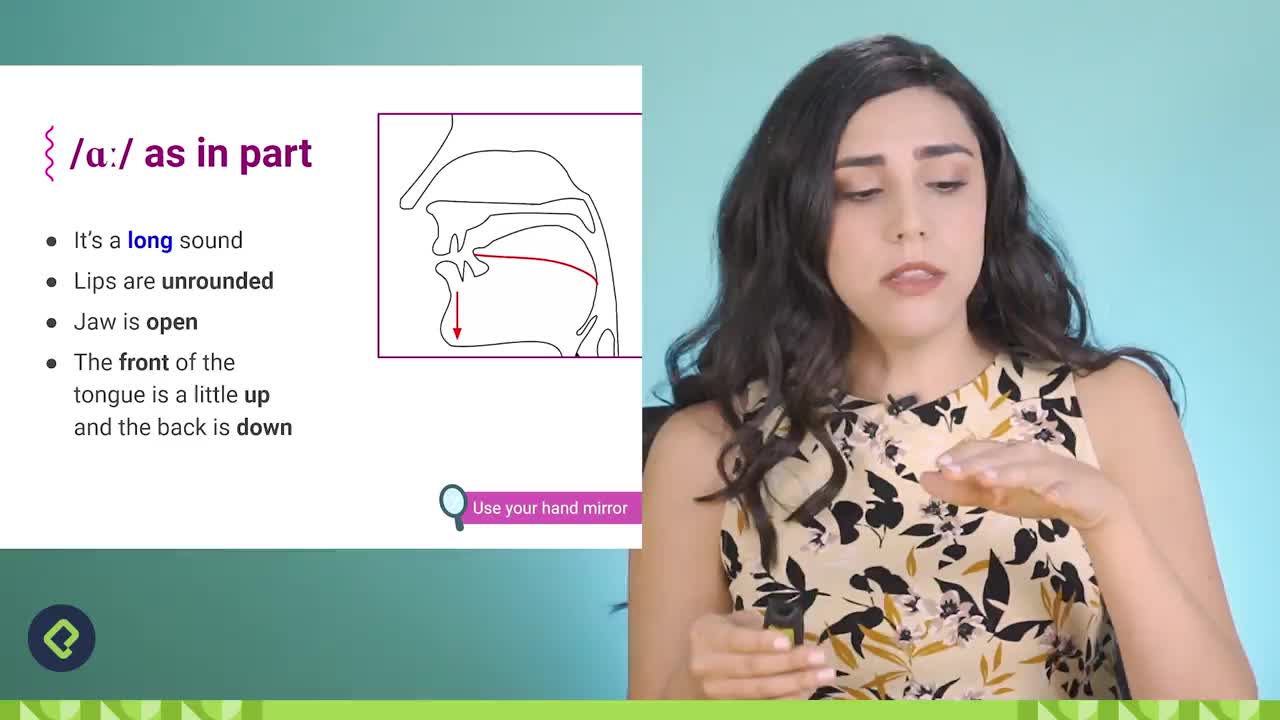
Producing sounds correctly in English requires understanding how your mouth, tongue, and vocal cords work together. When you combine that knowledge with practical tools and daily habits, your pronunciation improves faster than you might expect. Here's a look at the most valuable strategies and resources shared to keep progressing after mastering the fundamentals of phonetics.
¿What did you actually learn about English pronunciation?
Throughout the course, several foundational pillars were covered that every English learner should understand:
- How we produce different sounds in English — understanding the role of articulators like the tongue, lips, teeth, and vocal cords [0:06].
- The International Phonetic Alphabet (IPA) — a universal system that represents every sound in human language with a unique symbol, making it possible to read the pronunciation of any word without hearing it first [0:14].
- Vowel sounds and consonant sounds — learning the distinction between sounds produced with an open vocal tract (vowels) and those created by obstructing airflow in some way (consonants) [0:20].
- Word stress — knowing which syllable in a word receives emphasis, which is critical because English is a stress-timed language and incorrect stress can change meaning entirely [0:28].
These elements together form the core of English phonetics, and having them as a foundation makes every other pronunciation practice far more effective.
¿Which online tools help you practice pronunciation?
Two powerful and free resources were recommended to continue practicing independently.
¿How does Cambridge Dictionary support your learning?
At dictionary.cambridge.org/us/, you can look up any English word and find its IPA transcription, audio pronunciation, meaning, and example sentences all in one place [0:42]. This is especially useful because you can see the phonetic symbols you already learned and connect them to real audio. Making this a habit every time you encounter a new word reinforces both your vocabulary and your pronunciation skills.
¿What is YouGlish and why should you use it?
The website youglish.com lets you type any word and instantly see real English speakers saying that word in YouTube videos [0:56]. This exposes you to different accents, speeds, and contexts, which is exactly what you need to develop a natural ear for English. It bridges the gap between textbook pronunciation and how people actually speak.
¿What daily habits will strengthen your pronunciation?
Beyond tools, three practical habits were highlighted as essential for continued improvement.
Warming up before practicing is the first recommendation [1:12]. Your articulators — tongue, jaw, lips — are muscles, and many of the positions required for English sounds may be completely new to your body. A quick warm-up prepares those muscles and prevents tension, just like stretching before exercise.
Reading out loud for 10 minutes a day is another highly effective technique [1:25]. You can grab any magazine, newspaper article, or text in English and simply read it aloud. This builds muscle memory, improves fluency, and helps you internalize rhythm and stress patterns naturally. Consistency matters more than duration here — even 10 minutes daily creates significant progress over time.
Finally, imitating actors in movies and TV series provides an engaging way to practice [1:38]. Pause the video after a line, repeat exactly what the actor said, and try to match their intonation, stress, and rhythm. This technique, sometimes called shadowing, trains your ear and your mouth simultaneously. It also makes practice enjoyable, which means you're more likely to stick with it.
Now it's time to put everything into action — take the final exam, earn that certificate, and keep practicing every single day. What tip are you most excited to try first? Share your thoughts and let others know what worked best for you.