
Diferencias entre Sonidos Vocálicos 'e' y 'ae' en Inglés
Contenido del curso


Sonidos de vocales en Inglés
- 3

Vocales del inglés americano: cortas, largas y diptongos
08:28 min - 4
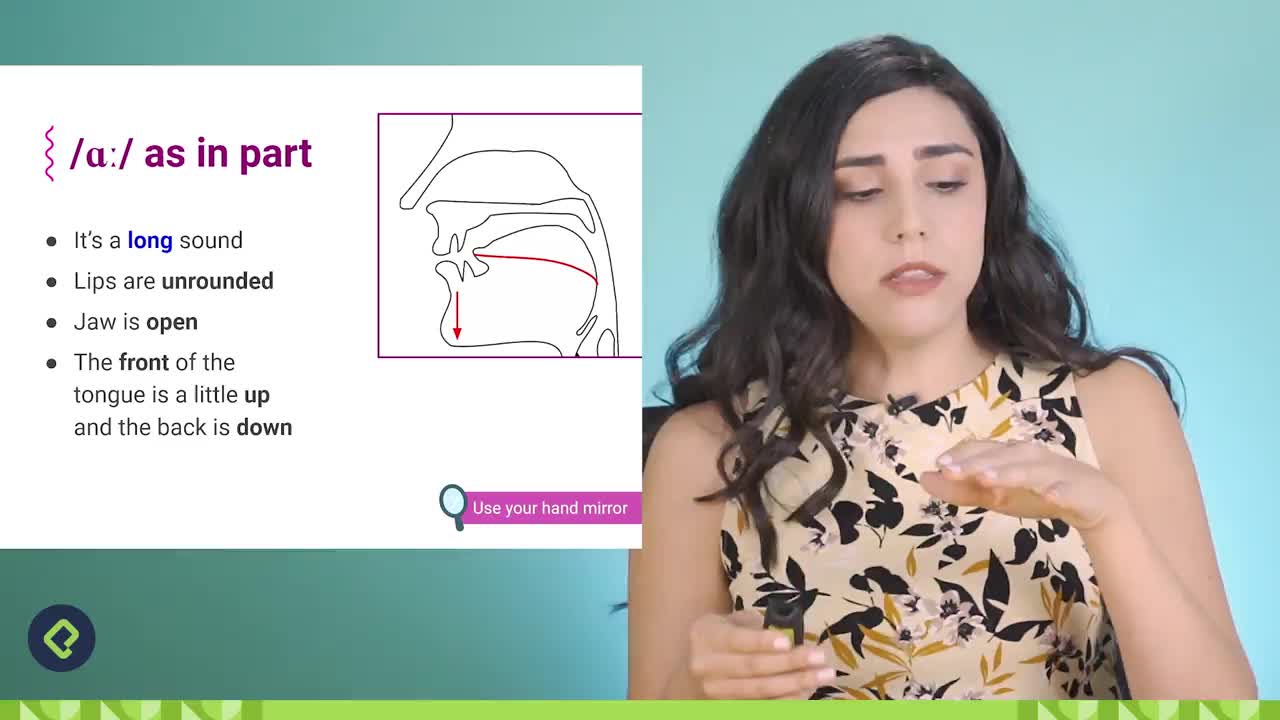
Pronunciar "car" vs "cup" en inglés
05:25 min - 5

Diferencias entre Sonidos Vocálicos 'e' y 'ae' en Inglés
Viendo ahora - 6

Long E vs Short I en inglés
06:50 min - 7

Sonido O largo: acento americano vs británico
03:37 min - 8

Cómo distinguir oo largo y oo corto en inglés
05:35 min - 9

Sonidos /ɜr/ y schwa en inglés
08:24 min - 10

Práctica de pronunciación y fluidez en inglés
00:00 min
Sonidos de consonantes en Inglés


Pronunciación de elementos gramaticales en Inglés
- 15

Pronunciación y Uso de Palabras en Inglés con Terminación "ING"
04:30 min - 16

Pronunciación de la S final en inglés
07:16 min - 17

Uso de Contracciones en Inglés: To Be, Will y Have
07:49 min - 18

Pronunciación de Terminaciones -ed en Pasado Simple
07:58 min - 19
Práctica de conversación en inglés en contextos cotidianos
00:00 min
Pronunciación Básica en Inglés

Recursos
Resumen
Learning how to pronounce the eh and ah vowel sounds in English helps you tell apart words like pet and map, two short sounds that confuse many learners. This lesson is for ESL students who want clearer pronunciation and the confidence to be understood.
The phrase that opens everything here is lend a hand, which means to help or assist someone voluntarily. And that is exactly the goal: giving you a hand with two tricky vowel sounds that live very close together in your mouth.
What is the /e/ sound as in pet?
The first sound is the eh you hear in pet. It is a short sound, so you do not hold it. The key is what your mouth does while you say it [00:28].
To produce it correctly, pay attention to three things:
- Your jaw stays a little closed, but slightly more open than a relaxed position.
- Your lips are unrounded, meaning they do not form a circle.
- Your tongue sits in the middle of the mouth, with the back a little down.
A helpful trick mentioned in the lesson is to use a hand mirror to check your mouth position. Seeing the movement makes it easier to copy.
How do I make the eh sound in English? Keep your lips unrounded, your jaw slightly open, and your tongue in the middle of your mouth. It is a short sound like in pet, leg, and egg.
Practice these example words out loud: leg (you kick with your leg), bread (you make a sandwich with it), egg (you can have one for breakfast), and ten (you have ten fingers) [00:46].
What is the /ae/ sound as in map?
The second sound is the ah in map, and it is also a short sound [01:28]. The difference is all in how open your mouth gets.
Here is what happens when you say it:
- Your lips stay unrounded.
- Your jaw opens wider than it does for pet.
- The back of your tongue drops down.
That wider jaw is the detail that separates ah from eh. Try these words: hat (protects your head from the sun), plan (you plan your day), stamp (you put one on a letter), and cat [01:40].
What is the difference between pet and map sounds? Both are short vowels, so duration does not help. The ah in map needs a wider, more open jaw, while the eh in pet keeps the jaw more closed.
Why can't I tell lend and hand apart?
Because both eh and ah are short sounds, you cannot use length to tell them apart. The difference lives entirely in your mouth position, not in how long you hold the sound [02:22].
Say the phrase slowly: lend a hand. Notice that hand opens your mouth a little more than lend. That small extra opening is the whole secret.
How can I hear the difference between short English vowels? Focus on jaw openness instead of sound length. More open equals ah as in map, slightly more closed equals eh as in pet.
How do I practice distinguishing /e/ and /ae/?
The best way to lock in these sounds is to test yourself with minimal pairs and rhymes [02:38]. Listen to a word, decide which sound it has, then say it back.
Run through these examples and sort them by sound:
- bad has the ah sound as in map.
- bet has the eh sound as in pet, and it even rhymes with pet.
- band has the ah sound as in map.
- dress has the eh sound as in pet.
Noticing that pet and bet rhyme is a quick memory anchor you can reuse with other word pairs.
Now it is your turn. Put new words into the correct column, eh as in pet or ah as in map, then record yourself with your device and share it in the comments [03:52]. Download the workbook to complete the activity, and tell me: are you a cat person or a dog person?