Uso de Contracciones en Inglés: To Be, Will y Have
Contenido del curso


Sonidos de vocales en Inglés
- 3

Vocales del inglés americano: cortas, largas y diptongos
08:28 min - 4
Pronunciar "car" vs "cup" en inglés
05:25 min - 5

Diferencias entre Sonidos Vocálicos 'e' y 'ae' en Inglés
05:33 min - 6

Long E vs Short I en inglés
06:50 min - 7

Sonido O largo: acento americano vs británico
03:37 min - 8

Cómo distinguir oo largo y oo corto en inglés
05:35 min - 9

Sonidos /ɜr/ y schwa en inglés
08:24 min - 10

Práctica de pronunciación y fluidez en inglés
00:00 min
Sonidos de consonantes en Inglés


Pronunciación de elementos gramaticales en Inglés
- 15

Pronunciación y Uso de Palabras en Inglés con Terminación "ING"
04:30 min - 16

Pronunciación de la S final en inglés
07:16 min - 17

Uso de Contracciones en Inglés: To Be, Will y Have
Viendo ahora - 18

Pronunciación de Terminaciones -ed en Pasado Simple
07:58 min - 19
Práctica de conversación en inglés en contextos cotidianos
00:00 min
Pronunciación Básica en Inglés

Recursos
Resumen
Mastering contractions is one of the most effective ways to sound natural in English. When native speakers talk, they rarely say "I am" or "they will" — instead, they blend words together into shorter forms that flow smoothly. Understanding how to produce these sounds correctly makes a real difference in both speaking and listening skills.
How do contractions work with the verb to be?
The verb to be is used to talk about the present, as in "We are learning pronunciation" [0:29]. When contracted, it becomes "We're learning pronunciation." Each pronoun has its own contraction pattern:
- I am becomes I'm — the Mm nasal sound at the end is essential [0:42].
- You are becomes you're — focus on the rr sound [0:50].
- She is becomes she's — a fricative ss sound [0:55].
- He is becomes he's, it is becomes it's [1:01].
- We are becomes we're, they are becomes they're [1:08].
What happens when you add "not" to the verb to be?
Adding not introduces two critical sounds: the Nn nasal and the Tt stop [1:17]. There are usually two contraction options:
- You are not → you're not or you aren't [1:30].
- She is not → she's not or she isn't [1:40].
- We are not → we're not or we aren't [1:55].
The word aren't requires the rr pirate-like sound followed by nn and tt [2:06]. Practicing these clusters out loud helps build muscle memory.
How are contractions formed with "will"?
Will expresses future actions, as in "We will not stop learning" [2:15]. The contracted forms rely heavily on the Lll sound, produced by blocking air in the middle of the mouth and letting it escape from the sides [2:30].
- I will → I'll, you will → you'll [2:24].
- She will → she'll, he will → he'll [2:38].
- It will → it'll — notice the tt followed by lll [2:43].
- We will → we'll, they will → they'll [2:50].
What does "won't" sound like?
The negative contraction won't replaces "will not" entirely [3:00]. The w- sound at the beginning demands rounded lips, followed by nn and tt at the end. Every pronoun uses the same form: I won't, you won't, she won't, he won't, it won't, we won't, they won't [3:05].
How do contractions with "have" differ?
Have is used to talk about the past in an unspecified time — the present perfect tense. For example: "I have finished the course" [3:35]. The key sound here is the Vv fricative, a voiced sound that creates a tingle on the bottom lip [3:52].
- I have → I've, you have → you've [3:44].
- She has → she's — here the fricative is ss, which is unvoiced [3:58].
- He has → he's, it has → its [4:05].
- We have → we've, they have → they've — this last one almost sounds like the name Dave [4:15].
When adding not, the contractions produce clusters like v-n-t and s-n-t:
- I have not → I haven't [4:25].
- She has not → she hasn't — ss followed by nt [4:33].
- They have not → they haven't [4:45].
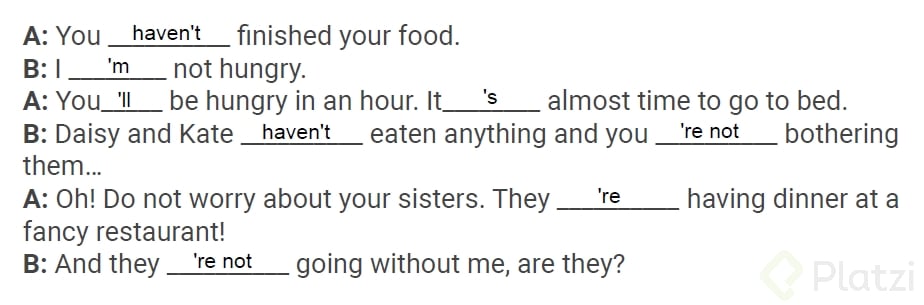
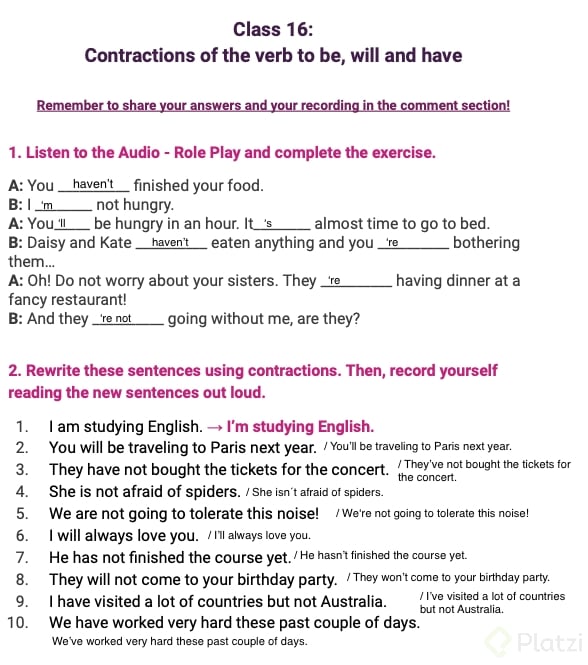
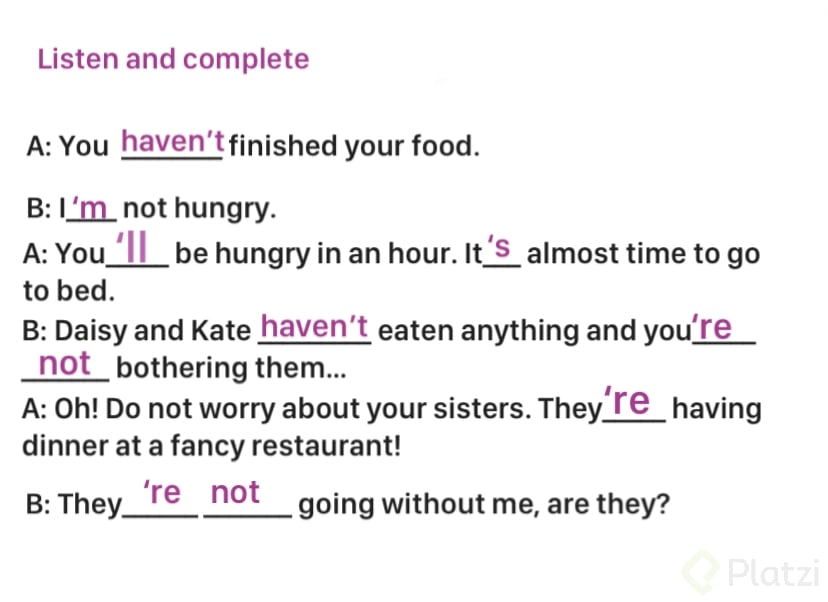
A practical role play exercise at [4:58] demonstrates these contractions in real conversation: "You haven't finished your food," "I'm not hungry," "You'll be hungry in an hour." Listening to natural dialogue reinforces how contractions connect sounds in everyday speech.
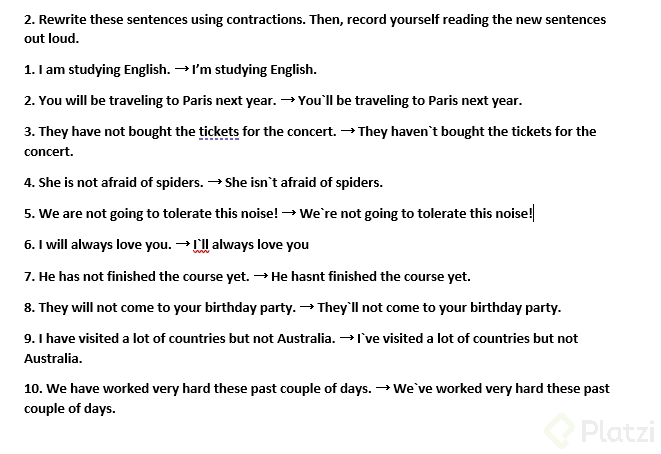
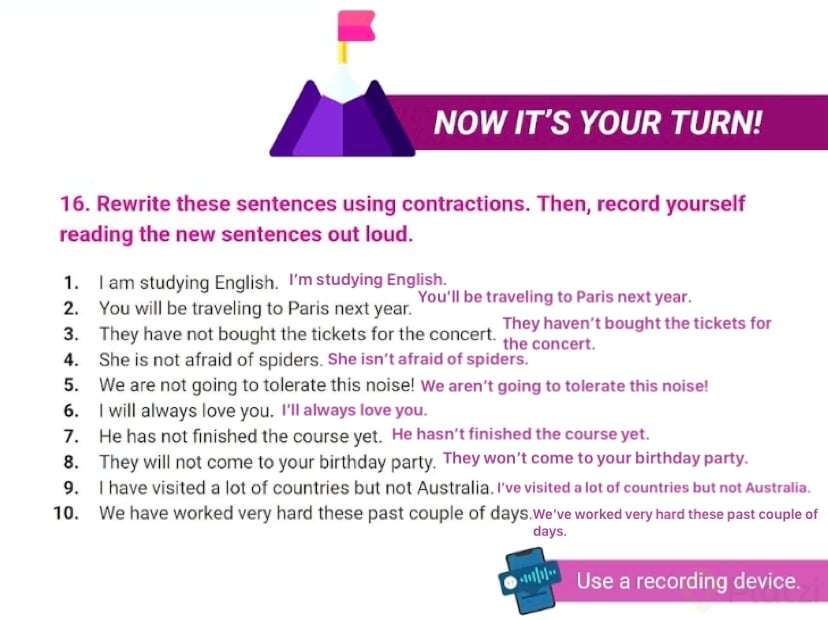
The best way to internalize these patterns is to rewrite full sentences using contractions and then read them out loud [5:42]. Record yourself, compare your pronunciation, and share your recordings for feedback. Which contraction do you find most challenging? Leave your answer in the comments.