





Ana Puerto
say me that i´m not the unique that thinking in Hemione Granger when the teacher says "is /´præk.tɪs/ NO /præk.tɪs´/

Mariana Lafón
Profesor

Moisés Gonzales
Not the one.
Aprender los sonidos del inglés es el primer paso para mejorar tu pronunciación y entender por qué una palabra no siempre suena como se escribe. Aquí descubrirás cómo se relacionan las letras con los sonidos, qué es el International Phonetic Alphabet (IPA) y cómo leer sus símbolos para hablar inglés con más confianza.
¿Por qué el inglés tiene más sonidos que letras?
El alfabeto inglés tiene 26 letras: 5 vocales (A, E, I, O, U) y 21 consonantes. Sin embargo, el idioma usa más de 40 sonidos diferentes. Eso significa que una sola letra puede representar varios sonidos según la palabra.
Mira estos ejemplos del transcript para entenderlo rápido:
¿Por qué una palabra en inglés tiene menos sonidos que letras? Porque algunas letras se combinan o se quedan mudas. En queen, las dos E producen un solo sonido largo; en practice, la E final no se pronuncia.
¿Qué es el IPA y para qué sirve en inglés?
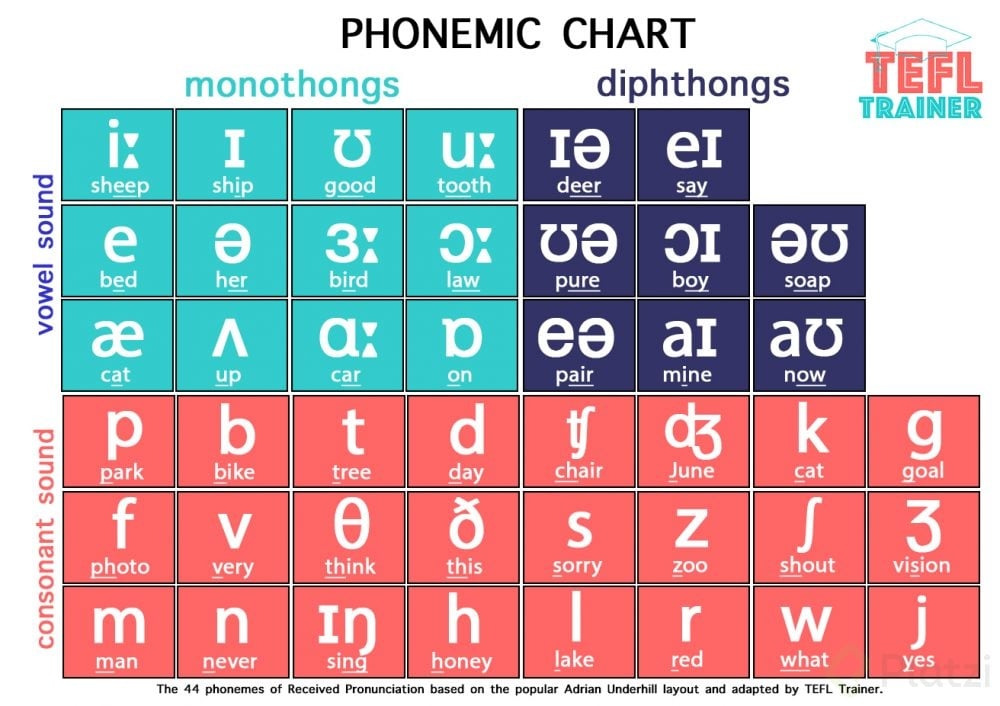
El International Phonetic Alphabet, o IPA, es un sistema de escritura que usa símbolos para representar cada sonido del habla. El estudio y la transcripción de esos sonidos se llama fonética, y es lo que ves en el diccionario entre símbolos extraños después de cada palabra [01:30].
La palabra practice es un buen ejemplo. Se escribe con 8 letras (P-R-A-C-T-I-C-E), pero al pronunciarla la E final desaparece. La transcripción IPA te muestra exactamente qué sonidos sí ocurren y cuáles no.
¿Qué es el IPA? Es un alfabeto internacional que asigna un símbolo a cada sonido del habla. Sirve para saber cómo pronunciar una palabra aunque su escritura no lo indique.
¿Cómo se leen los símbolos básicos del IPA?
Esta es la guía rápida que vas a usar en las próximas clases [02:25]:
/ /): marcan el inicio y el final de la transcripción. Todo lo que está dentro se pronuncia.Con estos cuatro elementos ya puedes empezar a interpretar cualquier transcripción que encuentres en un diccionario.
¿Cómo cuento letras y sonidos en una palabra en inglés?
La mejor forma de entrenar el oído es comparar la escritura con la pronunciación real. Vamos con tres ejemplos del transcript [03:45].
Happy, coffee y pink: ejemplos paso a paso
Fíjate en el patrón: cada vez que veas letras dobles o vocales seguidas, lo más probable es que haya menos sonidos que letras. Y aquí viene lo interesante: justo eso es lo que el IPA te ayuda a detectar de un vistazo.
¿Cómo sé cuántos sonidos tiene una palabra en inglés? Pronúnciala despacio y cuenta cada sonido distinto que haces, no las letras. Las letras dobles, las vocales combinadas y las letras mudas suelen reducir el conteo.
¿Cómo practicar los sonidos del inglés con el IPA?
La idea es ir despacio. Como dice la cita del transcript: "One must always practice slowly. If you learn something slowly, you forget it slowly." Aprender lento te ayuda a recordar lento, y eso es justo lo que quieres con la pronunciación [05:10].
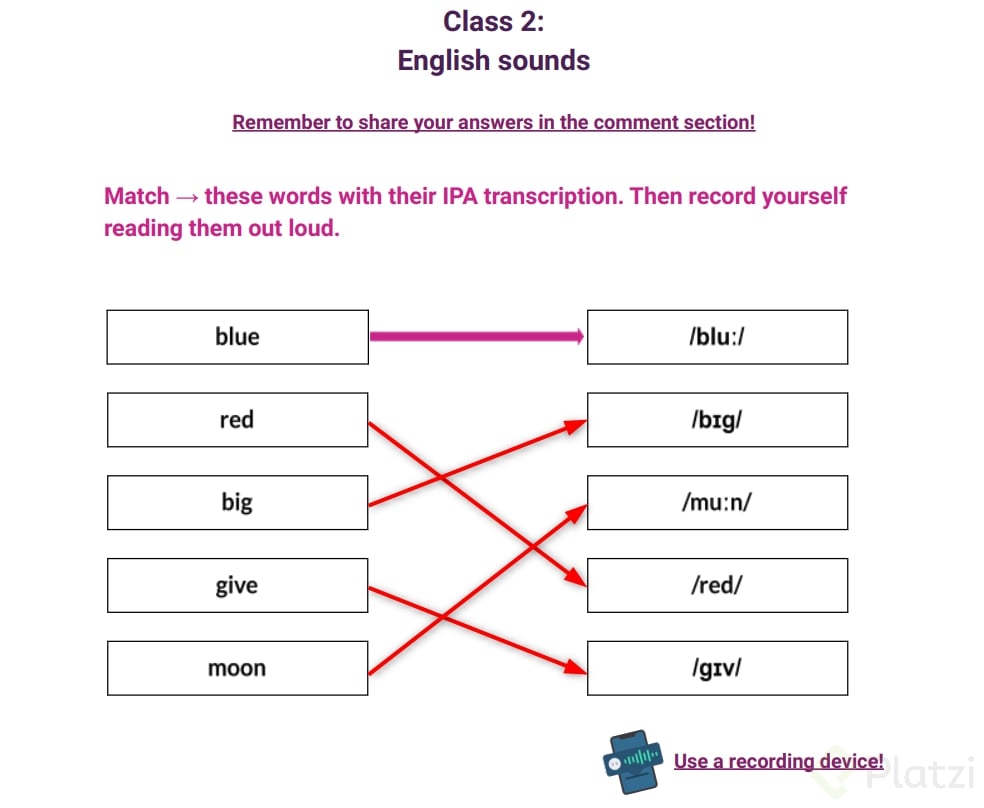
Para tu primer ejercicio, empareja estas palabras con su transcripción IPA y graba tu voz leyéndolas en voz alta:
Guarda tu grabación, compárala con la transcripción IPA y comparte tu audio en los comentarios. ¿Cuál de estas palabras te costó más pronunciar? Cuéntamelo abajo.
Ana Puerto
say me that i´m not the unique that thinking in Hemione Granger when the teacher says "is /´præk.tɪs/ NO /præk.tɪs´/
Mariana Lafón
ProfesorMoisés Gonzales
Not the one.

Emanuel Kapp
https://voca.ro/1jsU3AQ7JlOf , at the end , i made a funny mistake :d
Mariana Lafón
ProfesorHey, Emmanuel! Don't worry. The recording was perfect. My only note:

Luciana Fonseca
Profe te falto la letra j
Mariana Lafón
ProfesorI knooooow! Honest mistake!

Javier Ramos
In English please, is for your own good

Carlos Santaniello
blue: /blu:/ red: /red/ big: /big/ give: /giv/ moon: /mu:n/
Mariana Lafón
ProfesorThat's it Carlos! Good job!

Ross Rojas
Blue - /blu:/ red - /red/ big - /big/ give - /giv/ moon - /mu:n/ https://voca.ro/128NT6o1FppF
Mariana Lafón
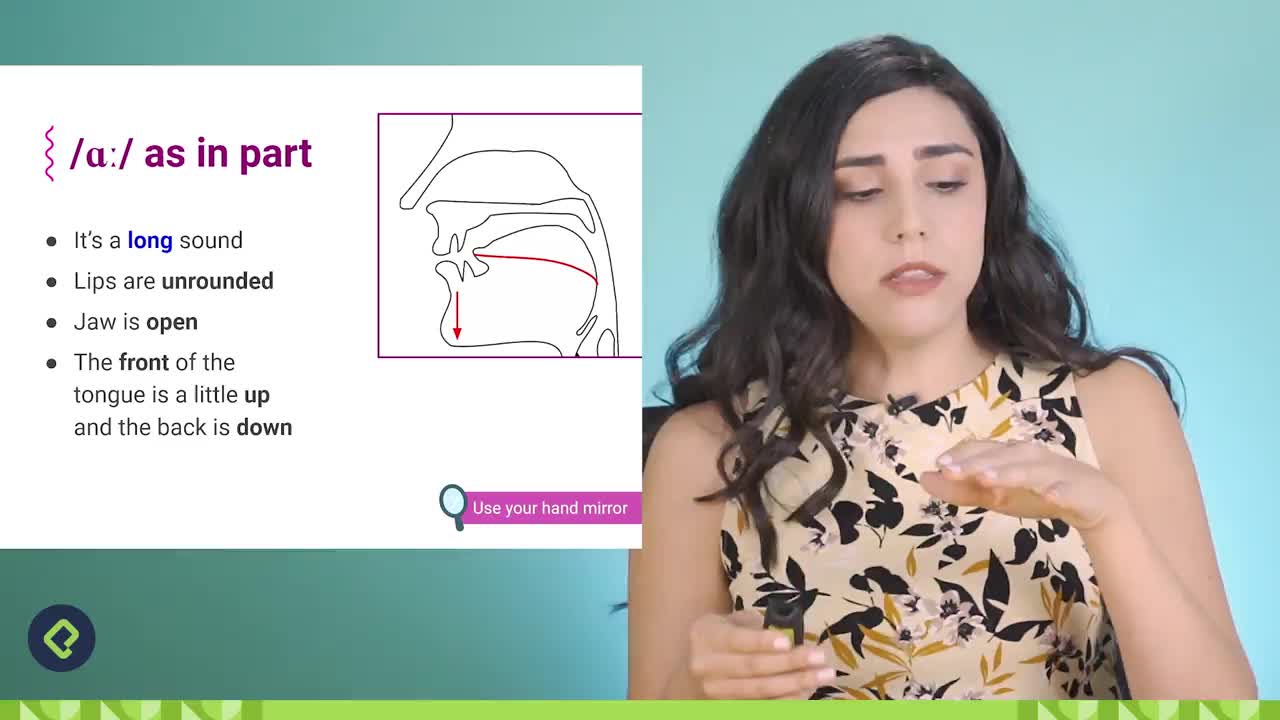
ProfesorHey Ross! Thank you for introducing yourself in the recording! It's so nice to meet you! :) Good job with this exercise! Remember you can take more time with that /u:/ sound in both ‘blue’ and ‘moon’. This vowel sound is a long sound. For the word ‘give’ make sure to let that /v/ sound vibrate so it doesn’t sound like a /f/ sound. I'll check your recordings in the next classes to see if this was achieved. Thank you for sharing!

Omar Aguayo
Amazing! I really love this course!
Mariana Lafón
ProfesorWell, I'm very glad to know that! Thank you for your comment. What's your name?

Jennifer Lisandra García Orellana
https://voca.ro/12xIdlxuxS7R I share my pronunciation, could you give me a feedback?

Sandra Hernández Nolasco
I'm sorry my computer is bad but I will try... =)
Mariana Lafón
ProfesorHey, Sandy! Thank you for the introduction. I can hear you just fine.

Alejandro Zuñiga Saavedra
English sounds. Match → these words with their IPA transcription. Then record yourself reading them out loud.
My pronunciation https://voca.ro/1mV74AIldPZX
Mariana Lafón
ProfesorHey there, Alejandro!
Alejandro Zuñiga Saavedra
Thank you for your recommendation, it's helped me very much. My pronunciation is better now.
Excellent teacher. Greetings.

Andrea Suzel Vega Cifuentes
Letters=souds same number of letters and sound CAT 123 3 letters, 3 sounds

Lazaro Baldiviezo

Patricio Manuel Ugarte
I love pronunciation courses! They are always very interesting and useful! I never thought in comparing the words amount of letters vs the amount of sounds. I'm very excited about this course!
Great class! Thank you so much!
Let's learn a lot!
Mariana Lafón
ProfesorThank you for your lovely comment, Patricio! Excellent job! Don't forget to share with me your recordings! :)

Luis Alejandro Gutierrez
Hi, everyone, this is my pronunciation: https://voca.ro/1nPsegH8fciB
Mariana Lafón
ProfesorHey there yourself, Luis! Great job, you're sounding great! My notes will be a little bit more advanced for you as I can hear that you already have a pretty good accent for a Basic student. Sooo...

Grade Marisol

Angela Mateus
Here I go! https://voca.ro/1ka4Hh7ag6i6
Thanks for the feedback.
Mariana Lafón
ProfesorHey, Angela! You have a lovely voice. :)

silfredo mario
For my, it is easier to pronounce the large word
Mariana Lafón
ProfesorOh, that's so interesting, Silfredo! We'll get to practice longer words very soon! Let me know if there are any words in English you would like me to explain how they should be pronounced. Cheers!
silfredo mario
thank you very much for your answer teacher, I was referring to the fact that it is easier for me to learn the sound of the words that their pronunciation is a long sound

Ricardo Gomez
Challenge:
Mariana Lafón
ProfesorHey Ricardo! Thank you so much for sharing your recording with me! You'll get to practice vowel sounds in Module 2. I recommend you take more time saying each word. Start slow and then say it quicker, so you can target all the sounds in each word. I felt you rushed a little bit for this challenge. But still, great job. I'll be looking out for your next recordings. :)
Ricardo Gomez
Hi, My improvement https://voca.ro/18sazRpSqMax

Robinson Rodriguez Sierra