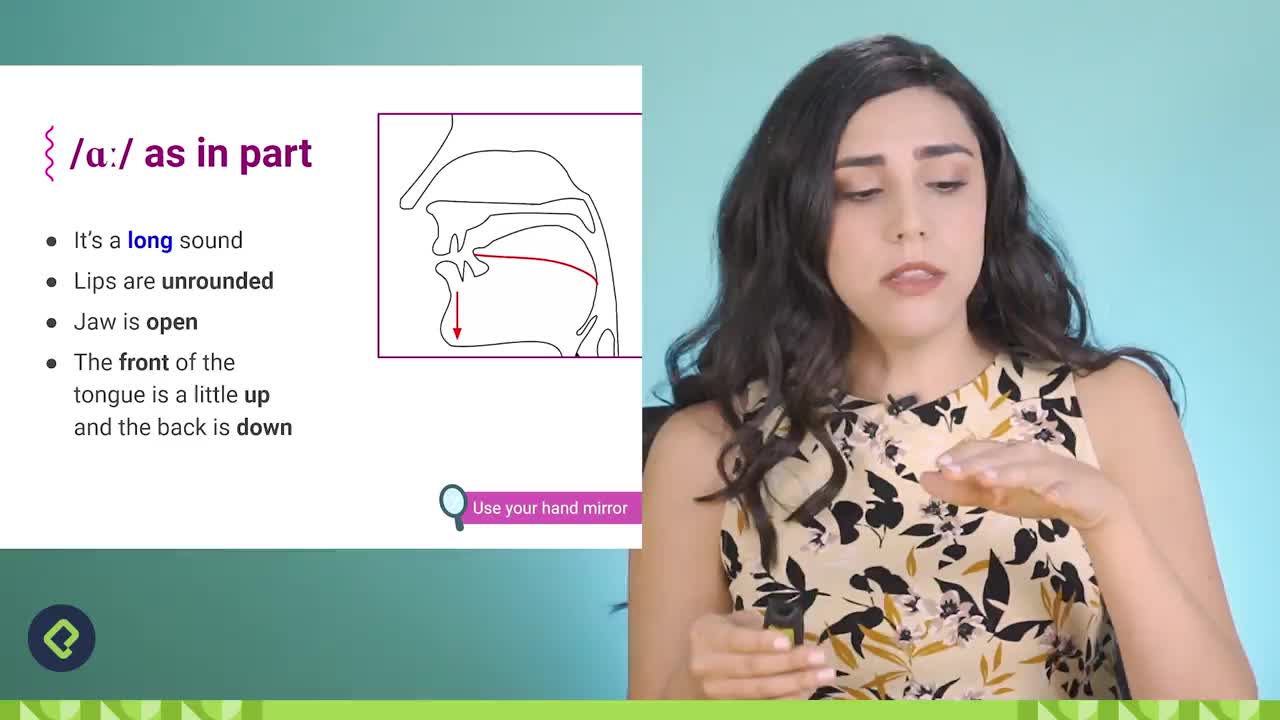
Distinguishing between similar vowel sounds is one of the most practical skills you can develop in English pronunciation. The sounds ooh (as in goose) and uh (as in foot) often confuse learners because the mouth position is almost identical, yet the difference in duration changes the word entirely. Understanding this contrast will help you sound more natural and avoid common mistakes.
How do you produce the ooh sound as in goose?
The ooh sound is a long vowel sound [0:18]. To produce it correctly, follow these steps:
- Round your lips.
- Keep your jaw slightly open.
- Raise the back of your tongue up.
Because this is a long sound, you hold it for a noticeable duration. Using a hand mirror while practicing helps you confirm the correct mouth position. Some common words that use this sound include:
- Two — number two.
- Moon — the moon is shining.
- Soup — you can have chicken soup.
- Movie — what's your favorite movie?
Notice how in each word the vowel stretches out slightly. That length is what defines the ooh vowel.
What makes the uh sound in foot different?
The uh sound uses the exact same mouth shape as the ooh sound, but it is shorter [0:55]. That difference in duration is what separates boot from book or pool from pull. To produce it:
- Round your lips.
- Keep your jaw closed but slightly open.
- Raise the back of your tongue.
Here are some examples with this short vowel:
- Book — what's your favorite book?
- Woman — she is such an attractive woman.
- Wood — we make paper out of wood.
- Wolf — the wolf is howling at the moon.
The key takeaway is that mouth position stays the same; only the length of the sound changes. Practicing both side by side makes the contrast much easier to feel and hear.
Can you spot which word does not belong?
A great way to train your ear is through grouping exercises [2:00]. Try these:
- Soon, moon, boot, or look? The answer is look, because it uses the short uh sound while the others use the long ooh.
- Pool, full, spoon, or sugar? The answer is spoon, which carries the long ooh sound, whereas full and sugar use the short uh. Interestingly, pool also has the long sound, so this exercise sharpens attention to subtle differences.
- To, put, too, or two? The answer is put, because it has the short uh vowel. A fascinating detail here is that to, too, and two are all pronounced exactly the same way [2:50] despite having different spellings and meanings. These are known as homophones — words that sound identical but differ in meaning and spelling.
Why does duration matter so much?
The sentence used throughout the lesson perfectly illustrates this: "I took a boot for my foot too" [1:33]. In just one sentence, both vowel sounds appear multiple times. Took and foot carry the short uh, while boot and too carry the long ooh. Saying this sentence aloud and paying attention to the length of each vowel is an effective practice technique.
How can you practice on your own?
The recommended exercise involves completing sentences using the correct vowel sound as a guide [3:15]. For example, filling in blanks like "My birthday is in ooh" (a month with the long vowel, such as June) or "This year it falls on a ooh" (a day like Tuesday). Recording yourself and listening back allows you to compare your pronunciation against the model.
Try reading the example sentence one more time: "I took a boot for my foot too." If you can clearly hear and produce the difference between the short and long vowels, you are making real progress. Share your recording and keep practicing — every repetition builds stronger muscle memory.