Learning to produce English sounds correctly is one of the most valuable skills you can build as a language learner. This course, guided by Mariana Lafón — actress, theater producer, and teacher based in Mexico City — focuses on the foundations of English pronunciation, from individual sounds to practical contractions you use every day.
What does this pronunciation course cover?
The course is structured around key building blocks of spoken English. You will work through several core topics that connect directly to how native speakers produce and perceive language:
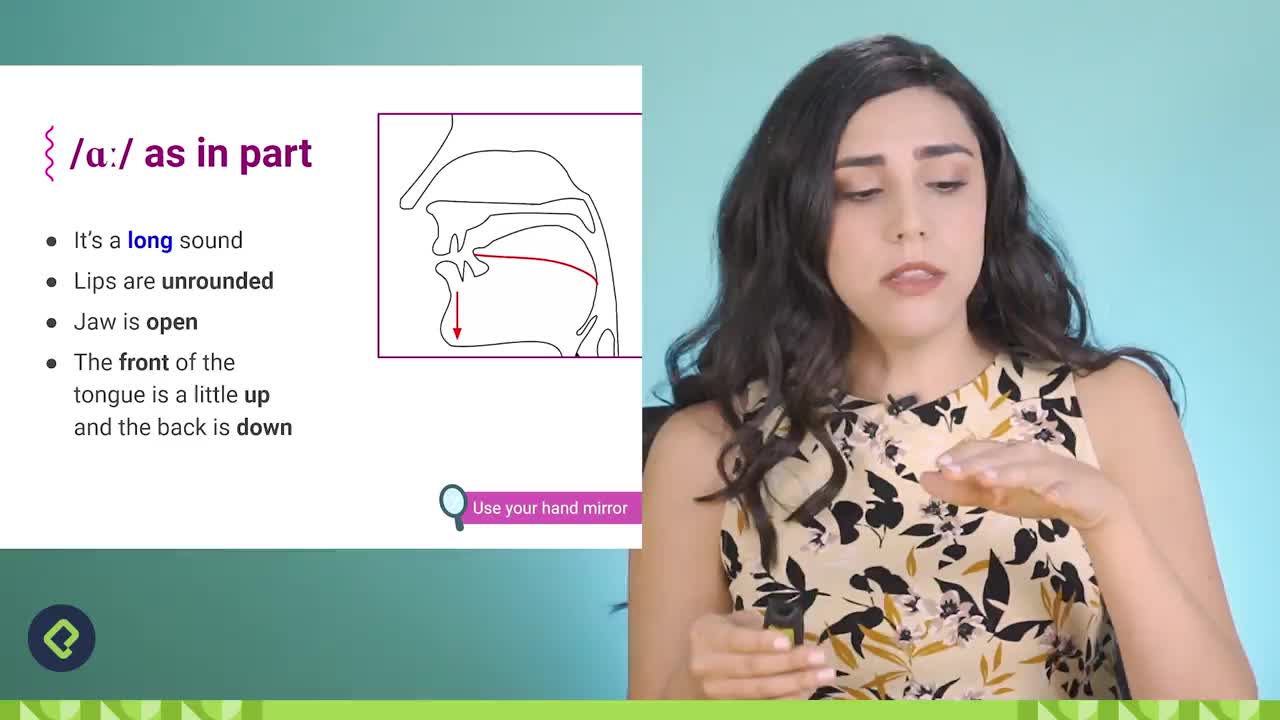
- How we produce different sounds in English [0:38]: understanding the physical mechanics behind pronunciation, including mouth position and airflow.
- IPA (International Phonetic Alphabet) [0:46]: a universal system of symbols that represents every sound in spoken language. Knowing IPA helps you read any dictionary entry and pronounce new words accurately, even without hearing them first.
- Vowel and consonant sounds [0:53]: the two main categories of sounds in English. Vowels are open sounds produced without blocking airflow, while consonants involve some restriction in the mouth or throat.
- Contractions of the verb "to be," "will," and "have" [0:57]: shortened spoken forms like I'm, you'll, and I've that are essential for sounding natural in everyday English.
What tools do you need to practice pronunciation?
Preparing the right materials before you start makes a real difference in how quickly you improve. Here is what you should have ready:
- A recording device [1:08]: this can be a voice recorder, your phone, a tablet, or your laptop. Recording yourself lets you compare your pronunciation against the model and track your progress over time.
- A hand mirror [1:18]: watching your mouth, lips, and tongue while you practice helps you match the correct positions for each sound.
- A notebook [1:27]: writing down key information turns short-term practice into long-term knowledge you can revisit.
Why should you download the workbook?
The course includes a workbook and answer key available in the resources section [1:37]. Every class has exercises designed to reinforce what you learn, and the answer key allows you to check your work independently. Completing these exercises consistently is what transforms passive listening into active skill-building.
Why does pronunciation matter from the start?
Mariana's background studying acting in London gave her firsthand experience with how deeply pronunciation shapes communication [0:18]. When you understand the mechanics behind English sounds, you gain confidence not just in speaking but also in listening comprehension. Recognizing contractions, for instance, helps you follow fast-paced conversations that might otherwise sound like a blur.
Grab your mirror, open your notebook, and get your recording device ready — share in the comments which sound in English you find most challenging and why.