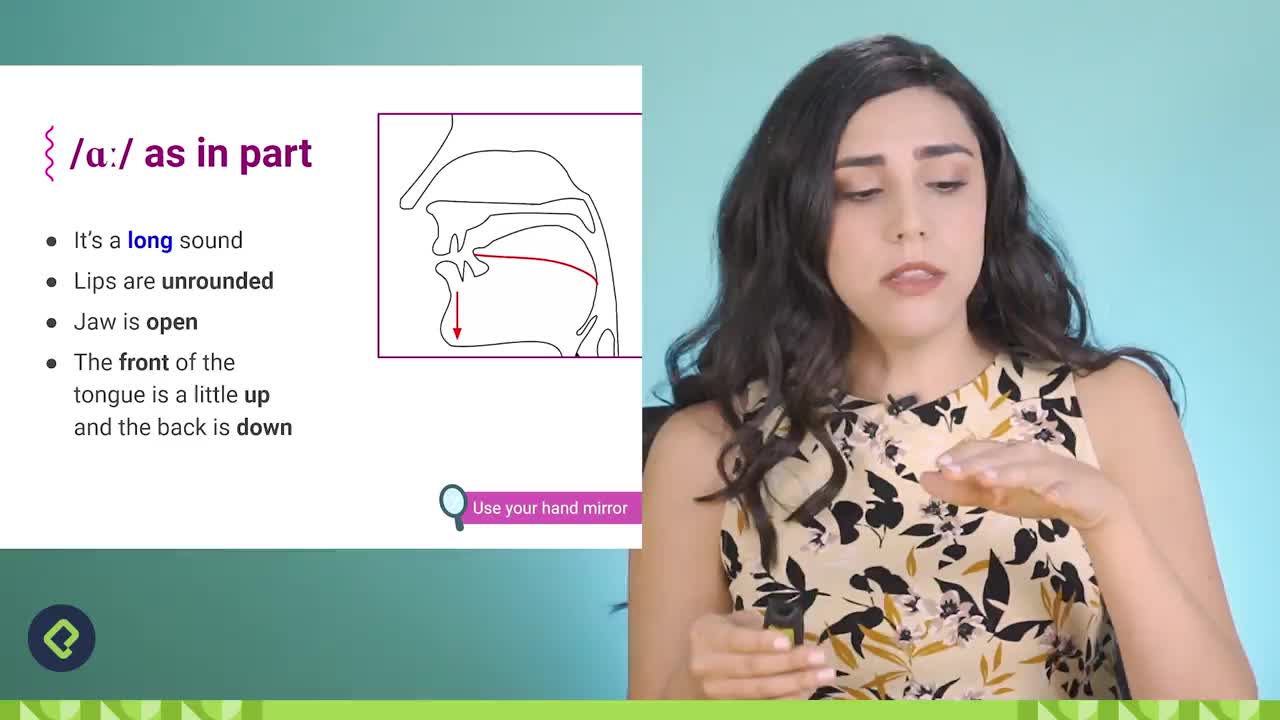
Mastering the -ing ending is essential for English learners because it appears in verbs, nouns, and adjectives alike. Understanding how to pronounce it correctly and where to place word stress will make your spoken English sound more natural and confident.
How do words with -ing function in English?
Words ending in -ing can serve different grammatical roles [0:06]:
- Verbs: playing, running, swimming.
- Nouns: learning.
- Adjectives: interesting, amazing, boring.
Recognizing the function of an -ing word in a sentence helps you understand meaning and use it properly in your own speech and writing.
What happens with the -ing sound after vowels and consonants?
The -ing ending combines the short vowel sound i with the nasal sound ng [0:22]. This nasal quality means the air flows through your nose, producing that characteristic ng vibration.
When the original word ends in a vowel sound, the air doesn't stop before -ing. The sound flows continuously [0:38]:
- Playing.
- Seeing.
- Dying.
- Doing.
When the original word ends in a consonant sound, the air briefly stops before the -ing begins [0:52]:
Practicing this distinction between vowel-ending and consonant-ending words will improve your fluency and rhythm.
Where does word stress fall in -ing words?
Adding -ing often creates an extra syllable, so knowing where to place word stress is critical [1:10]. The IPA transcription uses a high vertical line to mark the stressed syllable, and a period to separate syllables.
How does stress work in "interesting" and "amazing"?
- Interest → interesting: the stress stays on the first syllable, in-teres-ting [1:18].
- Amaze → amazing: the stress falls on the second syllable, a-ma-zing [1:26].
Notice that adding -ing does not shift the stress from its original position in the base word. This is a reliable pattern you can apply broadly.
What are key practice words for -ing pronunciation?
Listen and repeat these examples to train your mouth and ear [1:44]:
- Jumping.
- Swimming.
- Eating.
- Studying.
And these adjectives [2:04]:
- Boring.
- Relaxing.
- Disgusting.
- Frightening.
Each word reinforces the nasal ng sound and correct syllable stress.
How do you practice adding -s, -ed, and -ing to base words?
A practical exercise ties everything together [2:20]. Take a base word and create all three forms:
- Show → shows, showed, showing.
Now try these on your own:
- Dream → dreams, dreamed, dreaming.
- Help → helps, helped, helping.
- Check → checks, checked, checking.
- Finish → finishes, finished, finishing.
Record yourself saying each form out loud. Hearing your own pronunciation helps you identify areas to improve and builds muscle memory for the -ing nasal ending. Share your recordings and keep practicing — every repetition brings you closer to natural-sounding English.