Contenido del curso

Let's talk!
- 2

Idioms y Phrasal Verbs en Conversaciones diarias
05:56 min - 3

Identificación y uso de modismos en inglés cotidiano
Viendo ahora - 4

Idioms en Inglés: Significado y Uso Práctico
04:58 min - 5

Comprensión de Idiomas: Expresiones y Significados en Inglés
03:14 min - 6

Idiomas y Expresiones Comunes en Inglés: Ejercicios Prácticos
00:47 min - 7

Aprende Phrasal Verbs en Inglés: Significados y Ejemplos Prácticos
06:24 min
Time
- 8

Modismos de Tiempo en Inglés: Significado y Uso Práctico
05:29 min - 9

Lectura y Comprensión de Historias Cortas
02:47 min - 10

Expresiones de Tiempo en Inglés: Modismos y Uso Práctico
04:47 min - 11

Idioms de Tiempo en Inglés: Ejercicio de Comprensión y Práctica
02:00 min - 12

Phrasal Verbs en Inglés: Uso y Significado Práctico
04:30 min - 13
Práctica de conversación en inglés (contexto cotidiano)
00:00 min
It's a family affair
- 14

Modismos en Inglés Relacionados con la Familia
06:35 min - 15

Expresiones Idiomáticas en Inglés: Comprensión y Práctica
05:14 min - 16

Idioms en Inglés sobre la Familia: Significados y Ejemplos
04:29 min - 17

Relaciones familiares y autoconocimiento personal
03:18 min - 18

Phrasal Verbs con "Put": Significados y Uso Práctico
04:07 min
Till the next time!

Identificación y uso de modismos en inglés cotidiano
Resumen
Practicing English idioms through storytelling is one of the most effective ways to internalize new vocabulary. In this session, a short story brings together several conversational idioms, followed by comprehension questions that test listening skills and contextual understanding.
What idioms appear in the story?
The story revolves around a workplace meeting where the boss gathers the team. Each idiom appears naturally within the narrative, making it easier to grasp meaning through context.
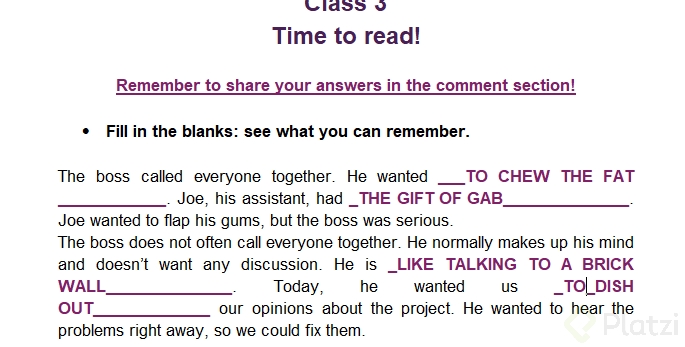
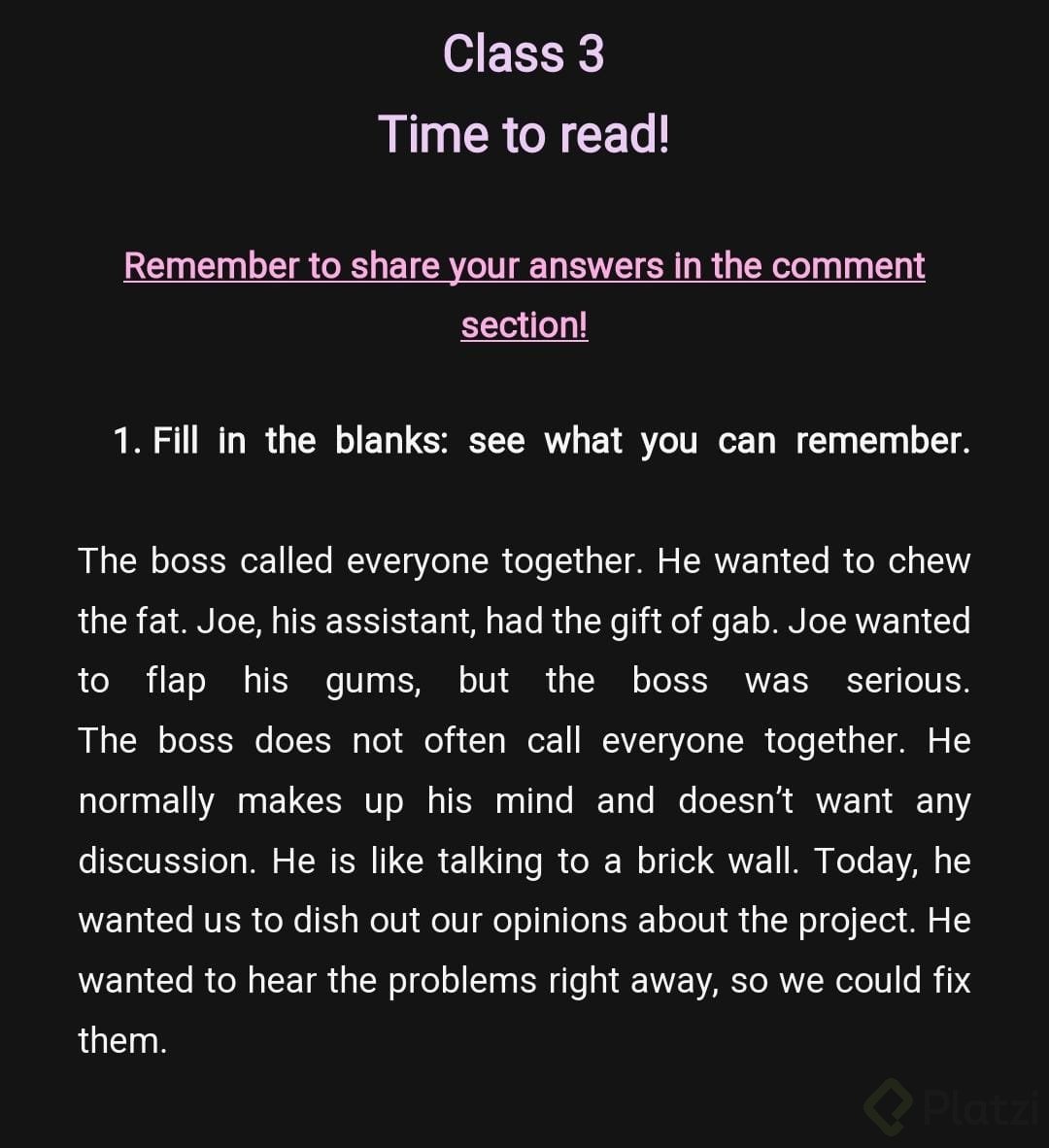
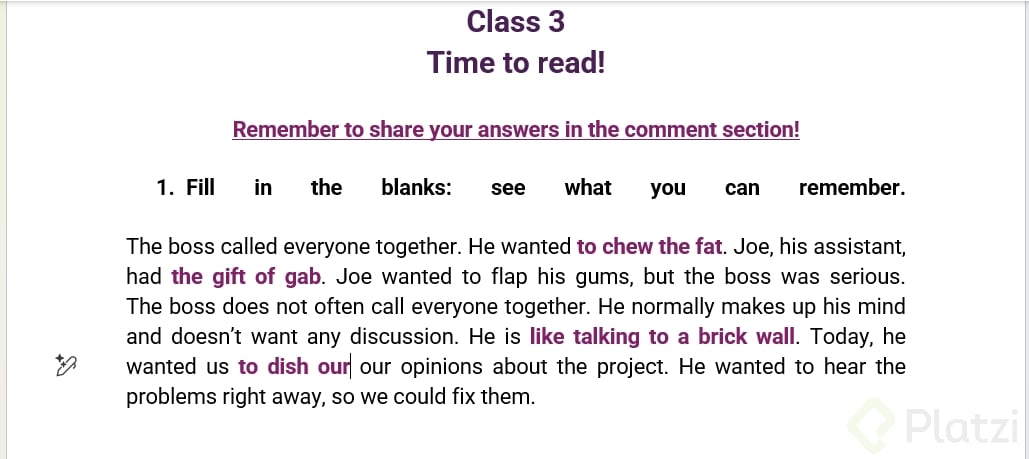
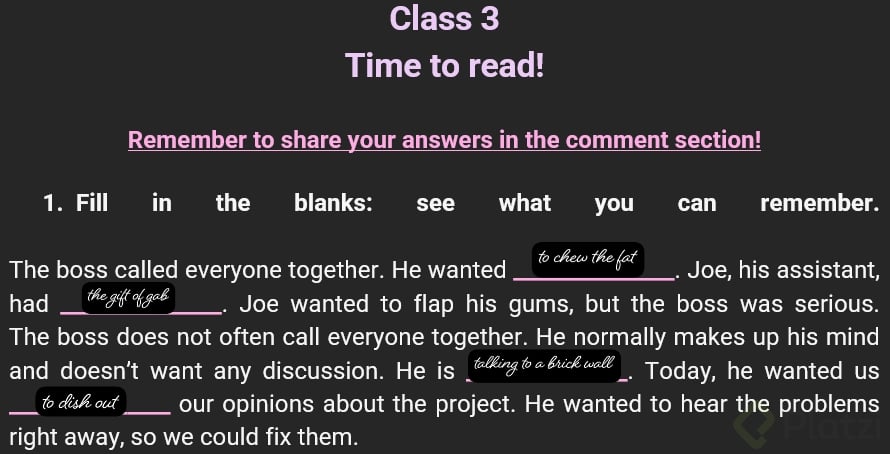
- Chew the fat [0:18]: means to have a casual conversation or discuss things informally. The boss called everyone together because he wanted to chew the fat about the project.
- Gift of gab [0:24]: describes someone who talks easily and fluently. Joe, the assistant, had this natural ability to speak well.
- Flap his gums [0:28]: means to talk a lot, often without saying anything important. Joe wanted to flap his gums, but the boss was serious.
- Make up his mind [0:36]: refers to reaching a decision. The boss normally makes up his mind without asking for input.
- Talking to a brick wall [0:42]: describes a situation where someone refuses to listen. The boss is usually like talking to a brick wall because he does not want any discussion.
- Dish out [0:48]: means to give opinions or criticism openly. Today, he wanted the team to dish out their opinions about the project.
How can you test your understanding of these idioms?
After hearing the story, four comprehension questions reinforce meaning by presenting two options each. This format pushes you to recall context rather than just definitions.
What did the boss want to do?
The boss called everyone together to chew the fat [1:20]. He wanted an informal discussion, not a formal presentation. This is the key distinction between chew the fat and simply giving orders.
What did Joe want to do?
Joe wanted to flap his gums [1:34]. Since Joe had the gift of gab, he naturally wanted to talk a lot, but the meeting had a more serious purpose.
Why is the boss like talking to a brick wall?
The boss is normally described as talking to a brick wall [1:47] because he does not want to hear any discussion. He typically makes decisions alone and moves forward without feedback.
How does "dish out" work in context?
The final question focuses on dish out [2:05]. To dish out your opinion means to be critical and let someone know what you really think. In the story, the boss surprisingly asked the team to dish out their honest opinions about the project so problems could be identified and fixed right away.
This is an unusual behavior for the boss, which is why the story highlights the contrast. He normally acts like a brick wall, but today he wanted open feedback.
Try using these idioms in your own sentences and share your examples in the comments. Which one do you find most useful for everyday conversation?