Theories of Motivation in Games & Gamification 🎮🔥
Why do people obsess over Pokémon GO, Duolingo streaks, or loyalty points? Motivation theory explains the psychology behind gaming addiction—and how to harness it in gamification. Here’s a breakdown of key theories and their applications:
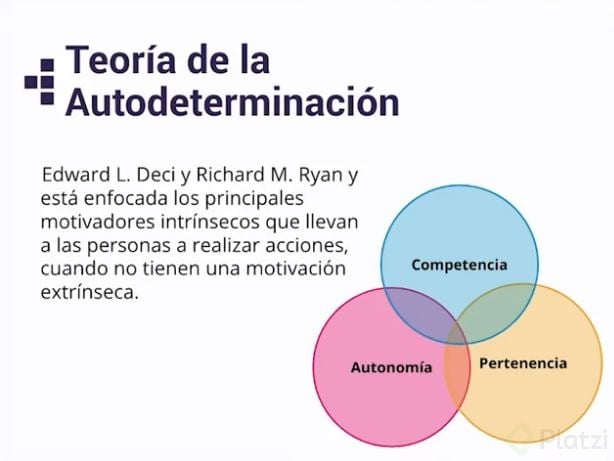
1. Self-Determination Theory (SDT) 🧠
Core Idea: People are motivated by autonomy, competence, and relatedness.
- Autonomy: Freedom to choose (e.g., customizable avatars in Fortnite).
- Competence: Mastery & progression (e.g., skill trees in RPGs).
- Relatedness: Social connection (e.g., clans in Clash of Clans).
Gamification Use:
- Let users pick goals (e.g., "Choose your learning path" in Coursera).
- Show progress metrics (e.g., LinkedIn’s "Profile Strength" bar).
- Add social features (e.g., Fitbit challenges with friends).
2. Operant Conditioning (B.F. Skinner) 🐭
Core Idea: Behavior is shaped by rewards and punishments.
- Positive Reinforcement: Rewards for actions (e.g., XP for completing tasks).
- Variable Rewards: Unpredictable bonuses (e.g., loot boxes).
Gamification Use:
- Points & Badges: Starbucks’ "Star Rewards".
- Randomized Bonuses: "Spin the wheel for a discount!" pop-ups.
Risk: Overuse can feel manipulative (e.g., mobile game microtransactions).
3. Flow Theory (Mihaly Csikszentmihalyi) 🌊
Core Idea: People are happiest when challenge matches skill.
- Too easy = boredom. Too hard = frustration.
Gamification Use:
- Adaptive Difficulty: Duolingo adjusts questions based on performance.
- Progressive Quests: "Complete Level 1 to unlock Level 2".
Example: Candy Crush’s "Just one more level!" hook.
4. Social Learning Theory (Bandura) 👥
Core Idea: People learn by observing others.
- Modeling: Copying behaviors (e.g., Twitch streamers influencing play styles).
- Vicarious Reinforcement: Seeing others rewarded motivates action.
Gamification Use:
- Leaderboards: Peloton’s live rankings.
- UGC Showcases: "Top Fan of the Month" features.
5. Goal-Setting Theory (Locke & Latham) 🎯
Core Idea: Clear, challenging goals boost motivation.
- SMART Goals (Specific, Measurable, Achievable, Relevant, Time-bound).
Gamification Use:
- Quests with Steps: "Complete 5 workouts this week → unlock badge."
- Progress Tracking: "You’re 80% to your next reward!"
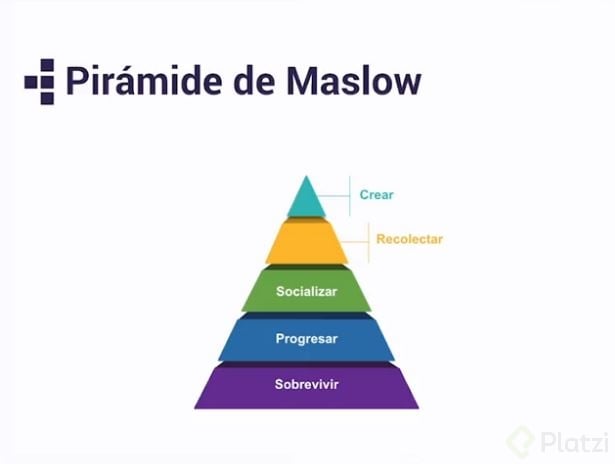
6. Maslow’s Hierarchy of Needs ⛰️
Core Idea: Motivation depends on fulfilling needs (physiological → self-actualization).
Gamification Links:
- Esteem: Badges (e.g., Reddit Karma).
- Self-Actualization: Creative modes (e.g., Minecraft building).
7. Bartle’s Player Types 🎭
Core Idea: Players have 4 dominant motivations:
- Achievers (Want rewards). → Leaderboards, trophies.
- Explorers (Want discovery). → Easter eggs, hidden levels.
- Socializers (Want connection). → Guilds, co-op modes.
- Killers (Want competition). → PVP battles, rankings.
Gamification Use:
- Segment users (e.g., offer competitive challenges AND collaborative quests).
8. The Octalysis Framework (Yu-kai Chou) 🕹️
8 Core Drives of Motivation:
- Epic Meaning ("Save the world!").
- Accomplishment (Badges, levels).
- Empowerment (Creativity, e.g., Roblox).
- Ownership ("My character, my loot").
- Social Influence (Leaderboards, teams).
- Scarcity ("Limited-time offer!").
- Unpredictability (Loot boxes).
- Avoidance ("Don’t lose your streak!").
Example: LinkedIn uses #1 (Meaning) via "Build your career", #2 (Achievement) with "Profile Completeness".
How to Apply These Theories 🛠️
- For Marketing:
- Use variable rewards in loyalty programs (e.g., random bonus points).
- Add social proof ("10K people redeemed this!").
- For Education:
- Adaptive learning paths (Flow Theory).
- Peer comparisons ("Your class rank: #8").
- For Apps:
- Personalized challenges (SDT’s autonomy).
- "Fear of Loss" ("Your progress resets in 24h!").
Ethical Warning ⚠️
- Addiction Risk: Don’t exploit psychological triggers (e.g., predatory microtransactions).
- Balance: Fun + value > manipulation.