Preparing for a job interview in English requires more than just knowing the language. Whether it's an online, phone, or face-to-face setting, each format has specific advantages, challenges, and best practices that can make the difference between landing the job or not. Understanding these nuances gives you a competitive edge, especially when applying to international companies.
What are the advantages and disadvantages of online and phone interviews?
Online and phone interviews offer practical benefits that make them appealing for candidates targeting international roles [0:06]. The most obvious advantage is that you save time and money because there is no need to travel. You might also feel more comfortable being in a familiar environment, and you gain access to opportunities with companies around the world.
However, there are clear disadvantages. These formats tend to be more impersonal, and technical problems like internet or phone issues can disrupt the conversation [0:38]. Time constraints may limit how much you can expand on your answers. During phone interviews specifically, incoming calls or messages can become distractions.
What tools do you need for an online interview?
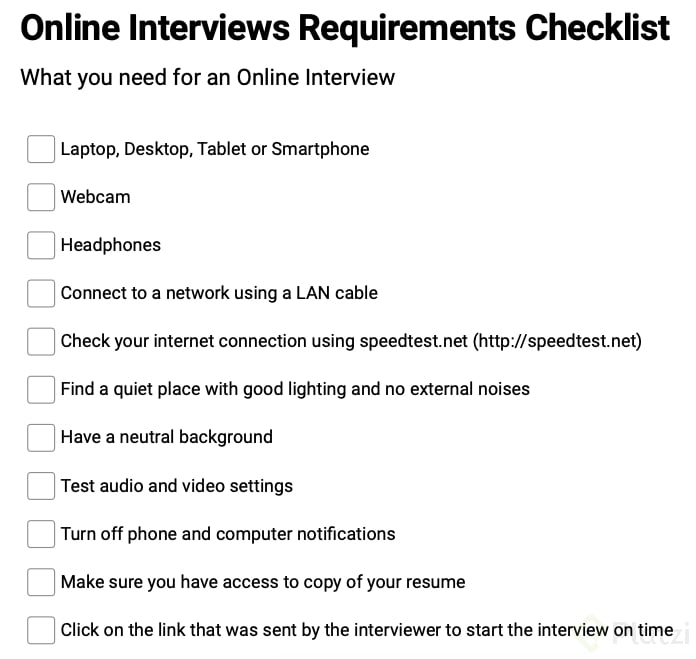
Having the right setup is essential [1:07]. A laptop or desktop computer is recommended over a phone or tablet. You should also have a webcam and headphones with a built-in microphone, meaning the microphone is incorporated directly into the headphones. Most importantly, ensure a good internet connection of at least five megabits per second. Internet failures during an interview leave a poor impression and add unnecessary stress.
Creating a personal checklist before each interview is also a smart move. Include keywords from your resume in English so you can reference them quickly if needed [1:41].
Why are face-to-face interviews still valuable?
Face-to-face interviews bring a level of personal contact that no screen can replicate [1:55]. You can expand your answers more freely, read the interviewer's body language in real time, and even get a sense of the office where you might work.
On the other hand, they require more preparation. You need to plan ahead by checking the address in advance. Using tools like Google Maps to estimate travel time ensures you arrive punctually [2:24]. You also need to pay closer attention to your body language and facial expressions, since everything is visible. Introverts may find this format less comfortable compared to remote options.
What are the best tips for succeeding in any interview format?
Regardless of the format, several practices apply universally and can significantly improve your performance [2:58].
How should you prepare before the interview?
- Confirm you have the link to your online interview; if it's not in the invitation, ask for it beforehand [3:04].
- For face-to-face interviews, request the address and name of the interviewer in advance.
- Sit in a quiet, private place to avoid distractions during online or phone calls [3:22].
- Test your video and audio settings before the interview starts.
- Use a neutral background that won't distract the interviewer [3:34].
- Dress professionally using soft, solid colors and avoiding distracting patterns, even for online interviews [3:44].
- Have a printed copy of your resume handy in case nerves make you forget details [3:55].
- Close unnecessary tabs, applications, and notifications, and place your phone in silent mode [4:16].
What should you do during the interview?
- Keep eye contact. During online interviews, look directly at your camera, not down at the screen [4:32].
- Don't excuse yourself for not knowing the video tool or for your level of English. It is simply not necessary [4:44].
- Don't interrupt your interviewer. Practice active listening and let them finish before responding [4:58].
- Speak clearly and confidently. Practicing common interview questions beforehand builds this confidence [5:10].
- Use hand gestures and smile when appropriate. For phone interviews, studies show that people can detect your facial expression through the tone of your voice alone [5:22].
- Arrive at least 10 minutes early to face-to-face interviews [5:40].
- Shake hands firmly, avoid looking around the office, and sit upright to show genuine interest [5:58].
- Answer what you are asked. A common mistake is straying into long stories that never address the actual question [6:12].
- Be genuine and polite, and always thank the interviewer for their time [6:28].
Improving your body language ties everything together [6:40]. Feel at ease with yourself so the interviewer also feels comfortable. You can subtly mimic the interviewer's gestures, like smiling or leaning forward, to create a natural bond. Stay present, maintain eye contact, and show authentic interest throughout the conversation.
What other interview tips have worked for you? Share your experience and let's learn together.