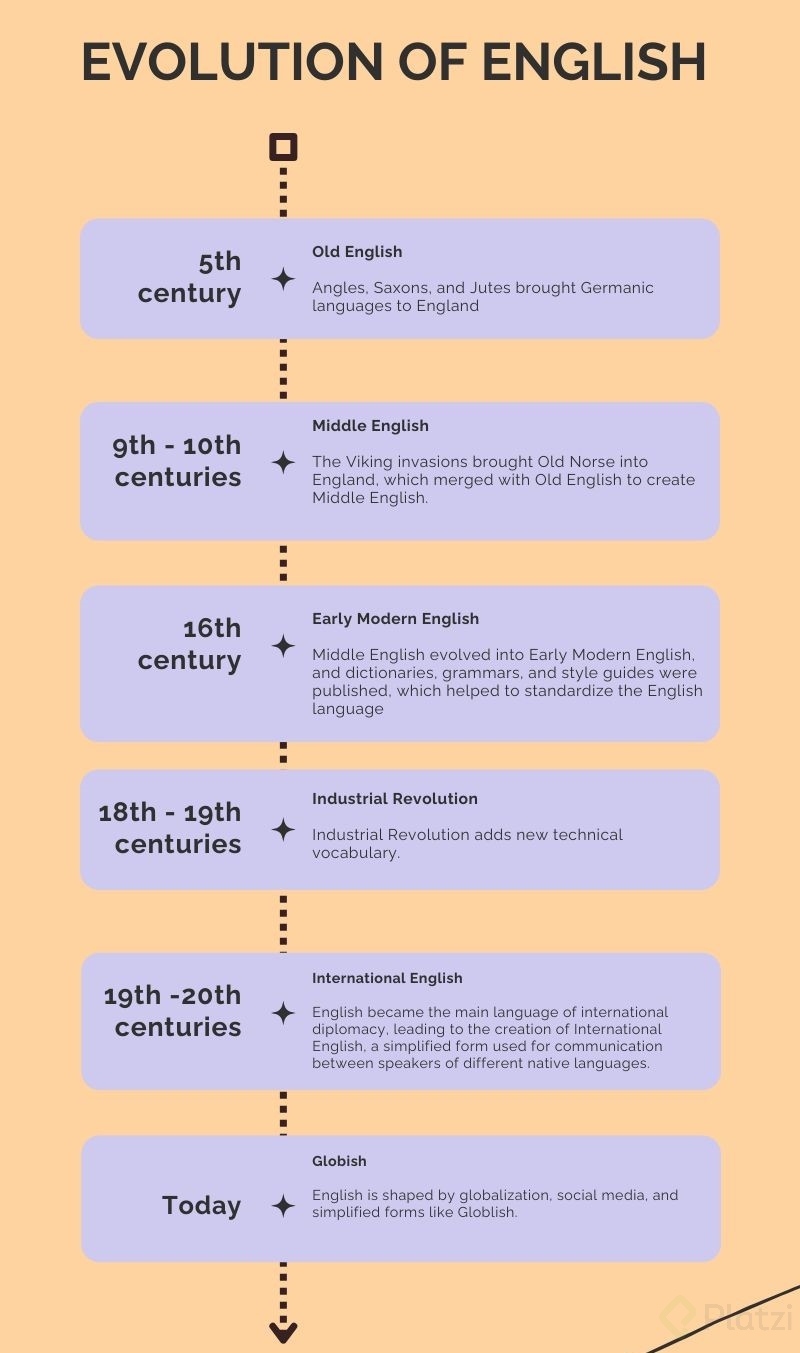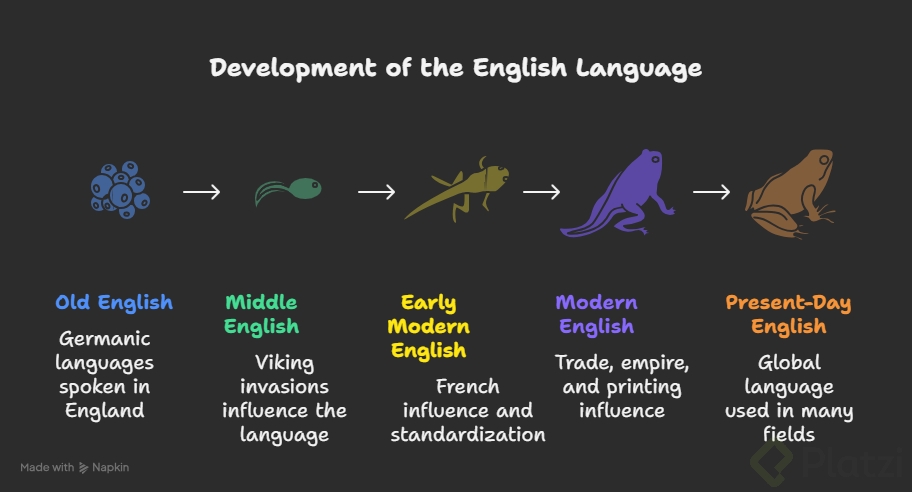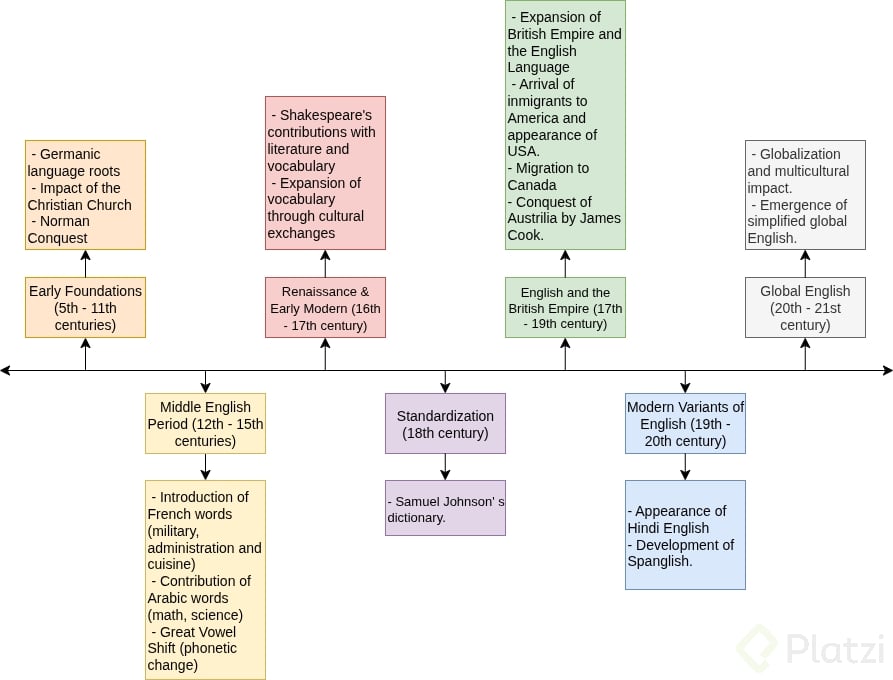
Línea de tiempo de la evolución del inglés
Contenido del curso



Migración del inglés a otras regiones


Influencia de otros idiomas en el inglés


Haz que el inglés siga evolucionando

Recursos
Resumen
Llegó el momento de poner en práctica todo lo aprendido a lo largo del curso. La tarea final consiste en crear un timeline que represente visualmente la evolución del idioma inglés, permitiendo observar cómo los distintos períodos y eventos se superponen o se suceden entre sí.
¿Por qué un timeline ayuda a comprender la evolución del inglés?
Organizar la información de forma cronológica facilita la comprensión y la retención de los contenidos. Un timeline —o línea de tiempo— ofrece una representación visual clara que permite identificar el orden en que ocurrieron los cambios más importantes del idioma. Al construirlo, se logra ver la progresión completa del inglés, desde sus orígenes hasta la actualidad, y se entiende cómo cada período influyó en el siguiente.
Este tipo de ejercicio también fortalece habilidades como la síntesis de información y el análisis crítico, ya que obliga a seleccionar los eventos más relevantes y a conectarlos de manera lógica.
¿Qué habilidades se practican con este proyecto final?
A lo largo del curso se trabajaron diversas competencias que ahora se integran en el proyecto final:
- Investigación: recopilar datos sobre los períodos clave de la historia del inglés.
- Análisis crítico: evaluar qué eventos tuvieron mayor impacto en la transformación del idioma.
- Síntesis: condensar la información en una línea de tiempo coherente y visual.
- Conexión personal: relacionar lo aprendido con experiencias y conocimientos propios.
Todo el trabajo de investigación y reflexión realizado en los capítulos anteriores sirve como base para complementar el timeline [00:36].
¿Cómo evaluar el trabajo propio y el de otros estudiantes?
El proyecto no termina con la creación del timeline. También se debe evaluar las líneas de tiempo de otros compañeros, lo que permite observar diferentes perspectivas y formas de organizar la misma información. Además, se recomienda utilizar la herramienta de autoevaluación (self-assessment tool) para reflexionar sobre el propio aprendizaje [00:52].
¿Por qué el ritmo del speech cambió clase a clase?
Un detalle interesante del diseño del curso es que la velocidad del habla aumentó progresivamente de una clase a otra. La primera clase se presentó a un ritmo considerablemente más lento en comparación con la última. Esto fue intencional: el objetivo era desarrollar las listening skills —habilidades de comprensión auditiva— de forma gradual, permitiendo que el oído se adaptara poco a poco a un ritmo más natural del inglés [01:02].
Este enfoque progresivo demuestra cómo la exposición constante y controlada a un idioma puede mejorar la capacidad de comprensión sin generar frustración.
¿Qué sigue después de completar el timeline?
Con el proyecto finalizado, vale la pena reflexionar sobre cómo se sintió el proceso: ¿fue más fácil comprender las últimas clases que las primeras? ¿Qué período de la historia del inglés resultó más sorprendente? Comparte tu experiencia en la sección de comentarios y cuéntanos cómo te sentiste con el cambio de ritmo a lo largo del curso.