Expresar posibilidades pasadas con "podría" y "no podría" en inglés

Clase 24 de 26Curso de Inglés Intermedio B1: Palabras Interrogativas y Propósitos

Contenido del curso

Tiempos y formas verbales en inglés

Resumen

Talking about what might have been is one of the most useful skills in English conversation. Whether you want to express regret, discuss impossible scenarios, or simply reflect on the past, mastering could have and couldn't have gives you the tools to do it naturally and with confidence.

How do you form sentences with could have and couldn't have?

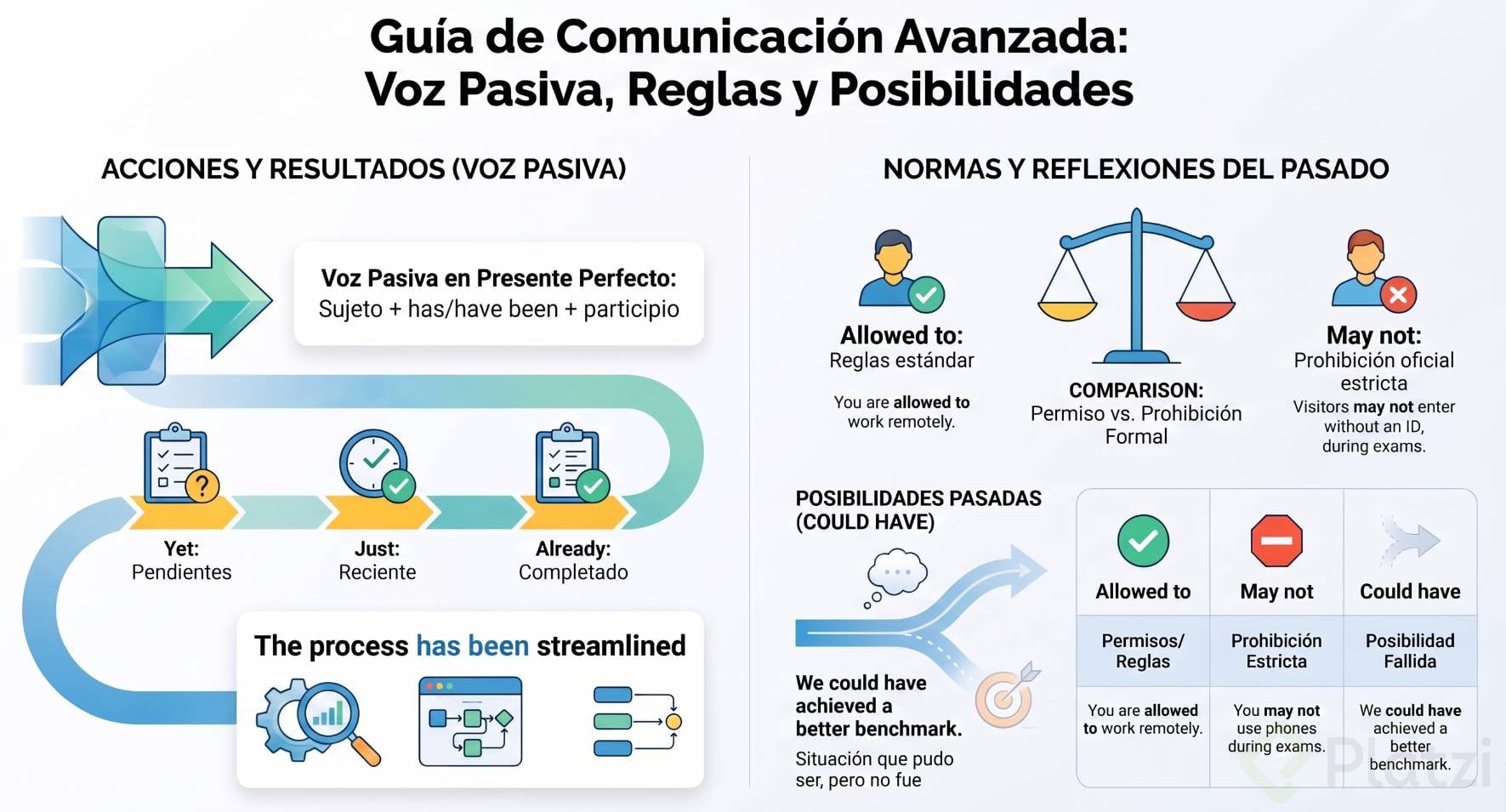
The structure is straightforward: subject + could/couldn't have + past participle. This pattern allows you to talk about past possibilities — things that were possible but didn't happen, or things that were impossible in a given situation [0:30].

Here are some examples from the lesson:

  • This sandwich is disgusting. I could have bought something way better for lunch. — You already bought the sandwich, you can't change that, but you can express that a better option existed [0:46].
  • She couldn't have robbed that bank. She was in Wisconsin at the time of the robbery. — This shows something was impossible given the circumstances [1:12].

The word alibi appears in this context [1:22]. An alibi is evidence that someone was somewhere else when a crime occurred, making it impossible for them to have committed it. If she was in Wisconsin, she couldn't have been at the bank. Simple logic.

What is the difference between could have and couldn't have?

  • Could have expresses that something was possible in the past but did not happen. It often carries a sense of regret or missed opportunity.
  • Couldn't have expresses that something was impossible in the past, or it can be used as a strong positive compliment.

Notice the emotional range. Saying I could have been a great tennis player if I would have practiced more [2:14] communicates regret — you didn't give it your best effort. On the other hand, I couldn't have asked for more amazing friends [2:31] is a warm, affectionate way of saying your friends are the absolute best. It means there is nothing better you could possibly choose.

How can you practice could have and couldn't have together?

The lesson includes a fill-in-the-blank challenge [1:50] with three key sentences:

  • I could have been a great tennis player if I would have practiced more.
  • He couldn't have won the contest. It was too difficult.
  • I couldn't have asked for more amazing friends.

These examples show the full spectrum: regret, impossibility, and gratitude.

How do you use could have to talk about regrets?

The final activity [2:44] asks you to express your three biggest regrets using could have, and then explain why you couldn't have done anything about it. This pairing is powerful because it mirrors how people actually process regret in real life — acknowledging what might have been, then forgiving yourself for the circumstances.

For example: I could have learned Spanish earlier, but I couldn't have found the time to study during college [3:04]. The first part admits the missed opportunity; the second part recognizes the limitation. Together, they create a balanced, honest reflection.

Why does mastering past possibilities matter for fluency?

Using could have and couldn't have correctly signals an intermediate-to-advanced level of English. Native speakers use these structures constantly in everyday conversation — when telling stories, making excuses, expressing gratitude, or analyzing what went wrong.

A few tips to keep in mind:

  • In spoken English, could have is often reduced to could've, which sounds like "could of." Always write it as could have.
  • Pair could have with couldn't have to create nuanced arguments, just like the regret activity demonstrates.
  • Practice with real personal examples to make the grammar stick.

What are your three biggest regrets using could have? Share them and explain why you couldn't have changed the outcome — it's a great way to practice letting go while building your English skills.