Understanding the difference between countable and uncountable nouns is essential for building accurate sentences in English. Did you know that time is an uncountable noun? That means you can't say "Do you have five times?" but you can say "Do you have five minutes?" or "Do you have an hour?" Minutes and hours are time units you can count, but time itself is uncountable [0:01]. This distinction affects the way we use quantifiers like some, any, a lot of, and more.
What are countable nouns and how do you identify them?
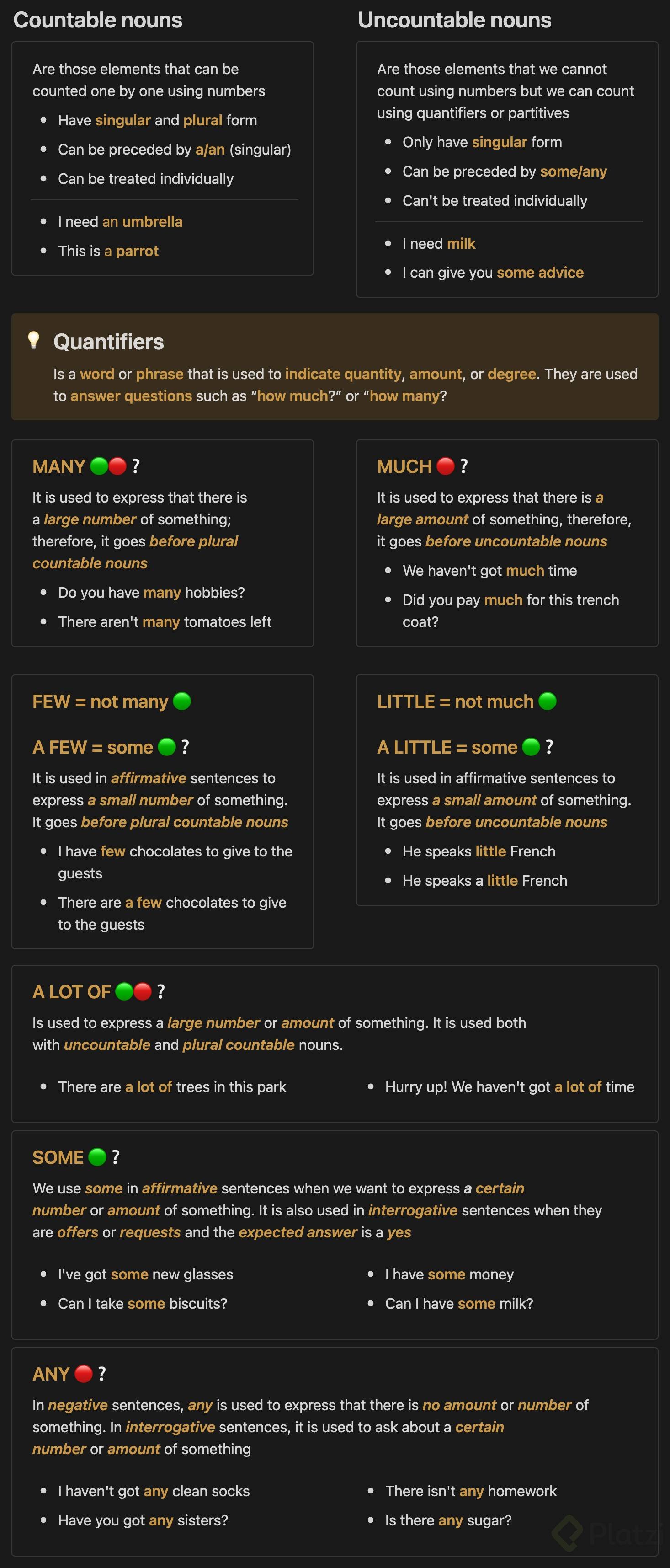
Countable nouns are nouns you can count: one, two, three, and so on [0:28]. They have both a singular and a plural form. Here are some workplace examples:
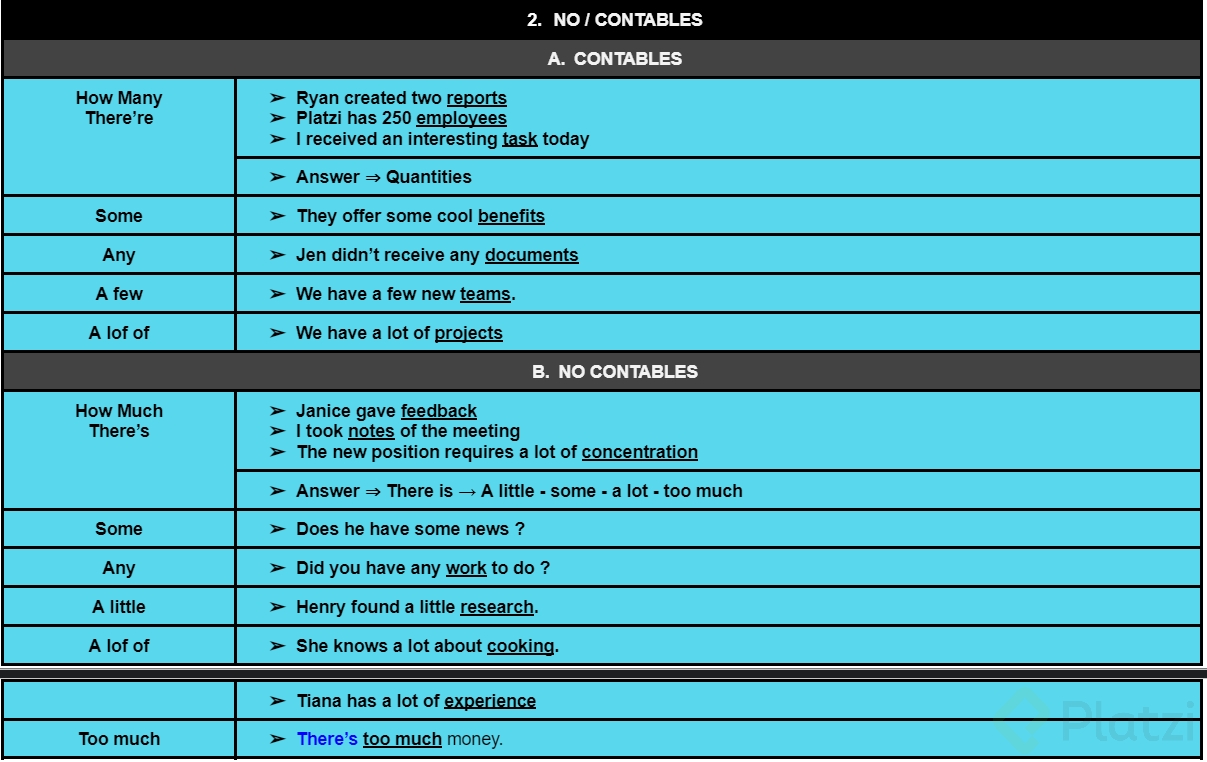
- "Ryan created two reports." You can count five reports, fifteen reports.
- "Flatsy has 250 employees." Employees is something you can count.
- "I received an interesting task today." Even when referring to just one, you can also talk about eight tasks or fifteen tasks.
When a countable noun is singular, use a or an before it. For example: "George had a very creative idea" [1:06].
What makes uncountable nouns different?
Uncountable nouns are nouns you simply cannot count, like water or sugar [1:17]. You wouldn't say "Can you give me three sugars?" expecting three individual pieces. Some uncountable nouns may surprise you:
- Feedback: "Janice gave feedback." You can't say "two feedbacks" [1:37].
- Notes: "I took notes of the meeting." Even though notes ends in S, it is not a plural countable form here. You don't ask for "two notes of the meeting" [1:44].
- Concentration: "The new position requires a lot of concentration." You can't say "three concentrations" [2:04].
How do quantifiers work with countable and uncountable nouns?
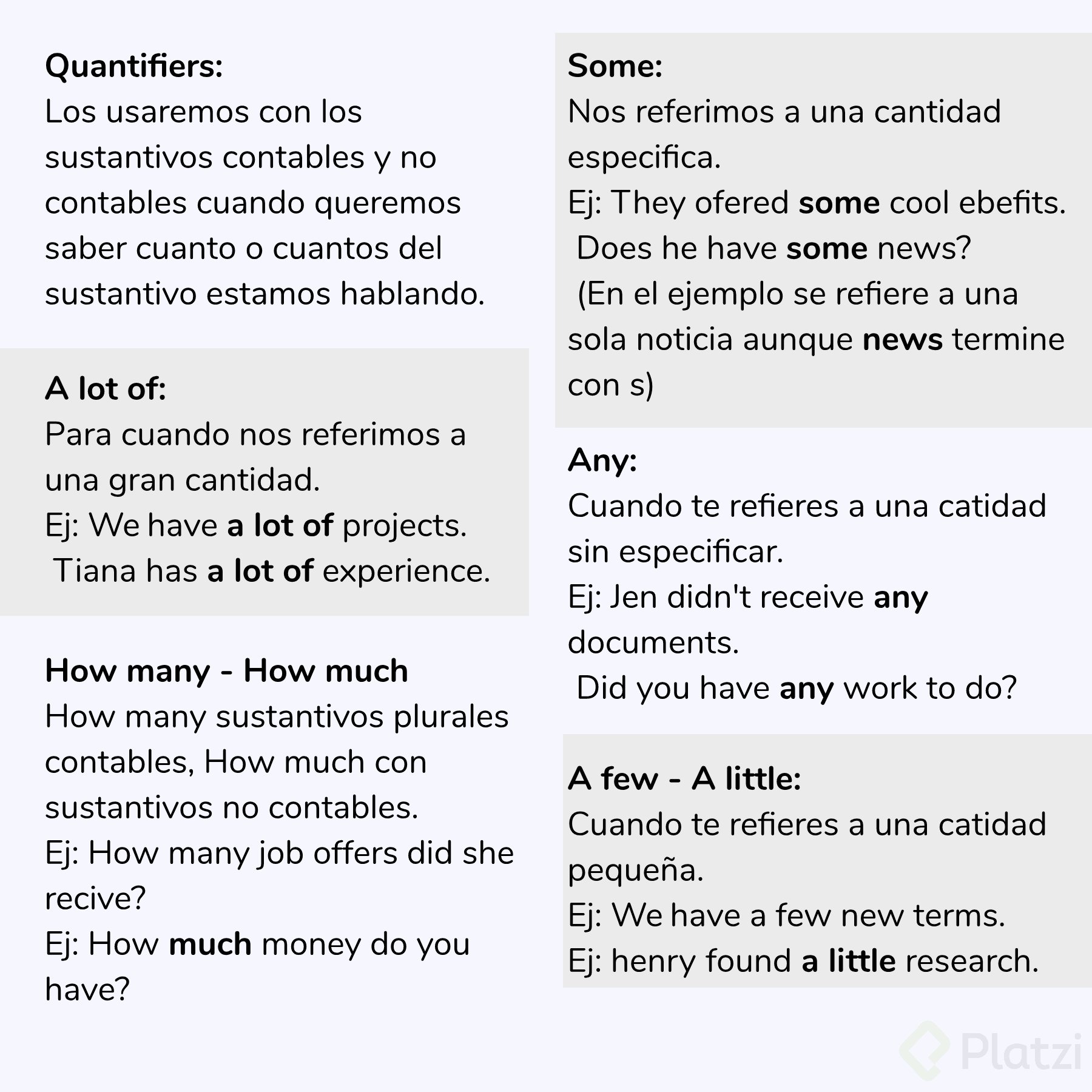
A quantifier tells you how much or how many of a noun you are talking about [2:16]. Choosing the right one depends on whether the noun is countable or uncountable.
When should you use some and any?
Some refers to an unspecified amount and appears in affirmative sentences and questions [2:31].
- With plural countable nouns: "They offer some cool benefits." Remember, the noun must be plural — not "some cool benefit" [2:44].
- With uncountable nouns: "Does he have some news?" Even though news ends in S, it is uncountable [2:58].
Any also refers to an unspecified amount, but it appears in negative sentences and questions [3:08].
- With plural countable nouns: "Den didn't receive any documents." Think of those emails that end with "Do you have any questions?" — questions must be plural [3:17].
- With uncountable nouns: "Did you have any work to do?" You can't count work — "one work, two work" doesn't exist [3:37].
How do you express large and small quantities?
A lot of indicates a big quantity and works with both types of nouns [3:50].
- Plural countable: "We have a lot of projects."
- Uncountable: "Tiana has a lot of experience." You can't say "three experiences" [4:03].
For small quantities, the rule splits in two [4:14]:
- Use a few with plural countable nouns: "We have a few new teams."
- Use a little with uncountable nouns: "Henry found a little research." It may sound odd because a little often refers to size, but here it indicates a small amount [4:23].
What is the difference between how many and how much?
Use how many with plural countable nouns: "How many job offers did she receive?" [4:42]. Use how much with uncountable nouns: "How much money do you have?" Money itself is uncountable, but dollars and pesos are countable [4:52].
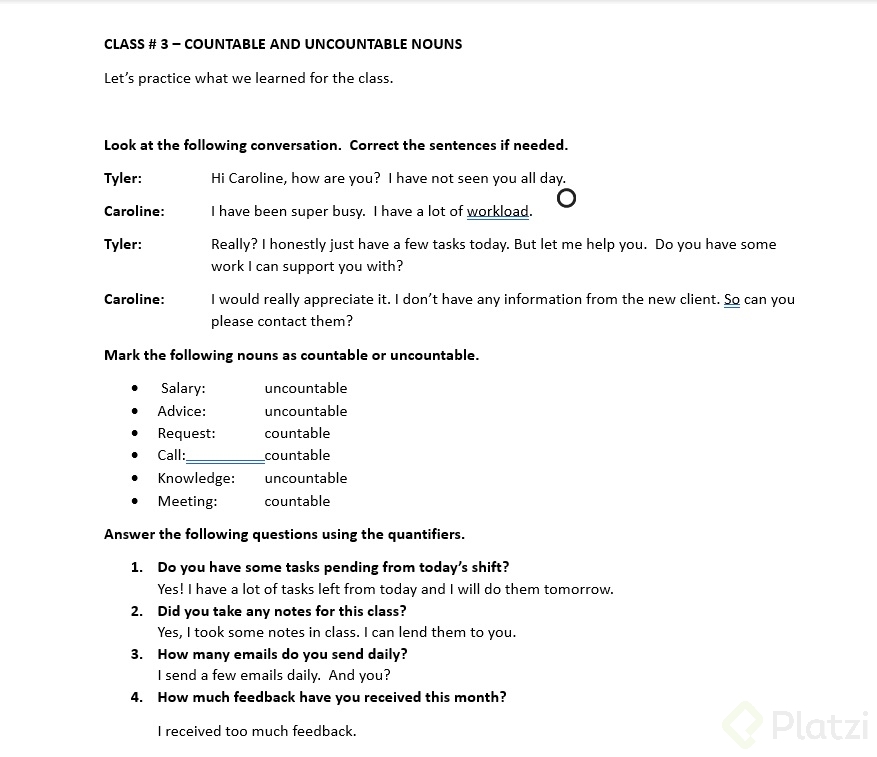
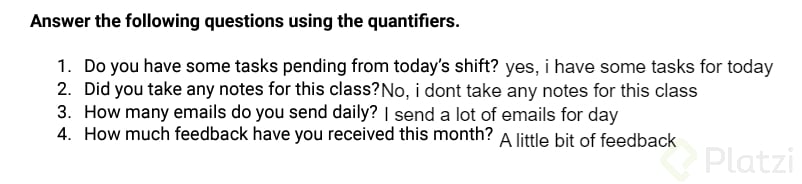
Practice makes the difference — grab the worksheet in the resources section and test your knowledge. Share in the comments which quantifier you find most confusing!