Reporte de Preguntas en Pasado: Estructura y Ejemplos
Clase 12 de 24 • Curso de Inglés Intermedio B1: Preguntas de Confirmación y Posibilidades
Contenido del curso

Prepositions


Future
- 5

Negar y Pedir Permiso en Futuro con "Will" y "Allowed"
03:30 min - 6

Uso de "Will" y "Going to" en Voz Pasiva para Futuro
03:55 min - 7

Uso de "Hope" para Expresar Futuras Aspiraciones
02:33 min - 8

Uso de "Should" para Expresar Probabilidad en Futuro Próximo
03:09 min - 9

Uso de Verbos Frasales y Preposicionales en Conversaciones
02:49 min
Questions


Conjugations

Prefixes and Suffixes




Verbs, Adjectives & Nouns


Relative clauses


Course Outcomes

Resumen Original question: Why do you like cars so much?
Reported question: She asked me why I liked cars so much.
Original question: Why do you like cars so much?
Reported question: She asked me why I liked cars so much.
Ahora aprenderás a escribir y reportar preguntas en pasado. En caso de expresar que alguien te realizó una pregunta ten en cuenta el tiempo verbal de la pregunta y no el texto de manera literal.
Estructura: Emisor + asked + receptor + mensaje.
Preguntas en presente simple
Si la pregunta está conjugada de la forma present simple, entonces, para transmitir el mensaje a alguien más, deberás conjugarla en la forma past simple.
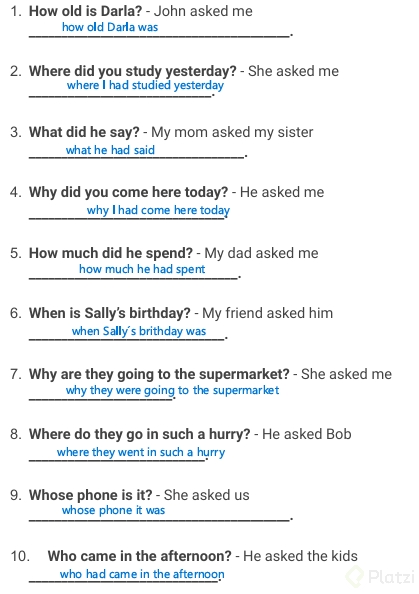
Original question: How much do you earn? (He asked me) Reported question: He asked me how much I earned.
Preguntas en pasado simple
Si la pregunta está conjugada de la forma past simple. Entonces, para transmitir el mensaje a alguien más, deberás conjugarla en la forma past perfect simple.
Original question: What did you do yesterday? (Jhon asked my friend) Reported question: Jhon asked my friend what he had done yesterday.
Ejemplos para transmitir preguntas en pasado
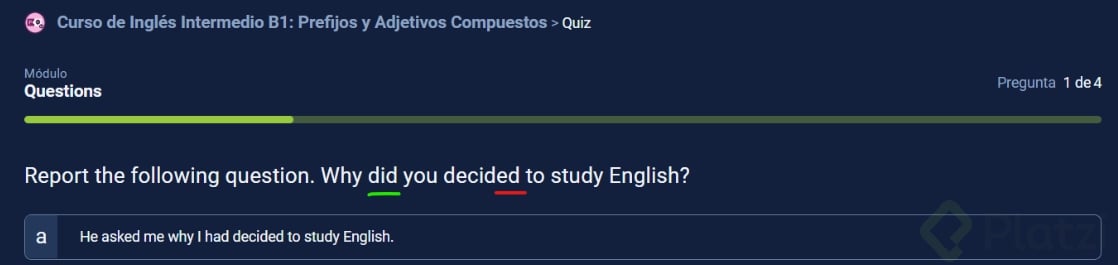
Original question: Why did she wake up so early in the morning? Reported question: He asked me why she had woken up so early.
Original question: When is your birthday? Reported question: He asked me when my birthday was.
Original question: How long were they there? Reported question: He asked me how long they had been there.
Ejercicios para transmitir preguntas en pasado
Entra en el siguiente enlace y resuelve la actividad.
Contribución creada por Andrés Guano.