Preposiciones de Movimiento en Inglés: Uso y Ejemplos Prácticos
Contenido del curso

Preposiciones de tiempo en Inglés


Preposiciones de lugar en Inglés



Preposiciones de movimiento y dirección en Inglés


Frases con preposiciones en Inglés


Practica el uso de preposiciones

Recursos
Resumen
Dominar las preposiciones de movimiento en inglés es fundamental para dar y entender instrucciones con claridad. Saber cuándo usar out of, into, around o past marca la diferencia entre comunicarte con precisión o generar confusión. A continuación se explican estas cuatro preposiciones con ejemplos prácticos que puedes aplicar de inmediato.
¿Qué son las preposiciones de movimiento y por qué importan?
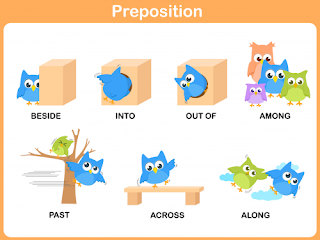
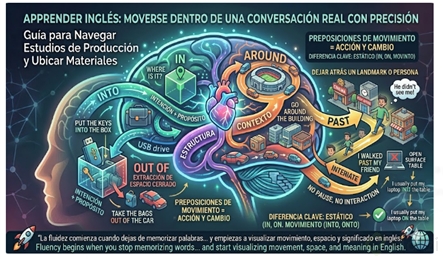
Las preposiciones de movimiento (prepositions of movement) indican la dirección o el desplazamiento de algo o alguien en relación con un objeto o lugar. A diferencia de las preposiciones de lugar, que señalan una posición estática, estas implican acción y cambio de posición [0:26]. Por eso siempre aparecen acompañadas de un verbo que describe la acción y de un sustantivo que indica el objeto o punto de referencia.
¿Cómo se usa out of en inglés?
La preposición out of se utiliza cuando sacamos algo de un espacio cerrado por todos los lados [1:36]. La estructura es sencilla: verbo + out of + sustantivo cerrado.
- Take the small case out of the big storage box.
- Take the bags out of the car.
- Take the money out of your pocket.
El sustantivo que acompaña a out of debe ser algo que tenga paredes o bordes: una caja, un coche, un bolso o incluso un bolsillo [1:56].
¿Cuál es la diferencia entre in e into?
La preposición into es la acción contraria a out of: se usa cuando introducimos algo dentro de un espacio cerrado [2:16]. Un ejemplo claro es Put the small case back into the storage box.
Una pregunta muy frecuente entre estudiantes es precisamente cuál es la diferencia entre in e into [2:30]. La respuesta es directa:
- In indica ubicación estática (dónde está algo).
- Into indica movimiento hacia el interior de algo.
Por ejemplo, The keys are in the box describe una posición fija, mientras que I put the keys into the box describe la acción de colocarlas dentro.
¿Qué significa go around y en qué se diferencia de go past?
Estas dos preposiciones se parecen porque ambas describen movimiento en relación con un punto de referencia, pero su significado es distinto.
¿Cuándo usar around?
Around se emplea cuando el movimiento tiene una trayectoria circular o semicircular alrededor de algo [3:04]. Necesitas un sustantivo que funcione como punto central:
- Go around the waiting area.
- Go around the building.
- Go around the roundabout.
Un roundabout (o circle) es esa gran estructura circular que encontramos en las carreteras y que obliga a los coches a girar a su alrededor [3:22].
¿Cuándo usar past?
Cuando usas past, estás indicando que pasas al lado de algo sin detenerte [3:40]. El objeto o lugar funciona como un punto de referencia que dejas atrás:
- Go past the cinema.
- Go past the post office.
- I walked past my best friend, and he didn't even recognize me.
La clave es que con past no hay pausa ni interacción: simplemente sigues de largo junto a un landmark (punto de referencia) o incluso una persona [3:50].
¿Puedes detectar el error en esta oración?
Para poner en práctica lo aprendido, considera esta frase: "I usually put my laptop into the table when I work from home" [4:18]. ¿Es correcta o no?
Recuerda que into implica movimiento hacia el interior de un espacio cerrado. Una mesa no es un objeto cerrado por todos los lados, así que la preposición adecuada sería on (sobre la mesa) en lugar de into. Comparte tu respuesta y tu razonamiento: practicar con ejemplos reales es la mejor forma de interiorizar estas preposiciones.