Contenido del curso

Artículos y sustantivos en inglés
- 2

Uso del Artículo "El" en Frases en Español
04:14 min - 3

Reglas para Cambiar Sustantivos de Singular a Plural
05:58 min - 4

Uso de "Mucho" y "Muchos" con Sustantivos Contables e Incontables
05:55 min - 5

Uso de "Cuál" y "Qué" en Preguntas Interrogativas
05:01 min - 6

Uso de "De quién" para Preguntar Propiedad de Objetos
01:49 min - 7

Uso de Artículos y Pronombres en Español
00:44 min
Habla del futuro y expresa sugerencias en inglés
- 8

Verbos de Percepción: Usos y Práctica en Oraciones
04:31 min - 9

Uso de "Let's" para Sugerencias e Invitaciones en Inglés
03:37 min - 10

Preposiciones de Movimiento en Español
Viendo ahora - 11

Uso de "Will" en Inglés para Hablar del Futuro
04:36 min - 12

Uso del "voy a" para expresar intenciones y planes futuros
07:08 min - 13

Uso de Let's, Preposiciones y Futuro en Inglés Básico
00:35 min - 14

Práctica de conversación en inglés (contexto cotidiano y de oficina)
00:00 min
Expresa solicitudes y peticiones en inglés
- 15

Adverbios de Movimiento y Dirección: Uso y Ejemplos Prácticos
01:57 min - 16

Peticiones y Ofertas Educadas con "Quisiera" en Español
02:47 min - 17

Uso correcto de "por favor" en órdenes y peticiones
03:28 min - 18

Uso del "Porque" y Frases Verbales en Español
02:48 min - 19

Expresiones de Tiempo: Pasado, Presente y Futuro
08:15 min
Práctica tu Inglés

Preposiciones de Movimiento en Español
Resumen
Understanding how people and objects move from one place to another is essential for building fluent English sentences. Prepositions of movement are the key words that describe direction and trajectory, and mastering them will make your spoken and written English far more precise and natural.
What are prepositions of movement and why do they matter?
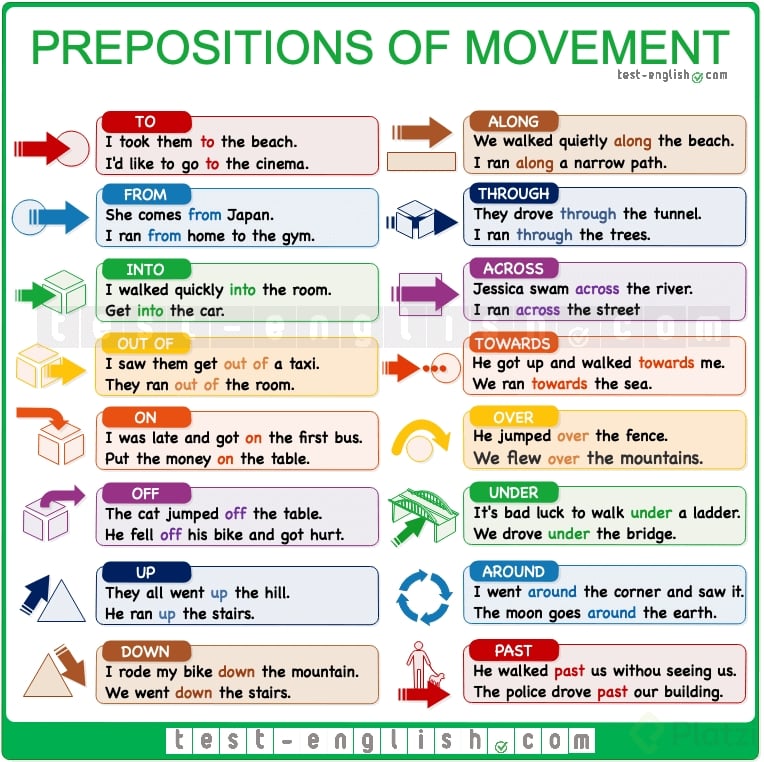
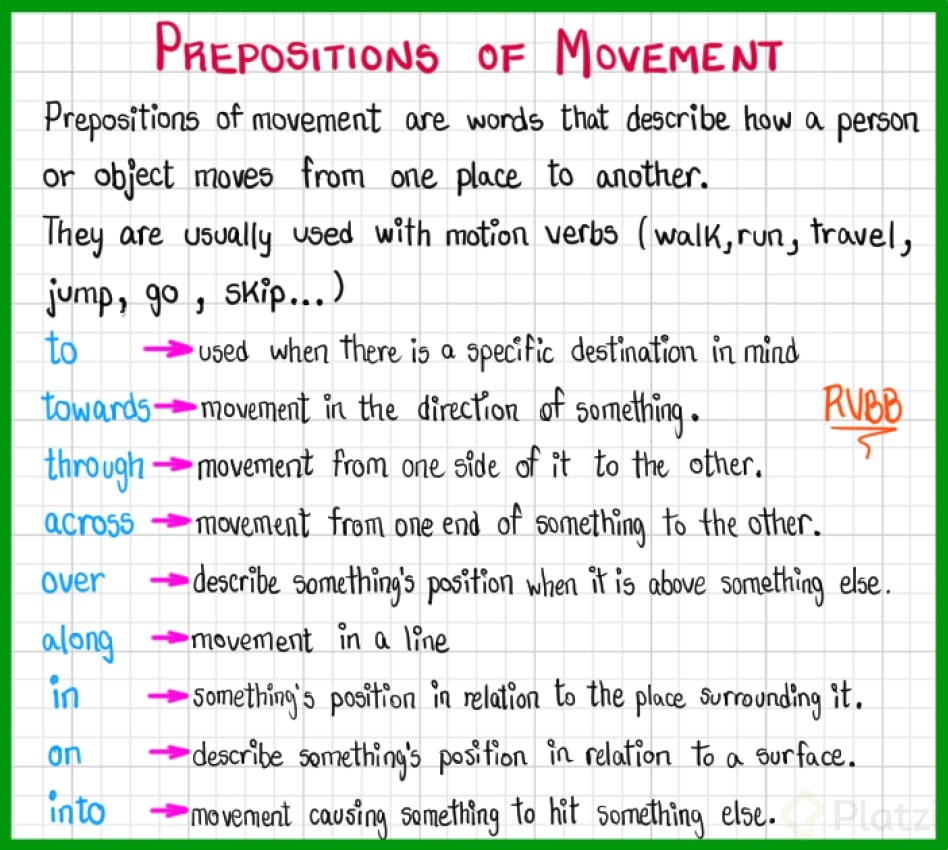
Prepositions of movement are words that describe how a person or an object moves from one place to another [0:09]. They answer the question where to? and give your sentences a sense of direction. Consider this example:
- I took the clients to the conference room. [0:22]
Here, to tells us the destination. Without the preposition, the listener wouldn't know where the clients went.
These prepositions are usually paired with motion verbs — verbs that express physical movement such as walk, run, travel, jump, go, and skip [0:30]. Any verb that performs a movement can work with a preposition of movement.
How do you use the most common prepositions of movement?
Each preposition paints a different picture of the movement. Here are the most important ones with clear examples from the lesson:
- Through: moving from one side to the other inside something. He passed through a group of people. [0:44] / The dog walked through the tunnel. [1:42]
- Along: following the length of something. On vacation, they walked along the beach. [0:49]
- From … to: indicating the starting point and the destination. Emily took an Uber from her house to the office. [0:55]
- Over: moving above and across an obstacle. Tyler jumped over the fence because he was late. [1:02]
- Around: moving in a circular path or avoiding something. They walked around the cat to not hurt it. [1:08]
- Into: entering a closed or enclosed space. He threw the computer into the garbage. [1:16] / The dog ran into the room. [1:54]
- Across: going from one side of an open area to the other. Tim was dancing across the street. [1:26] You can use across with a lake, a river, a park, or a road.
- Past: moving beside something or someone without stopping. He walked past his boss. He didn't stop. [1:38]
What is the difference between through and across?
A common source of confusion is choosing between through and across. Use through when the movement happens inside something — a tunnel, a crowd, a forest. Use across when you move from one side to the other of a flat or open space — a street, a lake, a field [1:26].
When should you use into instead of in?
Use into when there is actual movement toward the inside of a closed space [1:16]. In, on the other hand, indicates location without movement. Compare:
- I go into the room. (movement)
- I am in the room. (location)
Can you practice with quick exercises?
Try matching the correct preposition to each sentence, just like the practice in the lesson [1:40]:
- The dog walked ___ the tunnel. → through.
- The dog ran ___ the room. → into.
- The dog jumped ___ the fence. → over.
- The dog ran ___ the house ___ the garden. → from … to.
- The dog walked ___ the tree. → around.
- The dog ran ___ the road. → across.
- The dog walked ___ the beach. → along.
- The dog went ___ his owner. → past.
Remember that choosing the right preposition changes the entire meaning of a sentence. If any of these feel tricky, review the examples above and practice writing your own sentences. Share your attempts in the comments — practice is the fastest path to confidence.