Conectores Básicos en Inglés: "Y", "Pero", "O"
Clase 2 de 26 • Curso de Inglés Básico A2: Conectores y Artículos
Contenido del curso
Clase 2 de 26 • Curso de Inglés Básico A2: Conectores y Artículos
Contenido del curso

Usuario anónimo
Usuario anónimo
Usuario anónimo
Usuario anónimo
Usuario anónimo
Usuario anónimo
Usuario anónimo
Usuario anónimo
Usuario anónimo
Usuario anónimo
Usuario anónimo
Usuario anónimo
Usuario anónimo
Usuario anónimo
Usuario anónimo
Usuario anónimo
Usuario anónimo
Usuario anónimo
Usuario anónimo
Usuario anónimo
Usuario anónimo
Usuario anónimo
Usuario anónimo
Usuario anónimo
Usuario anónimo
Usuario anónimo
Usuario anónimo
Usuario anónimo
Usuario anónimo
Usuario anónimo
Usuario anónimo
Usuario anónimo
Usuario anónimo
Usuario anónimo
Usuario anónimo
Usuario anónimo
Usuario anónimo
Usuario anónimo
Usuario anónimo
My phrases:
It´s a hard one, but I will say that I prefer eating
of course that i prefer eat, i eat each hour
I like learn English ++and++ Japanese.
I can read a bit little in English, ++but++ I can't speak in English.
I study English one ++or++ two hours at day.
Hola Marco, luego de like el verbo debería terminar en ING: I like Learning… A “little bit” es el orden correcto para expresar “un poquito”. La preposición at se usa para especificar horas o momentos puntuales: por ejemplo at 5, at midday, at noon. En el caso de tu ejemplo sería “…two hours a day” El artículo “a” sería el equivalente a “por” de nuestro español.
3 veces x semana —-> 3 times a week
In your first sentence, it could be "I like learning" or "I like to learn"
You can review this class class
I want that dog and this cat
we eat hamburguer but not hotdogs
you can drink soda or milk
}}
BASIC CONNECTORS
EXAMPLES:
Will I study React or artificial intelligence?
I will work and study at the same time.
I will study and work but I will not be able to be with my family.
excellent
Excelent!
En ingles usamos los conectivos dependiendo de la idea que queramos interconectar:
And: es una conjunción y se traduce como y, se utiliza para conectar dos oraciones que tienen idea similares. Or: se traduce como O, y es usado para presentar opciones entre dos ideas. But: esta palabra se traduce al castellano como pero, y se emplea para unir dos oraciones donde la segunda oración modifica la información dada en la primera.
:(
.......
I'm learning english and Swift.
I need to work but I'm so tired
Do you want ice cream or popcorn?
Excelent!
I like to read comics and mangas. She plays guitar, but she doesn't play piano. I would like one thing. A pc gamer or a play station 5.
yeah
very good
Well I have cretive text for the platzi-nautas
I like this class **and **way of teaching Cesar Cordero but sometimes I fell as an impostor because I am learning online but I have two options

And you ,what do you think about this?
WOW 💪🏼 Amazing, Cristobal! You're absolutely right, we must never stop learning 💚
Good it whay
and:
but:
or:
lol
Exercise:
My Practice:
https://voca.ro/1dEZY6PRaeVk
AND: use to refer to something and add to my expression or phrase.
++Examples:++
+I like to drink coffee and tea.
+My sister watches series and movies
+Miranda bought a new swimsuit, sunglasses and hat.
BUT: the use of this connector is to make a contrast in the sentences.
++Examples:++
+I like to drink coffee but not tea.
+My sister watches series, but I watch movies.
+Miranda bought a new swimsuit and sunglasses, but she didn´t but a hat.
OR: We use this connector to offer options or refer this on my dialogue
++Examples:++
+You can drink coffee or tea.
+Does your sister watch series or movies?
+Miranda needs to choose one: a new swimsuit or a hat.
Aaa
thanks You
This picture could be useful to review.
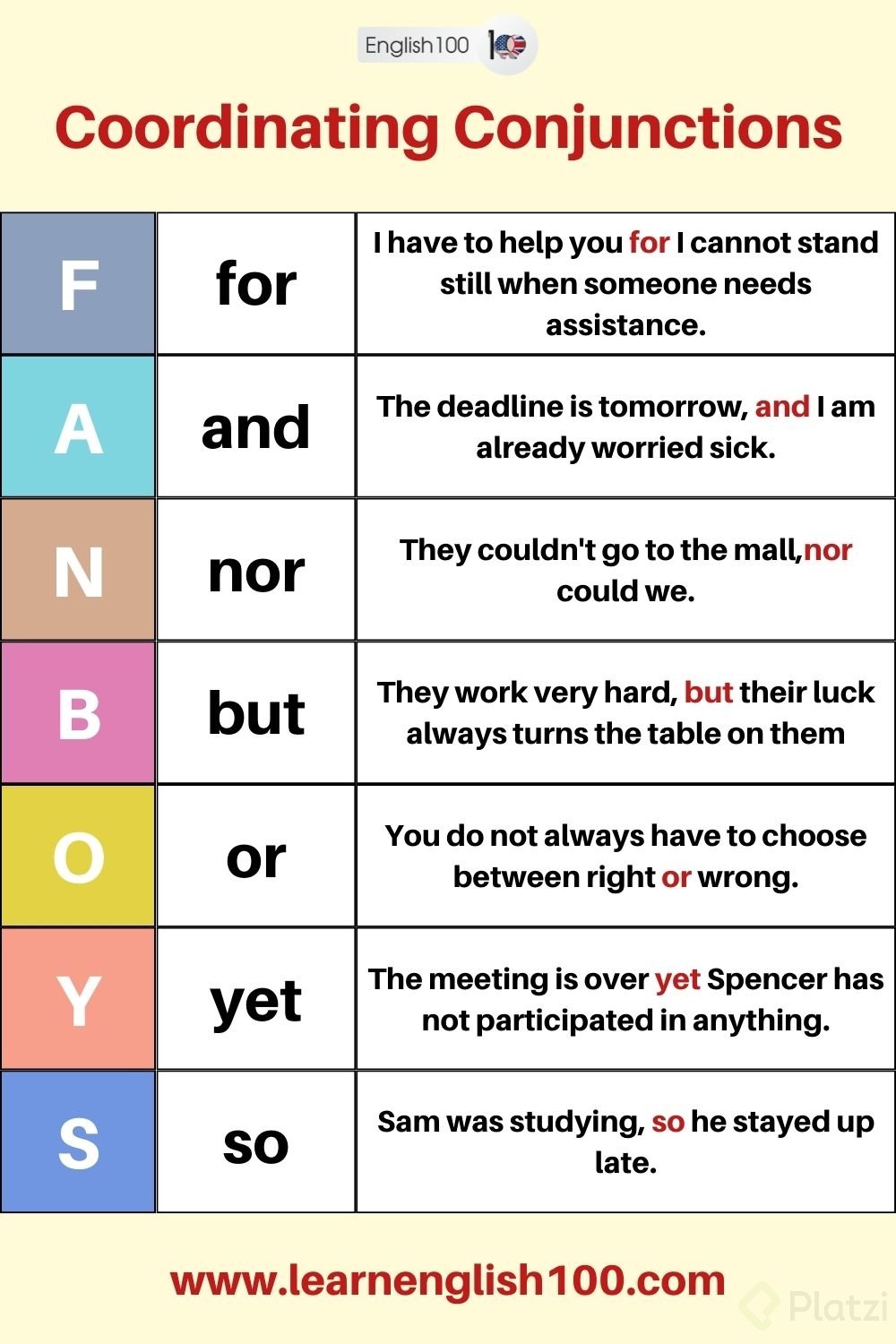
I like javascript and python
which is better to learn English or Portuguese
I like the movies but not much the series; I like spend time with my family and dislike spend much time alone. Sometimes i like play baskeball or soccer
Will I study React or artificial intelligence?
I will work and study at the same time.
Excellent ! Well done👍 How is the course going so far? Never stop learning 💚
I like soccer and basketball I love coffee but without sugar I want to travel, I should choose between Brazil or Peru
I like piratas and gringas I will buy a smoking, buy I'll not buy the shoes. I want to learn Python or JAVA