Want your English to sound natural and confident? Learn to connect ideas with can, and, but, plus time expressions and adverbs of frequency. With these tools, short phrases become complete, realistic sentences that express routines and specific moments.
Why do connected sentences sound more realistic?
Joining sentences helps you move from isolated facts to a single, clear message. Instead of separate ideas, you share context and intention. That shift makes communication smoother and more natural.
What changes from short to complete ideas?
-
From short facts to one clear message.
-
From basic structure to more complex sentences.
-
From word lists to connected ideas with context.
-
Example of short ideas: "I work. I study. I play soccer.".
-
Example of connected ideas: "I work and I study, but I sometimes play soccer.".
Which skills will you practice?
- Join sentences to sound more realistic.
- Use connectors to relate ideas.
- Add context with time expressions and adverbs of frequency.
- Express routines and specific moments clearly.
- Add meaning to words you already know.
How do can and but connect ideas?
You will use can and but to connect ideas and build more complex sentences. The example also shows and working alongside them to create a complete thought.
What do these connectors express?
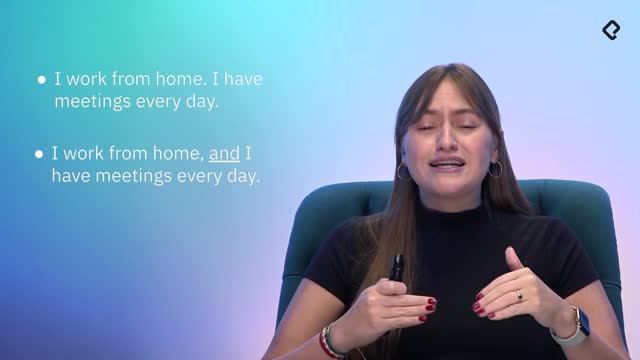
- and: links related actions in one sentence. Example: "I work and I study.".
- but: signals contrast within a single idea. Example: "I work and I study, but I sometimes play soccer.".
- can: combines naturally with these structures to connect ideas in meaningful ways.
Why does this improve fluency?
- You avoid short, repetitive sentences.
- You present ideas with relationships and nuance.
- You communicate in a way that feels natural to listeners.
When do time expressions and adverbs of frequency add context?
They place your ideas in routines or specific moments, so your message is precise. This turns simple statements into complete, informative sentences.
Which words and phrases are key?
- time expressions.
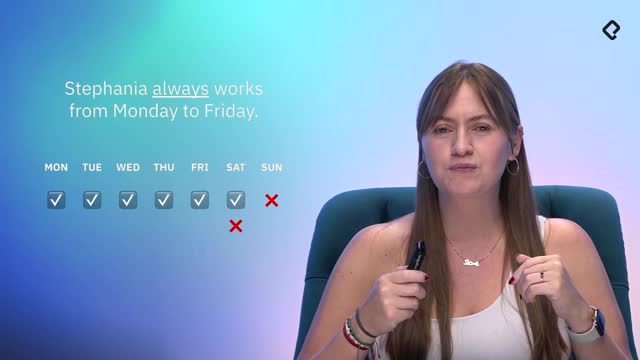
- adverbs of frequency.
- always.
- sometimes.
- in the morning.
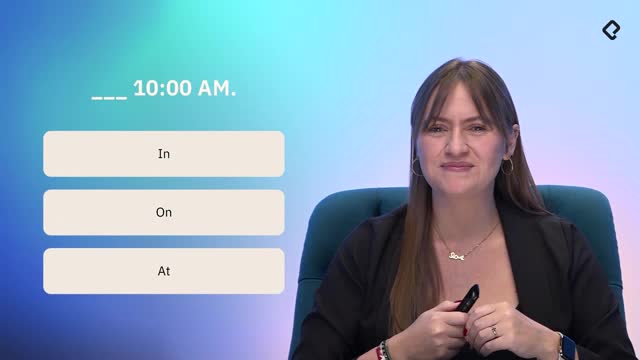
- at 6:00 PM.
How do they place ideas in time?
- They show habits and schedules with clarity.
- They specify moments so actions are easier to understand.
- Example: "I always go to the gym in the morning and I sometimes play soccer at 6:00 PM.".
Have a question or an example of your own sentence using can, and, but, or a time expression? Share it in the comments and get feedback.