Telling time with past, to, and o'clock
Curso de Inglés Básico A2: Adverbios y Expresiones de Tiempo
Contenido del curso
Talking About Places and Things

Talking About Time
Frequency and Habits
Telling time with past, to, and o'clock
Telling time with past, to, and o'clock
Curso de Inglés Básico A2: Adverbios y Expresiones de Tiempo
Contenido del curso

MARIA CANDELARIA MONCAYO GARCIA

WALTER ALEXANDER LEMUS PERAZA

Gissell Stefany Torres Alonso

Arturo Plascencia
Mara Jaritzi Hernandez Garcia

Leonardo Aldana
Jasmin Nathalia Mendoza

Osman Menco

Carlos Aaron Garcia Canseco

Leon Felipe Ocampo Escobar
Nelson Flores
Nelson Flores
Nelson Flores

María del Consuelo Irastorza Vázquez

Brayan Ramos
Nicolás Alberto Altamira Ortiz
Raúl Balmore Galdámez Recinos
Raúl Balmore Galdámez Recinos

Percy Del Águila

MARCY ASBBLEIDY QUINTERO CASTANO
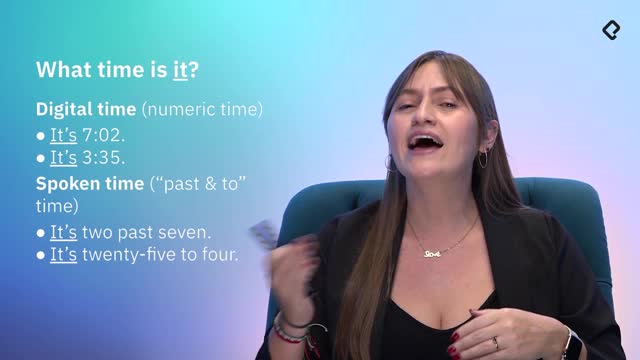
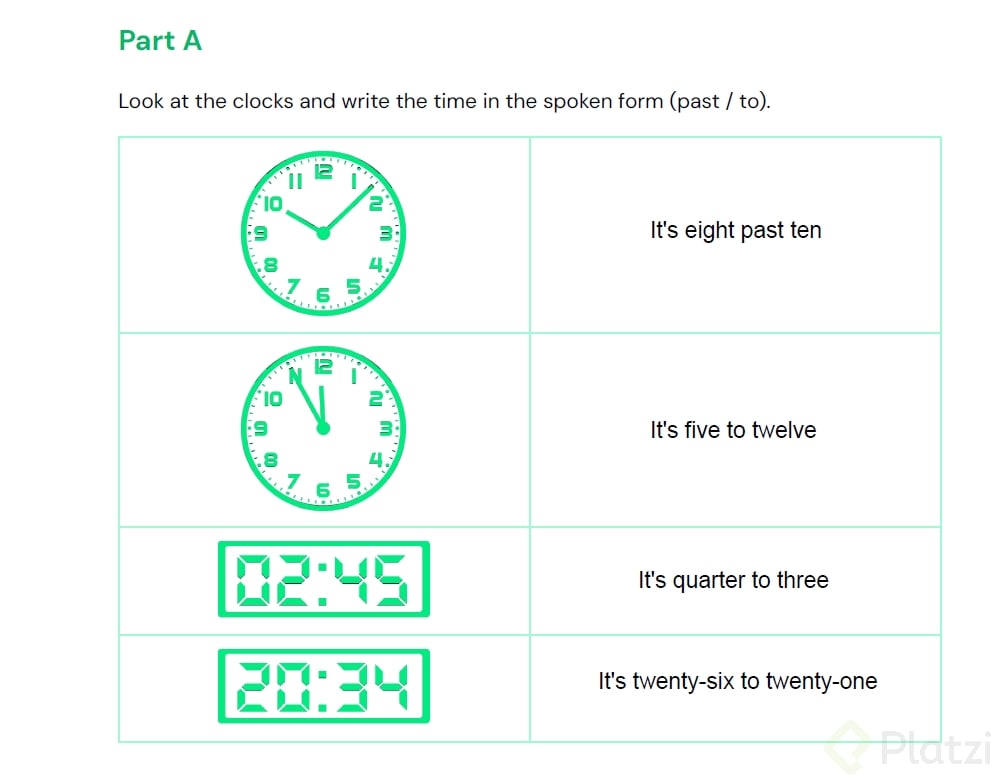
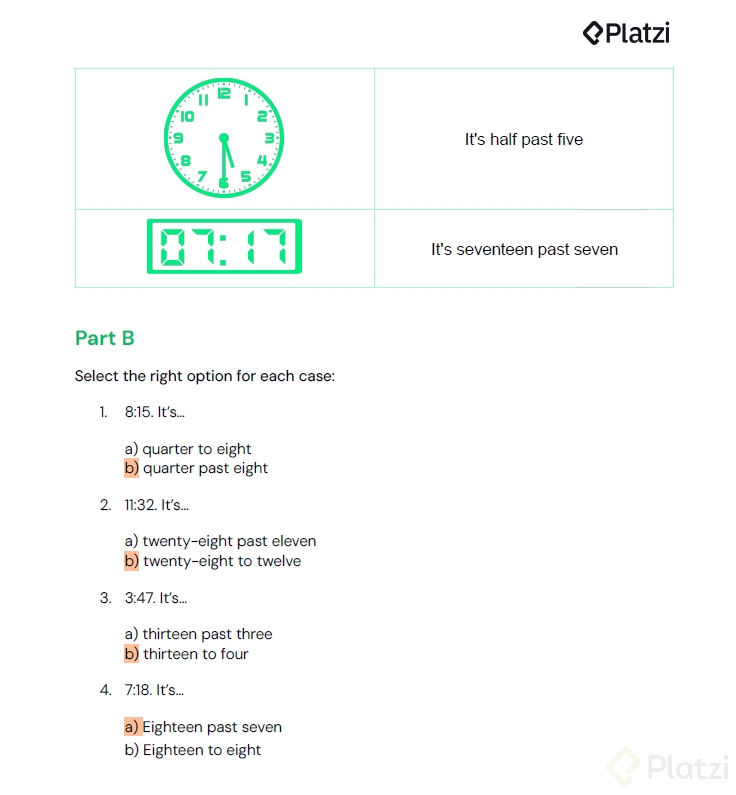
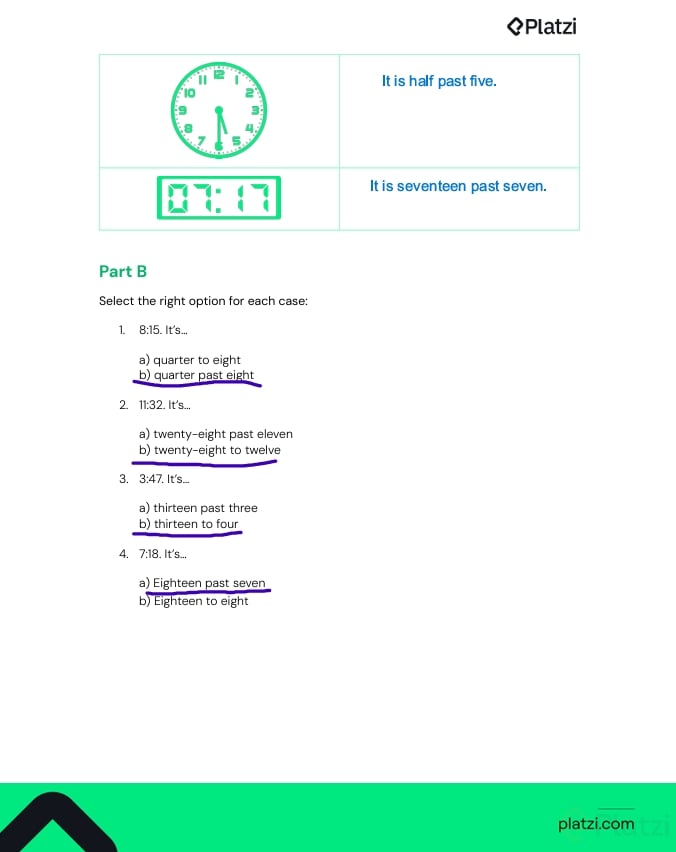
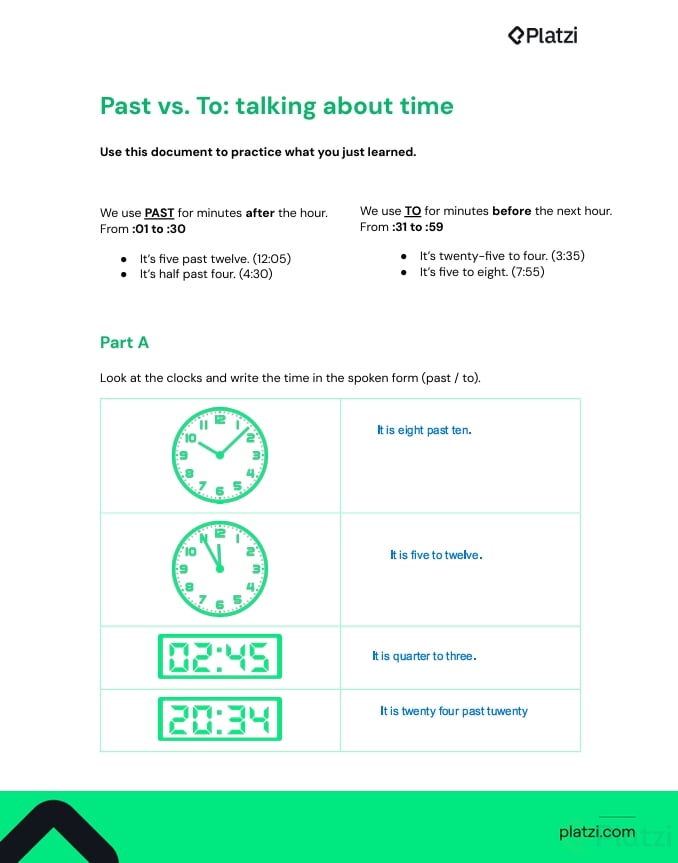
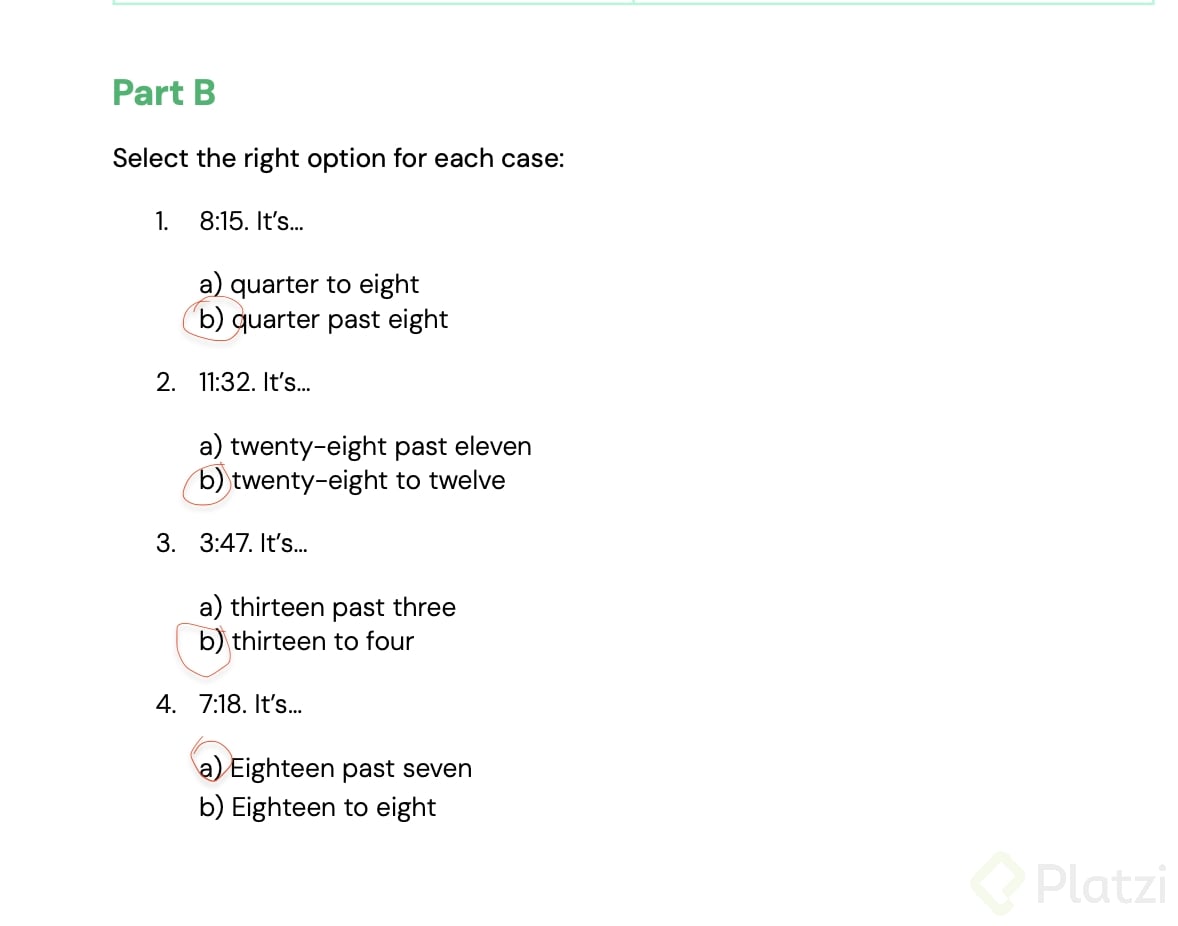
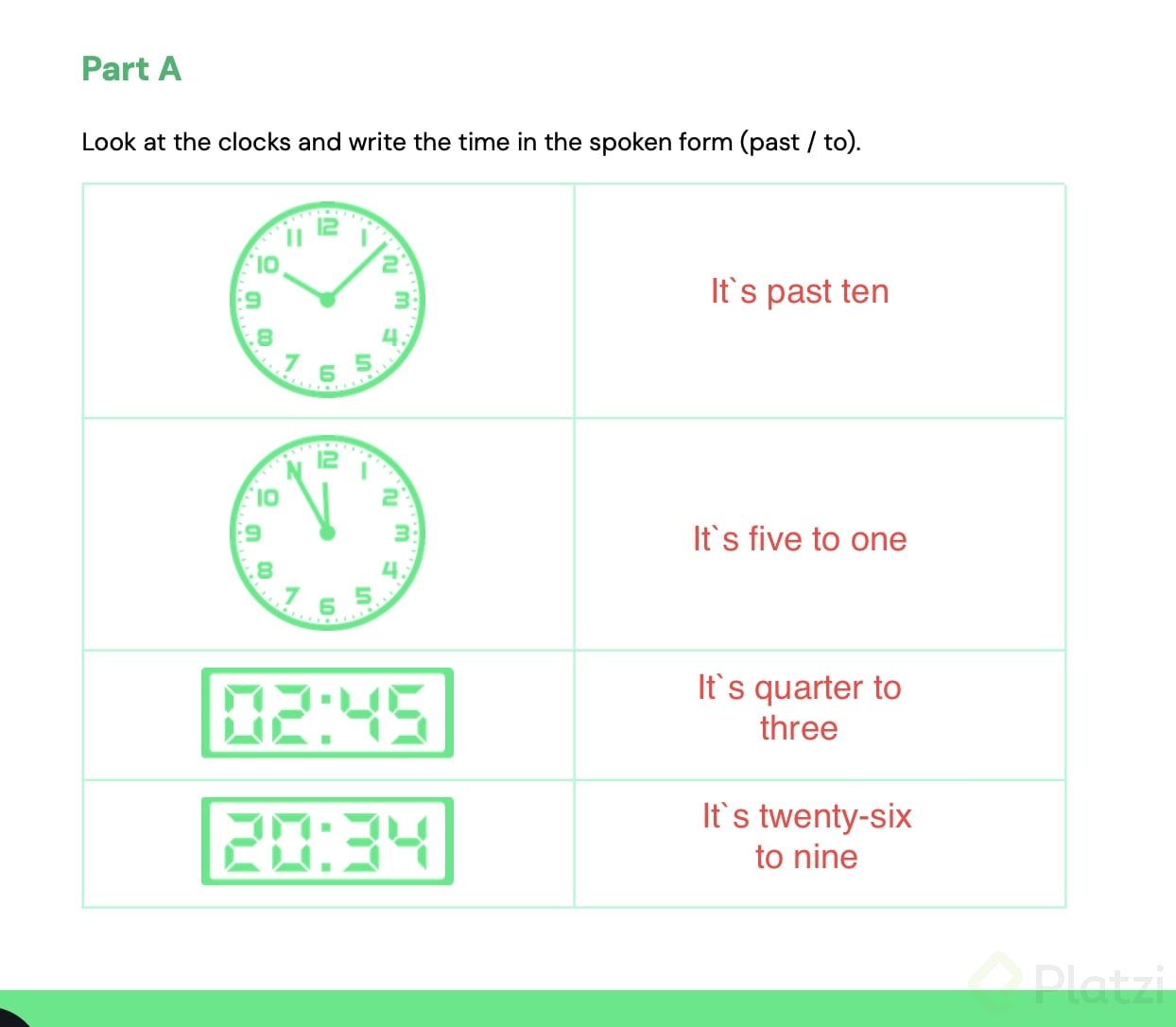
We use past from minute one to 30 , and we use to from minute 31 to 59.
We use quarter from 15 minute past hour o'clock.
We use half from 30 minute past hour.
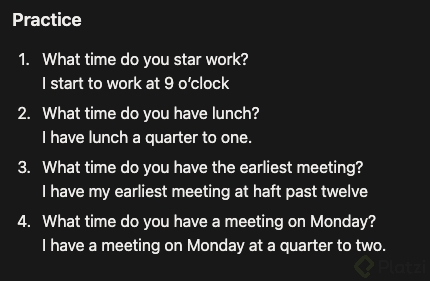
I start to work at seven o´clock
I have lunch at half past six
I have a meeting at a quarter past eight
I have a meeting on Monday at a quarter to ten
I started to seven o´ clock
I make the luch to eight past half
my earliest meeting is eleven o´clock
I have a meeting on moday to quarter past one
It's twenty-five minutes past six
It's three minutes to four
It's quarter to one
I'm star to work at 8 a.m.....
I have my lunch at 12 p.m....
My earliest meetings are at 8 a.m.....
On Monday....My meetings are at 9 am....
I start work at eight o'clock.
I have lunch at ten o'clock.
My first meeting is at half past nine.
On Mondays, I have meetings all day, from 9:30 to five o'clock.
I start work at a quarter past eight (8:15), and I have lunch at half past two (2:30). I have my earliest meeting at a quarter to nine (8:45), and on Monday, I have a meeting at twenty to ten (9:40).
I start work at eigth o'clock in the morning.
I have lunch at aquarter to one.
My eat arliest meeting is at half past eigth.
I have a meeting on monday at half past three.
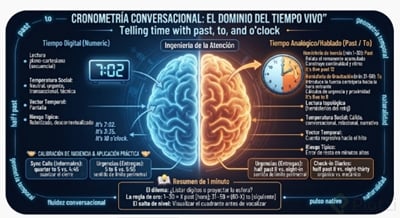
Saying the time in English is not an exercise in numerical translation (seven-thirty-five), but in spatial orientation. The analog clock divided into past (the trail traveled) and to (the gravity of the destination) projects a geometric mindset. While the digital format indexes data for the machine or the cold agenda, spoken time (quarter to, five past) draws arcs of shared attention.
Mastering this dichotomy separates the mechanical speaker from the native-pulse speaker. Past flows with the inertia of the ongoing event; to introduces strategic anticipation (5 minutes to closing). Calibrating which one to use depending on the social or high-friction context transforms a chronological data point into a rhythmic tic-tac of naturalness and ease.
Mastering past/to versus pure digits shifts the expression of time from cold statistics to the fluid geometry of conversation.
it's nine oclock
it's two oclock
it's ten to 11
it´s haft to six
I have lunch at half past twelve
i star to work at nine o´çlok