Connecting ideas with "and" and "but"
Curso de Inglés Básico A2: Adverbios y Expresiones de Tiempo
Contenido del curso

Connecting ideas with "and" and "but"
Curso de Inglés Básico A2: Adverbios y Expresiones de Tiempo
Contenido del curso
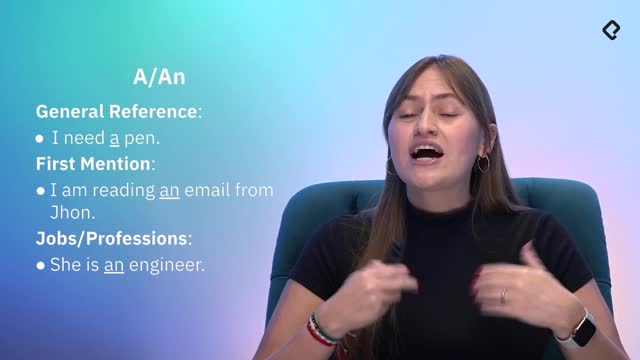
0:00/3:13
Fluent English uses simple tools to sound natural. Learn how to join ideas with and and but to make speech and writing smoother, clearer, and more engaging. See how commas work, how to build a sentence, and how to list items with confidence—all with real examples you can copy.
Why use and and but to connect ideas?
Connecting ideas avoids short, choppy lines. In English, we don’t only say sentence after sentence; we link thoughts for flow and clarity.
How to use and correctly?
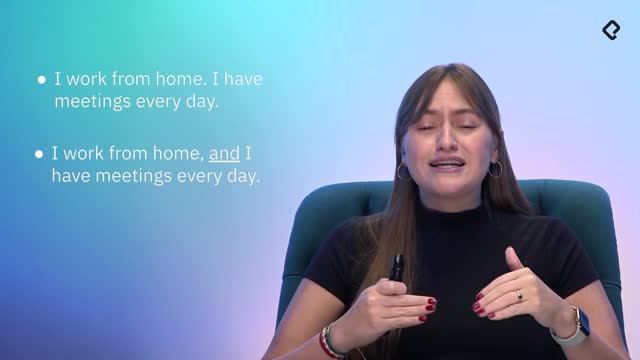
A sentence has a subject (he, she, you, they, a person or a thing that performs an action), the verb (the action), and the complement. With and, you can connect sentences, phrases, or words, and you can make lists.
How do we connect sentences with and?
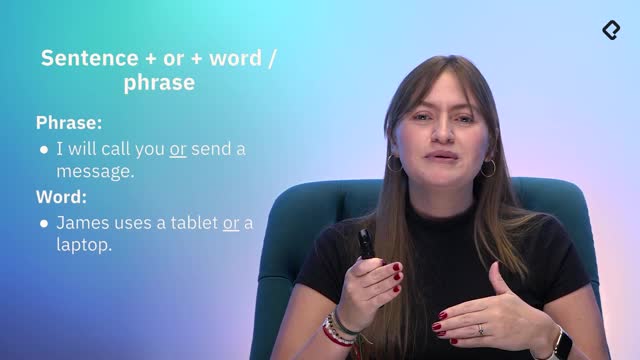
How do we connect words or phrases with and?
How do we make lists with and?
When do we use but to contrast ideas?
Use but to show a difference between ideas. When connecting two full sentences, add a comma before but.
Practice time: write two sentences with and and two with but about your studies, work, or personal life. Share them in the comments and check others’ answers too.