Build confident, natural English with clear questions about time and frequency. Learn how to use when, how often, and what time with the right structure: do/does + subject + verb + complement. See simple workplace examples you can use today.
How to ask about time with when?
We use when to know the time something happens. The structure is: when + do/does + subject + verb + complement. Use it to ask about routines and schedules.
What structure do when questions follow?
- when + do/does + subject + verb + complement.
- Example question: “When do you take the bus to work?”.
- Example answer: “I take the bus to work at 7:00 AM.”.
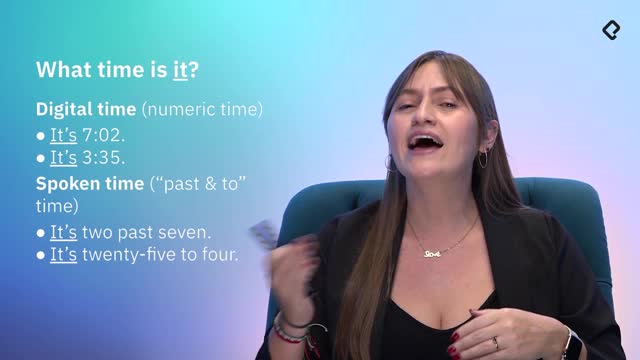
Can you ask what time for exact hours?
- Use what time when the answer has an exact time.
- Example question: “What time do you start your shift?”.
- Example answer: “I start my shift at 8:00 AM.”.
How to ask about frequency with how often?
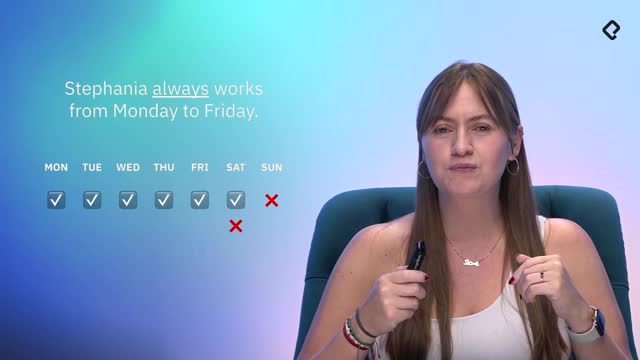
We use how often to ask about frequency. The structure is: how often + do/does + subject + verb + complement. Answers commonly use adverbs of frequency like always, rarely, and never.
What structure do how often questions follow?
- how often + do/does + subject + verb + complement.
- Example question: “How often do you start your shift at 8:00 AM?”.
- Example answer: “I always start my shift at 8:00 AM.”.
Which adverbs of frequency appear in answers?
- always: acción que ocurre todo el tiempo.
- rarely: acción que ocurre en pocas ocasiones.
- never: acción que no ocurre.
- Examples: “We rarely finish work early.” “I never work from home.”.
What practice questions can you try now?
Practice out loud and write your answers. Focus on do/does, subject, verb, and complement. Keep sentences short and clear.
- How often do you talk to your manager?.
- How often do you go out for beer with your coworkers?.
- When do you have meetings with your team?.
- When do you usually check your email?.
Share your answers in the comments and learn from others’ examples.