Boost your confidence using polite, professional English at work. You learned to ask for permission, offer help with can, understand the difference between can, could, and would to make requests, and ask for and give instructions. You can now apply these skills in real-life situations at work or in your studies.
How do you sound more polite and professional at work?
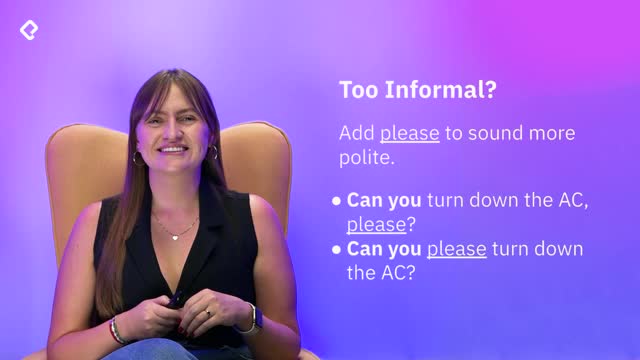
You advanced your communication by focusing on clarity and courtesy. The emphasis is on choosing the right modal verb and delivering clear instructions.
- Use language that is polite and professional.
- Ask for permission appropriately.
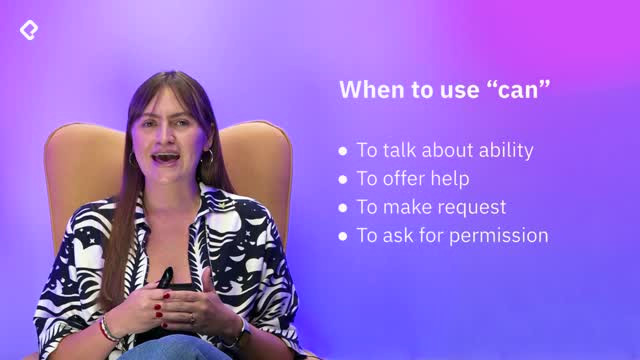
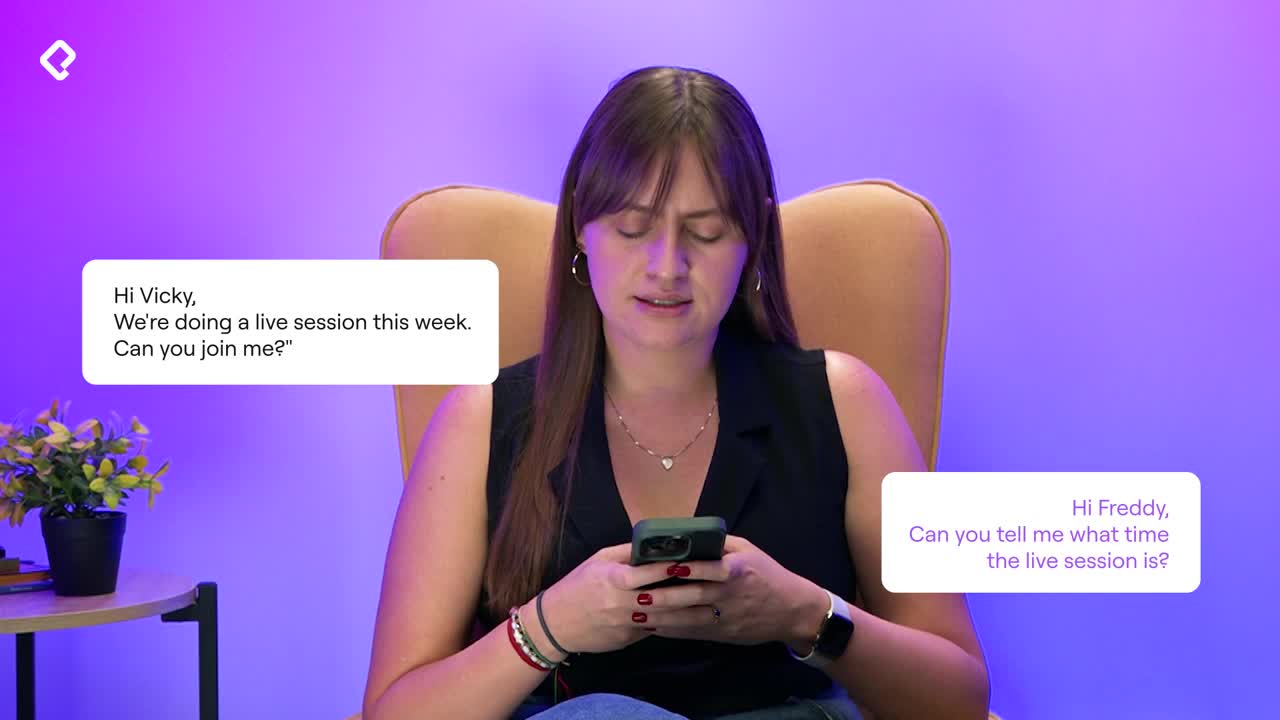
- Offer help with can when needed.
- Apply your skills in real-life situations.
When should you use can, could, and would for requests?
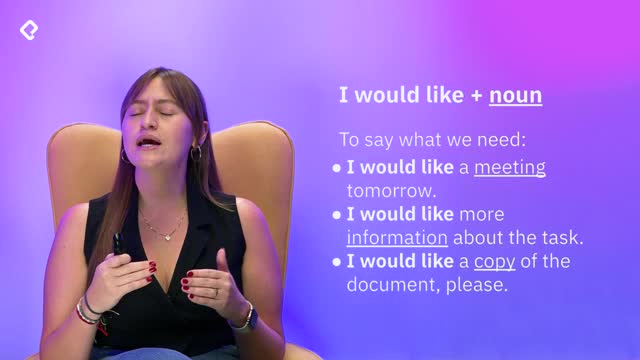
You now know the difference between can, could, and would to make requests. This helps you select the best form for your purpose.
- Use can to ask for permission.
- Recognize how can, could, and would shape different requests.
- Apply them at work or in your studies.
What key vocabulary should you remember?
- polite.
- professional.
- ask for permission.
- offer help.
- with can.
- requests.
- can, could, would.
- ask for and give instructions.
- real-life situations.
- practice.
- work.
- studies.
Which examples stand out from the transcript?
- “ask for permission.”
- “offer help with can.”
- “the difference between can, could, and would to make requests.”
- “ask for and give instructions.”
- “use can, could, and would in real-life situations.”
- “practice at work or in your studies.”
How can you ask for and give instructions clearly?
You are able to both ask for and give instructions. Focus on clarity and purpose so tasks move forward smoothly.
- Ask when you need steps or clarification.
- Give directions that are simple and direct.
- Practice these moves at work or in your studies.
Have a question or a favorite way to practice at work or in your studies: share it in the comments.