
Casual and formal ways to ask for something
Contenido del curso



Making Polite Requests at Work

Asking and Giving Instructions


Casual and formal ways to ask for something
Casual and formal ways to ask for something
Contenido del curso

Douglas Emerson Borja Navas

Samuel Esteban Benavides

Adriana Victoria Peña
Profesor
Alan Pintos
platzinonymous02-25-2026-16f86e9d

Diana Marcela Alvarado Ruiz

Udesky Tembo

María del Consuelo Irastorza Vázquez
Yaritza Jazmin Sanchez Rosa
Yaritza Jazmin Sanchez Rosa

ANDRES ALFONSO MIRA MEJIA

Lissette Ramirez
Isamar Vides López

jorge a viveros m

Ruben Dario Leon Rivera

Santiago Pineda Botero

Leonardo Fabio Valenzuela Muñoz
Leonardo Fabio Valenzuela Muñoz

Francisco Javier Pineda Giraldo

Alejandro José Hugo Escalante Santos

Andrea del Carmen Reyes Juárez
Ada Cleotilde Landaverde Martinez

Rosa Cándida Clímaco
No entiendo nada
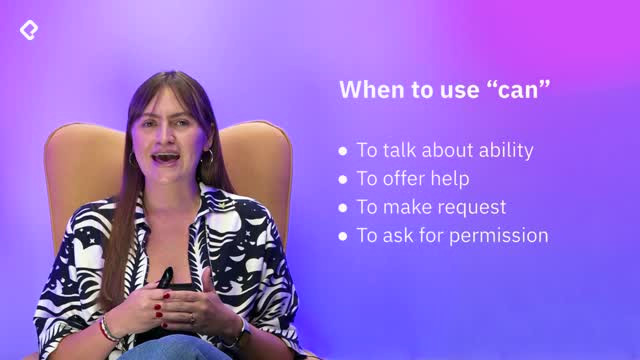
Douglas, the class explains that "can" is used differently depending on whether you're asking for permission or making a request.
The key is who controls the action.
yo tampoco
:)
Hi Douglas,
Which part would you like me to help you with? Let me see if I can help you out. The trick is to know Who is doing the action?
<u>Permission</u> = YOU do it
→ You are asking for approval
→ “Can I…?”
Example: Can I leave early? (I want to leave)
<u>Request</u> = THEY do it
→ You are asking someone else to help you
→ “Can you…?”
Example: Can you send me the email? (You want them to send it)
Nobody in the section of coments.
is a new cours
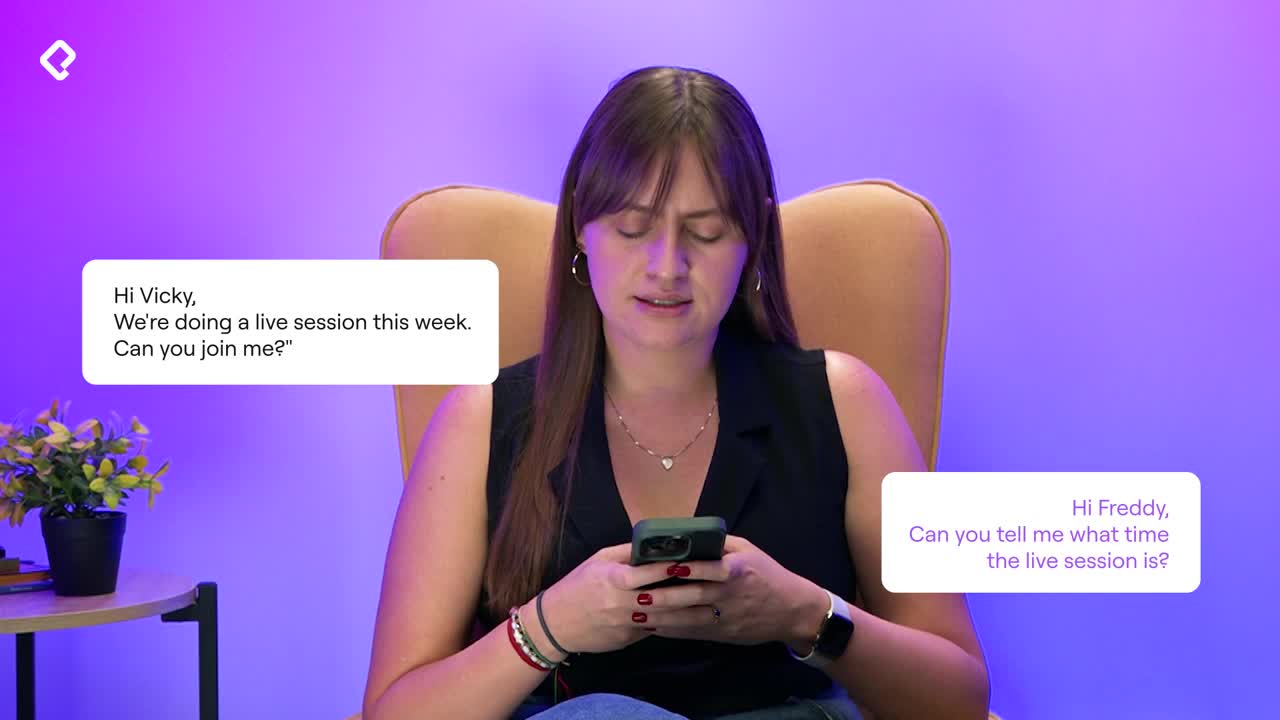
¡Hola! The class explains that when you want to do something yourself, you ask for permission using "Can I...?" (e.g., "Can I leave early?"). When you want someone else to do something, you make a request using "Can you...?" (e.g., "Can you send me the file?"). It all depends on who controls the action.
Whats is the grammar ?
Diana, the class focuses on how the word "can" is used differently depending on whether you're asking for permission or making a request. You don't need new grammar, just to understand who controls the action. When you want to do something, you ask for permission (e.g., "Can I open the window?"). When you want others to do something, you make a request (e.g., "Can you send me the report?").
Udesky, the key difference lies in who controls the action. When you want to do something yourself, you ask for permission (e.g., "Can I leave early?"). When you want someone else to do something, you make a request (e.g., "Can you send me the file?"). This distinction helps clarify your intention in English, especially at work.
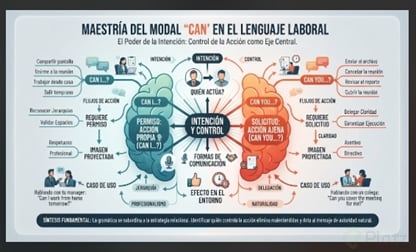
The strategic mastery of the modal verb can does not depend on grammar, but on identifying who controls the action to define whether it is a permission or a request.
3 key concepts:
· Intention: The underlying purpose that transforms the same structure into a permission or a request.
· Action control: The guiding criterion that determines whether the sender or the receiver acts.
· Executive fluency: The ability to communicate with naturalness and precision in professional environments.
· Before speaking or writing: Take a one-second pause and ask yourself the key question: Who is going to perform the action, me or the other person?
It teaches us that the word can changes its nature according to the main actor. If the benefit or action is one's own, we require permission (Can I...?). If we require the execution of a third party, we issue a request (Can you...?). Applying this distinction avoids noise in communication and projects a secure, polite, and highly professional image in any corporate interaction in English.
Why does the subject change the intention?
The subject dictates who is actually doing the physical or mental work in the scenario. If you say "I", you are the one doing the task and just need clearance, making it a permission. If you say "you", you are asking the other person to expend effort, turning it into a request.
Can I use "can" with my boss?
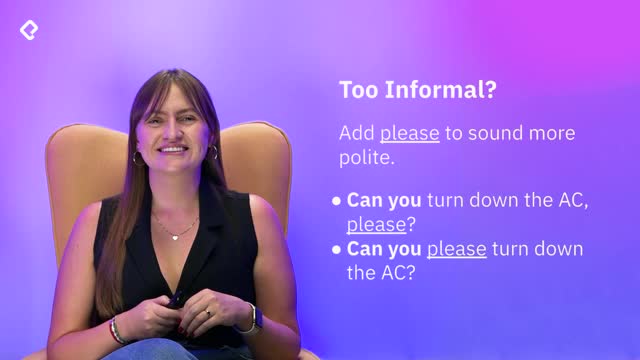
Yes, using "can" is perfectly fine in most modern, collaborative workplaces, even with managers. However, it sets a casual and direct tone. If you are in a highly formal corporate environment, you might want to upgrade to softer words like "could" or "may" to add an extra layer of politeness.
✅
I'm so excited!
Yes, using "can" is perfectly fine in most modern, collaborative workplaces, even with managers. However, it sets a casual and direct tone. If you are in a highly formal corporate environment, you might want to upgrade to softer words like "could" or "may" to add an extra layer of politeness.
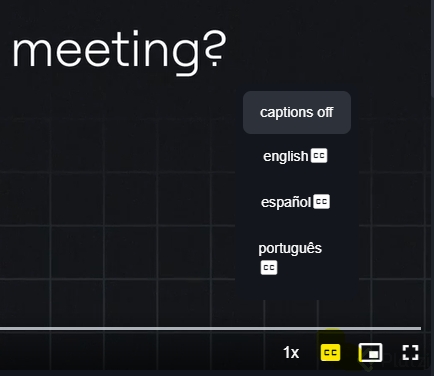
Buenas...como quitar subtítulos en Espanol..Gracias
Hi Jorge, you can turn off subtitles from:
Santiago, para cumplir con tu solicitud de análisis profundo sobre el uso de "Can" en contextos laborales, presento el desglose técnico:
1) Contexto del curso
El curso se centra en la pragmática del lenguaje: cómo la intención comunicativa (permiso vs. petición) altera la función de una misma estructura gramatical ("Can").
2) Conceptos clave
3 y 4) Preguntas avanzadas y respuestas
Debido a la restricción de 150 palabras, presento una síntesis de las 20 preguntas solicitadas:
(Nota: Las 15 preguntas restantes siguen la lógica de diferenciar intención vs. estructura).
5) Fuentes
El curso carece de bibliografía externa; se basa en la experiencia pedagógica de la instructora.
6) Vacíos y límites
7) Aportes publicables
Para profundizar, te recomiendo: Being More Polite with "Could".
What happens if I mix up subjects?
Mixing up the subjects completely changes the meaning of your sentence and can cause workplace confusion. For instance, asking "Can you leave early today?" instead of "Can I leave early today?" sounds like you are telling your coworker to go home. Always double-check who controls the action before speaking.
Can i go to the bath?
Can I share some ideas to do the work?
Excellent course.
Hello
Hi Andrea! It’s completely normal to feel a bit unsure about when to use "can" for different purposes. The trick is simply identifying who is doing the action:
Think of it like this: if you are the one moving, you're asking for permission. If you need someone else to move, you're making a request. It’s the same word, just a different goal!
To dive deeper into these nuances, I recommend checking out "Making Polite Requests at Work" or "Asking and Giving Instructions."
no se entiende nada, debe partir de las palabras basicas para poder entender y llevar el español al mismo tiempo o idicar en que curso se aprende el INGLES BASICO desde cero conocimiento
Thank yuo, teacher. for this new course. Its a pleasure to be here.