
Can, could, and would for work requests
Contenido del curso



Making Polite Requests at Work

Asking and Giving Instructions
Can, could, and would for work requests
Can, could, and would for work requests
Contenido del curso

Alejandro José Hugo Escalante Santos

Alexander Salvador Hernández Blanco

Adriana Victoria Peña
Profesor
Yaritza Jazmin Sanchez Rosa

Joel Campos
Adriana Victoria Peña
Profesor
Carlos Andres Linares Lesmes

Rafael Vera Gómez
Adriana Victoria Peña
ProfesorMaría Guadalupe Guzmán Mercado

Rosa Cándida Clímaco
Irma del Carmen Figueroa de Alemán

Arturo Plascencia

Edna Ruiz Lopez
Yolanda Soledad Montes Barrera

María del Consuelo Irastorza Vázquez

Roberto Iván Pineda Hernández
Edna Ninethe Orozco López
Alicia Edelmira Hernández de Hernández
Yaritza Jazmin Sanchez Rosa

Camilo Medina Muñoz

Lissette Ramirez
Excellent course.
Exellent course, I would like to continue learning.
Thanks, Alexander! You will!
Is it possible to mix these modals?
Yes, absolutely! Mixing these modals is a fantastic way to navigate complex workplace conversations smoothly. You will often find yourself using different modals within the same interaction depending on the specific micro-goal of each sentence. For example, you might start a conversation by asking for permission with 'Could I interrupt you for a second?', then make a direct request with 'Would you mind sending me that file?', and finally offer assistance with 'I can format it for you once I receive it.' This dynamic use of can, could, and would shows a high level of fluency and emotional intelligence. It allows you to adjust your tone in real-time, balancing respect, directness, and helpfulness perfectly. Practicing this mix will make your English sound incredibly natural and adaptable to any professional scenario.
Thank you, this was a really good course.
Thanks for the feedback, Joel!
Thank you, Teacher. This class is really great.
Teacher!! i'm very proud at learning english with you. Blesseds
Thanks, Rafael! I am proud of you for finishing the course!
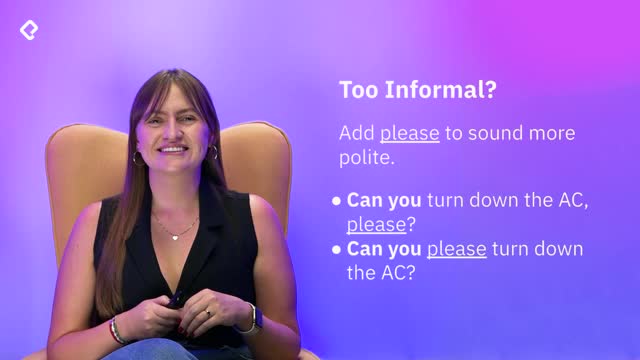
How can I make instructions sound polite?
To soften a direct command, simply add the word please. Imperative verbs are naturally very direct, which can sometimes sound bossy in a professional setting. By adding please, you instantly change a strict order into a courteous request. You can place it at the beginning or the end of your sentence. Just remember the punctuation rule: if it goes at the beginning, use a comma right after it like Please, send the report. If you put it at the end, place the comma right before it like Send the report, please. This small addition makes a huge difference when onboarding new team members or asking colleagues for help.
Thanks teacher, is a excellent course.
Thanks teacher for your class
Thank you teacher!
You are a great teacher, thank you so much
Thanks so much.
Professional requests in English
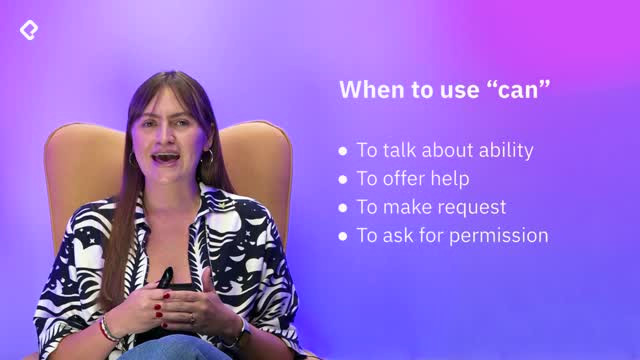
Master the use of can, could, and would to make professional requests with courtesy and effectiveness.
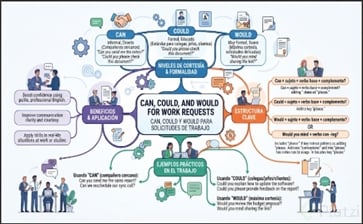
Levels of formality:
· Can: Direct and informal for close colleagues.
· Could: Polite and standard for colleagues or superiors.
· Would: Maximum courtesy and formality in requests.
Key example:
· Could you please provide feedback on the latest project report?
Apply these structures to improve your professional communication.
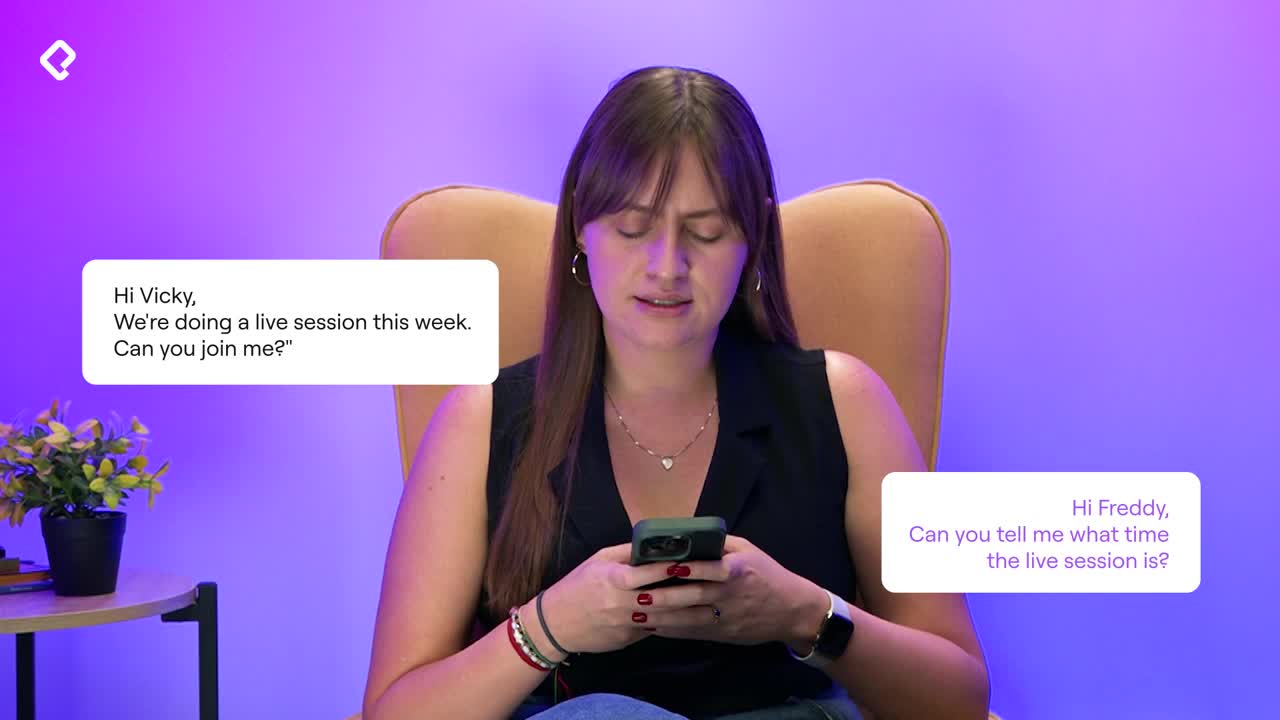
· Usando "Can" (con un compañero cercano):
o Can you send me the latest sales report? (¿Puedes enviarme el último informe de ventas?)
o Can we reschedule our sync call? (¿Podemos reprogramar nuestra llamada de sincronización?)
· Usando "Could" (para colegas, jefes o clientes):
o Could you check this document before I send it? (¿Podrías revisar este documento antes de que lo envíe?)
o Could you explain how to update the software? (¿Podrías explicar cómo actualizar el software?)
· Usando "Would" (máxima cortesía o solicitudes formales):
o Would you review the budget proposal by Friday? (¿Te importaría / Podrías revisar la propuesta de presupuesto para el viernes?)
o Would you mind sharing the presentation link? (¿Te importaría compartir el enlace de la presentación?)
1. Peticiones directas a un compañero usando can
· Can you send me the notes from today's meeting? (¿Puedes enviarme los apuntes de la reunión de hoy?)
· Can you review this slide before I present it? (¿Puedes revisar esta diapositiva antes de presentarla?)
2. Peticiones muy educadas a un supervisor o cliente usando could o would
· Could you please provide feedback on the latest project report? (¿Podría por favor darme su opinión sobre el último informe del proyecto?)
· Would you mind sharing the updated schedule for next week? (¿Le importaría compartir el horario actualizado para la próxima semana?)
excellent course, thanks
This class was amazing, now, I can use can, could and would correctly.
Thanks,
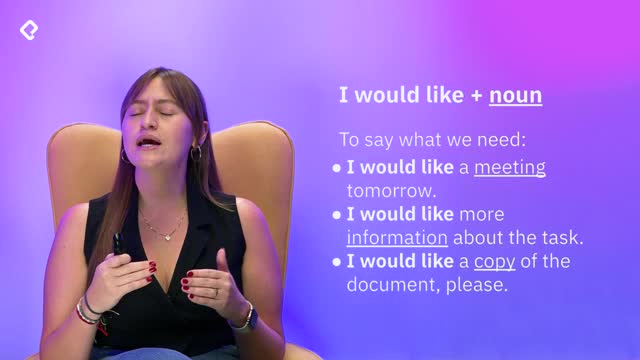
Why is would better for formal requests?
Because would is the ultimate tool for high-level politeness and diplomacy in the workplace. When you use phrases like 'Would you mind...' or 'I would like...', you are essentially giving the other person a graceful way to accept or decline without feeling pressured. This is particularly crucial when dealing with external clients, senior executives, or stakeholders where maintaining a pristine professional image is necessary. Would distances the request from an immediate demand, making it sound hypothetical and highly respectful. For instance, 'Would it be possible to extend the deadline?' sounds significantly more professional than 'Can we extend the deadline?'. It demonstrates that you acknowledge the inconvenience of your request and value the other person's flexibility. Mastering would elevates your business communication from simply functional to highly persuasive and elegant.
Thank you, you're a great teacher!
Thank you teacher, you are the best!