
Using Can to Ask for Permission
Contenido del curso

Making Polite Requests at Work

Asking and Giving Instructions
Using Can to Ask for Permission
Using Can to Ask for Permission
Contenido del curso

Fattima Denis Pichardo Lara

Francisco Javier Pineda Giraldo

Cashiel Fuentes

Percy Del Águila

Arturo Plascencia

Sergio Leonel Laroj Asturias

RAÚL ERNESTO VELÁSQUEZ VELASCO

Nelson Cortez

Camilo Ortiz Carvajal
Rudy Fitzgerald Ramirez

Carlos Aaron Garcia Canseco

Jaime Andrés González Cardona

María del Consuelo Irastorza Vázquez

Leon Felipe Ocampo Escobar
Joan Sebastian Beltran Cuesta

Yanira Samara Saravia Salinas

Yenniana Briceño

Juan Jesús Coronado Rivas

Gabriel Arcila
Gustavo López
Can I practice conversation with you from Monday to Friday? Yes, off course at 7:00 o’clock
Can I help you?
Can I go to the party?
Can you close the door?
Yes, you can get in
Yes, you can eat at your desk
Yes, you can ask me a question now
Yes, you can use your phone
Can I help you change your car's tire? Yes, please, can you give me key 12? I can speak two languages and now study for one language more. Hello, can you open the door, please? Yes, take a moment to wait; research the key.
Can i get in? Yes, yo can
Can I eat at my desk? No, thats's wrong
Can I ask you a question now? No, sorry but I'm busy
Can I use my phone? Yes, you can
Can i get in? yes you can.
Can I eat in my desk? no you can't.
Can ask you a question now? yes you can.
Can I use my phone? no you can't
Can I get in? I'm sorry, but you can't. It´s full.
Can I eat at my desk? No you can't.
Can I ask you a question now? Sure! I have a query.
Can I use my phone? Yes, of course.
Can I gety in? - Sorry No
Can I eat at my desk - No, you can´t
Can I ask you a question now? - Yes. offcourse
Can I use my phone? - Yes, you can
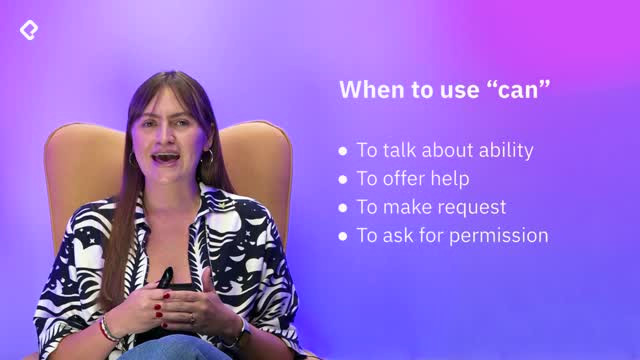
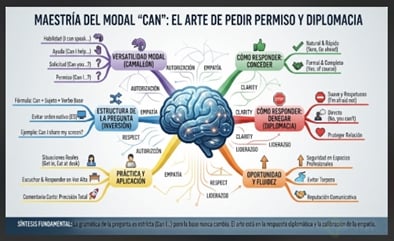
· The modal verb can stands out like a communicative chameleon: its form remains unaltered, but its soul mutates according to the context. Whether to declare an ability, extend a helping hand, issue a request, or, as in this case, ask for permission, the secret does not lie in the complexity of the vocabulary, but in the clarity of the structure and the elegance of the response.
· But true communicative mastery does not stop at knowing how to ask; it reveals itself in how we manage the response. Granting or denying permission in professional or everyday environments requires a fine calibration of empathy. Short responses like Sure or diplomatic formulas like I'm afraid not not only convey a message, but protect the interpersonal relationship and project an image of social sophistication.
· Mastering the use of can to ask for permission and structure diplomatic responses allows you to navigate any social or professional environment with absolute naturalness and security.
· When formulating the question: Avoid the native Spanish structure and always remember the inversion formula: Can + Subject + Base verb (e.g., Can I use my phone?).
Can I get in?
Sure!
Can I eat at my desk?
No, you can't
Can I ask you a question now?
I'm sorry but you can't because I'm at the phone
Can I use my phone?
No, you can't
1. Can I get in?
Yes of course.
2. Can I eat at my desk?
No, you can't.
3. Can I ask you a question now?
I'm afraid not. I am very busy.
4. Can I use my phone?
I'm sorry, but you can't.
can I get in? yes You can can I eat at my desk? No You can't can I ask you a question now? Sure Can I use my phone? yes You can
can i use mu Phone? no, im sorry i can'/
Can I get in? yes, of course.
Can I eat at my desk? no, yo can't.
Can I ask you a question now? Sure.
Can I use my phone? I'm afraid not.
1-Yes, of course. 2-No, you can’t. 3-I’m afraid not, sorry. 4-Yes, go ahead.