Making Polite Requests at Work: Recap
Contenido del curso



Making Polite Requests at Work

Asking and Giving Instructions

Making Polite Requests at Work: Recap
Making Polite Requests at Work: Recap
Contenido del curso

María del Consuelo Irastorza Vázquez

Omar Alfredo Amador Ayala

Yaritza Jazmin Sanchez Rosa
Yaritza Jazmin Sanchez Rosa
Yaritza Jazmin Sanchez Rosa
Milagro delcarmen coreas cruz
Milagro delcarmen coreas cruz
Milagro delcarmen coreas cruz

Camilo Medina Muñoz

Reina Xiomara Sandoval
Leticia Rivera

Lissette Ramirez

ANDRES ALFONSO MIRA MEJIA
Omar Alfredo Amador Ayala
Alejandro jauregui gomez
Irma del Carmen Figueroa de Alemán
Irma del Carmen Figueroa de Alemán

Rosa Cándida Clímaco
Alejandro jauregui gomez
Víctor Miguel Rodríguez González
Alejandro Mendoza

Carlos Pinedo
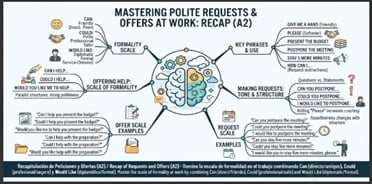
5 situaciones laborales comunes en las que puedes ver la progresión completa de las tres formas (Can, Could y Would like) según el nivel de formalidad y la relación:
1. Enviar un reporte o documento
· Can: "Can you send me the final report?" (Directo y amigable, ideal con un compañero de confianza).
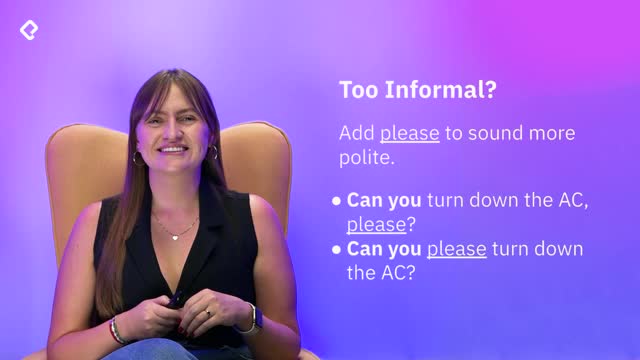
· Could: "Could you send me the final report, please?" (Más formal y educado, perfecto para un supervisor o cliente).
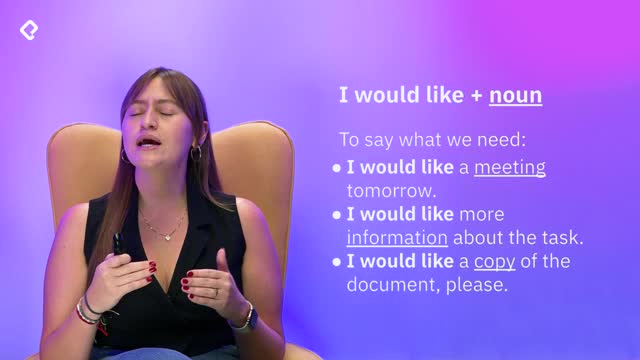
· Would like: "I would like you to send me the final report, please." / "I’d like a copy of the final report." (Muy profesional y diplomático).
2. Reprogramar una junta o llamada
· Can: "Can we postpone the meeting?" (Sencillo y directo con tu equipo cercano).
· Could: "Could we postpone the meeting to tomorrow?" (Más cortés y considerado con los tiempos de otros).
· Would like: "I would like to postpone the meeting, if possible." (Forma clara y formal de expresar tu necesidad como una declaración).
3. Ofrecer ayuda con una presentación
· Can: "Can I help you prepare the presentation?" (Ofrecimiento rápido y casual).
· Could: "Could I help you with the presentation preparation?" (Un tono más profesional y servicial).
· Would like: "Would you like me to help you prepare the presentation?" (Altamente cortés, orientado a la hospitalidad y servicio profesional).
4. Pedir información sobre un horario o sesión
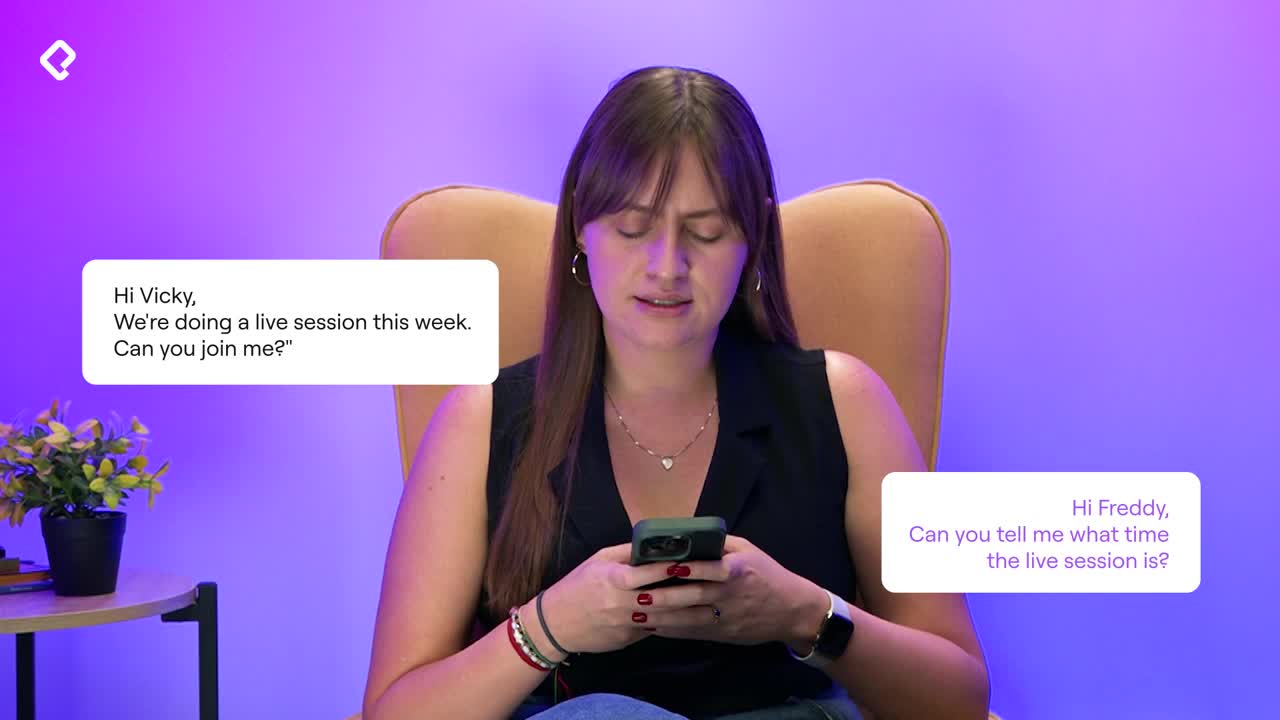
· Can: "Can you tell me what time the session starts?" (Pregunta rápida y clara).
· Could: "Could you tell me what time the live session is, please?" (Más educado para alguien que no conoces bien o un gerente).
· Would like: "I would like to know the exact schedule of the live session." (Declaración formal de lo que requieres saber).
5. Revisar notas o un documento juntos
· Can: "Can you check these project notes?" (Directo entre colegas).
· Could: "Could you please review these project notes?" (Más formal y respetuoso).
· Would like: "I would like you to review these notes when you have a moment." (Muy profesional, suavizado con respeto hacia el tiempo del otro).
When should I use 'could' over 'can'?
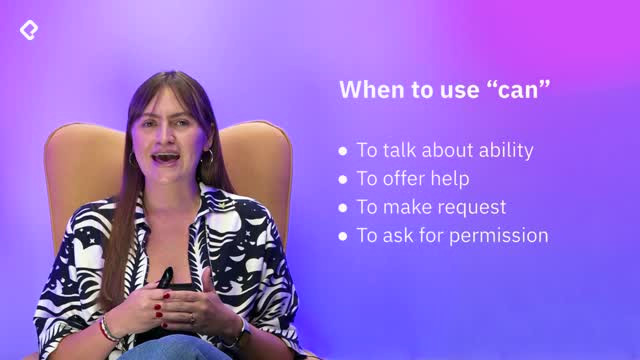
You should switch to 'could' when you want to add an extra layer of professionalism and distance. Think of 'can' as your everyday tool for coworkers you know well—it is friendly and direct. For example, Can you send me that file? works perfectly with a peer. However, if you are speaking to a new client, a senior manager, or asking for a bigger favor, 'could' softens the request. It shows respect for the other person's time and boundaries. Using Could you review this report? sounds less like a demand and more like a polite inquiry. It is the safest bet when you are unsure of the workplace hierarchy or want to make a great first impression.
Can I use this for boss requests?
Absolutely, but you need to choose the right level of formality. When speaking to your boss, 'could' and 'would like' are your best friends. Since your boss manages your time and priorities, you want to avoid sounding like you are giving them orders. Instead of saying Can we change the deadline?, which might sound too casual, upgrade it to I would like to request a deadline extension or Could we possibly adjust the timeline?. This shows respect for their authority while clearly communicating your needs. If you have a very relaxed, informal relationship with your manager, 'can' might be acceptable, but defaulting to the more diplomatic options ensures you always sound professional and respectful.
Why is it better to use 'would like'?
Because 'would like' transforms a direct question into a diplomatic statement. When you use can or could, you are asking the other person to do something, which can sometimes put them on the spot. By saying I would like to postpone the meeting, you are simply stating your preference or need without immediately forcing a yes/no answer. This approach is highly effective in corporate environments where direct commands might seem aggressive. It gives the other person room to negotiate or agree smoothly. Additionally, when offering help, Would you like me to... sounds incredibly accommodating and polished, making it the gold standard for customer service or high-level executive communication.
Can you join us
Could you bring me my phone please
Can I use your computer
Can I use this printer?
Can I help you to present the sales presentation?
Can I leave early today?
Could you please give a hand with my report?
Would you like me to help with sales report?
thank you for explaining very clearly.
I really like this course! Thank you so much!
✅
✅
tercero
I would like is
Can I help You?
Yeah, please!
escriban algo
jaja, por qué nadie lo hace?
xd
Would you like to share the latest version of the project spreadsheet, please?